

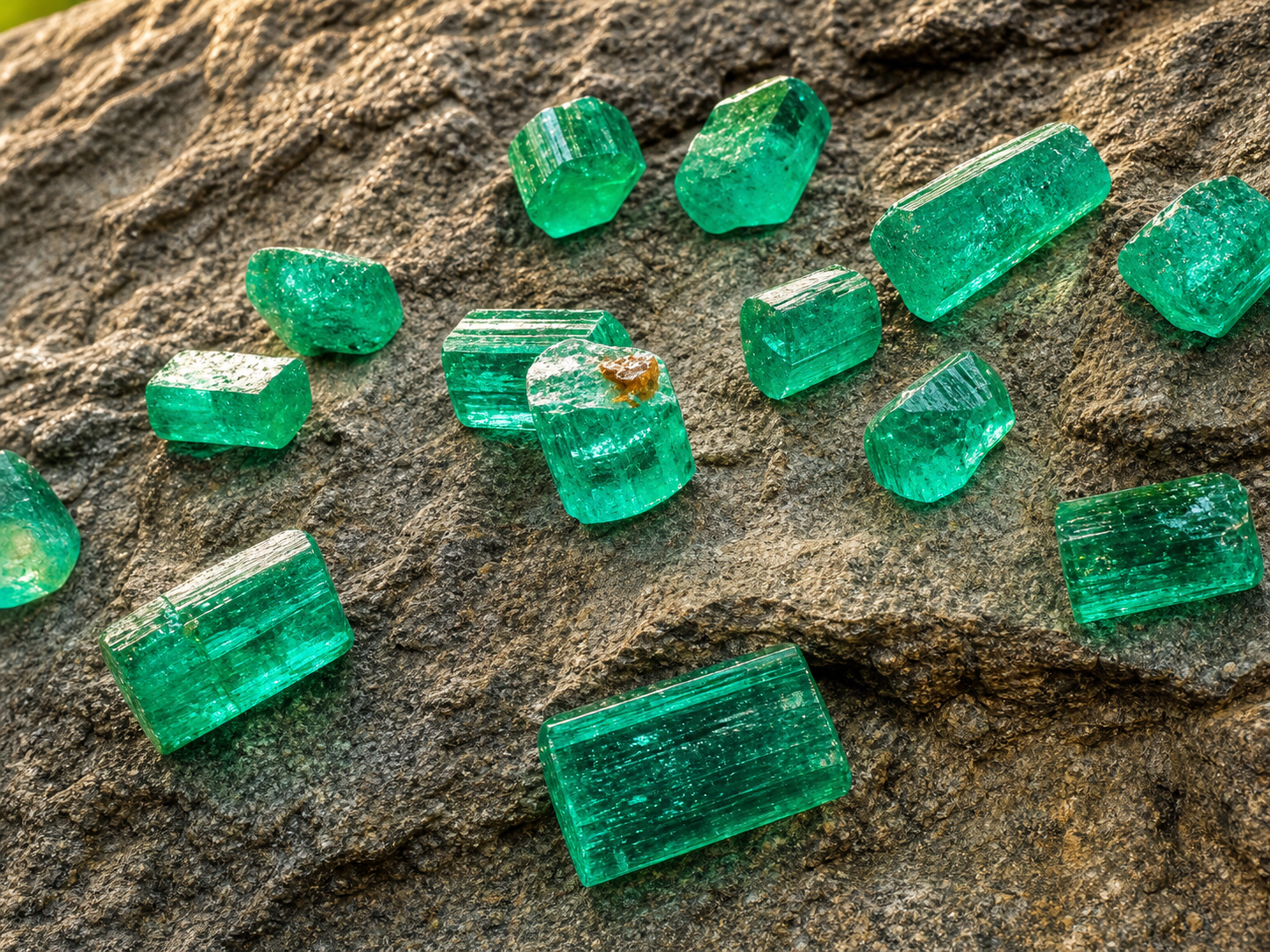
State-run media under the de facto administration announced the auction of 7,234 carats of emeralds extracted from mines in Panjshir province. According to reports published by Bakhtar News Agency, the precious stones were sold to domestic gemstone traders for over six million Afghanis during a bidding process supervised by the provincial Directorate of Mines and Petroleum.
The transaction represents the latest in a continuous series of bi-weekly and monthly mineral auctions held in Panjshir. Since 2021, de facto authorities have rapidly expanded legal and informal mining registrations across northern provinces, issuing hundreds of licenses for emerald, ruby, lapis lazuli, and beryl extraction. Local officials claim that a ten percent state royalty is collected on all sales, with remaining proceeds distributed to licensed local extraction operators.
Economic analysts and regional monitors point out that the accelerated liquidation of natural resources serves as a primary fiscal lifeline for the de facto government amidst severe international banking restrictions, foreign aid reductions, and ongoing economic isolation. By centralizing control over Panjshir’s lucrative gem trade, the administration aims to stabilize central revenues while asserting administrative authority over traditionally opposition-aligned territories.
However, transparency advocates and local community representatives raise persistent concerns regarding resource governance, revenue tracking, and environmental degradation in high-altitude mining corridors. Independent observers note that without international oversight, institutional checks, or inclusive public spending, the rapid depletion of national mineral wealth fails to alleviate widespread provincial poverty or improve basic public service delivery across the region.