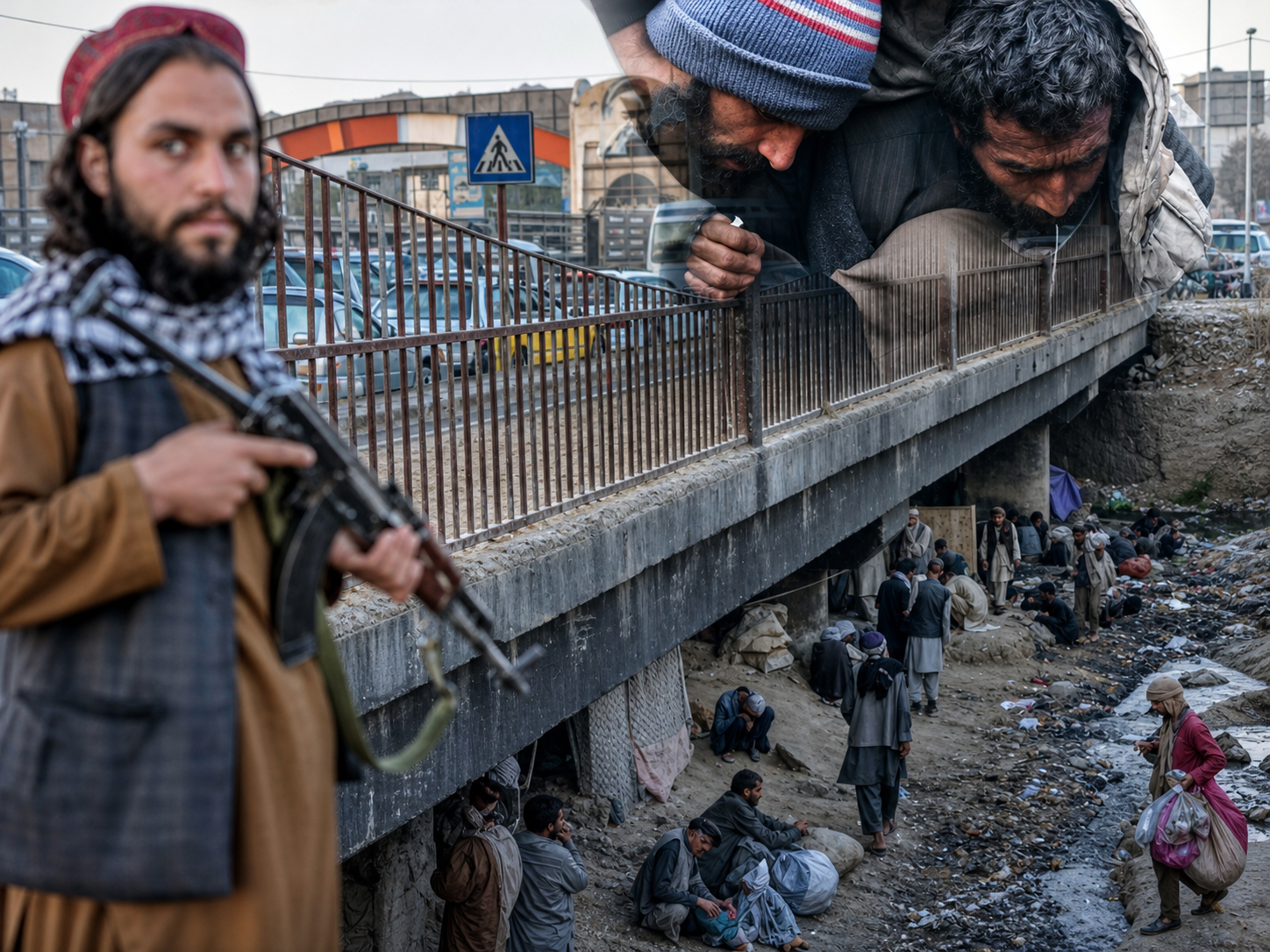
Residents across Kabul report a marked increase in the visibility of individuals suffering from substance abuse along city streets, avenues, and public alleys.
Community members attribute the sudden surge to two major drivers: an influx of newly addicted individuals and the abrupt displacement of recovering patients from the Omid Addiction Treatment Center following cross-border airstrikes. The renewed presence of unmanaged substance abuse is generating widespread public safety concerns regarding escalating street crime, petty theft, and pickpocketing across urban neighborhoods.
Destruction of treatment infrastructure and patient displacement
The disruption at the 2,000-bed Omid Addiction Treatment Facility—formerly known as the Ibn Sina center near the Kabul airport axis—has severely undermined local rehabilitation and municipal containment efforts:
PBS
- Disruption of Inpatient Care: Following military strikes that hit the main treatment complex, hundreds of patients undergoing compulsory or voluntary detoxification dispersed into surrounding municipal districts.
- Incomplete Recovery and High Relapse Rates: Local residents note that individuals thrown back into the community mid-treatment lack basic medical oversight, psychological support, and post-rehabilitation follow-up, driving immediate relapse.
- Unrestricted Drug Accessibility: Citizens point to persistent street-level narcotics distribution and a lack of effective municipal enforcement against local dealers as major factors facilitating continuous drug access.
Rising urban insecurity and community frustration
The return of displaced addicts to public thoroughfares has intensified security anxieties among local shopkeepers and residents:
- Escalation in Property Crime: Residents in central and suburban Kabul report a noticeable rise in petty theft, burglary of commercial stalls, and pickpocketing linked to individuals seeking funds to sustain addiction.
- Lack of Municipal Support Services: Community leaders stress that municipal and de facto health authorities have failed to establish alternative care shelters or emergency transit centers for displaced patients following the destruction of the city’s primary treatment facility.
- Demands for Institutional Intervention: Kabul inhabitants are urging public health organs and municipal security details to restore structured addiction treatment frameworks, clean up public spaces, and curb open-air narcotics sales.
Civic observers warn that without immediate reinvestment in specialized medical facilities and post-treatment social reintegration, the collapse of rehabilitation capacity will continue to deepen social instability and petty crime across the capital.