

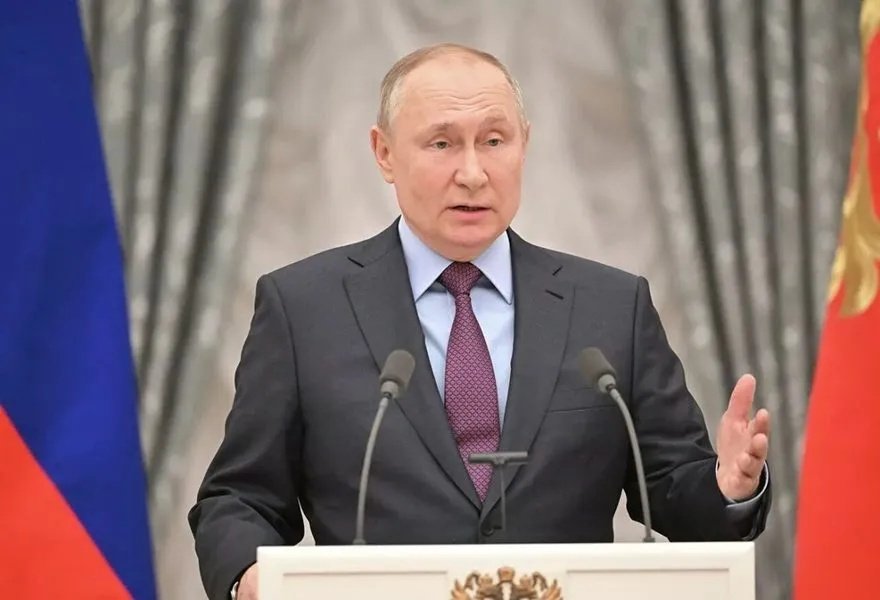
Russian President Vladimir Putin and other leaders of the Collective Security Treaty Organization (CSTO) have underscored growing regional anxiety over Afghanistan’s security landscape, warning of persistent cross-border threats, transnational militant networks, and drug trafficking emanating from the country.
Speaking on Wednesday, November 11, during the CSTO Collective Security Council summit in Moscow, President Putin stated that developments in Afghanistan are receiving continuous attention as member states work to fortify the organization’s external borders and coordinate counter-terrorism responses.
Regional leaders voice alarm over militant networks
The high-level discussions brought together leaders of CSTO member states to address strategic security vulnerabilities along Central Asia’s southern frontier:
- Warnings on Extremist Groups: Kyrgyz President Sadyr Japarov joined Putin in highlighting Afghanistan-related security risks, calling for unified regional action to counter international terrorism, religious extremism, and organized criminal syndicates. Japarov emphasized that stabilizing the region requires balancing robust border security with support for Afghanistan’s economic recovery.
- Scale of Militant Presence: Ahead of the summit, Russian officials and security estimates cited by international media highlighted that an estimated 23,000 fighters belonging to more than 20 distinct armed groups—most notably the Islamic State Khorasan Province (ISKP)—continue to operate within Afghanistan, posing a direct threat to neighboring Central Asian states.
- Tajikistan Border Fortification: Recognizing the vulnerability of the rugged 1,344-kilometer Tajikistan-Afghanistan frontier, the CSTO is advancing a comprehensive five-year border reinforcement program. The initiative involves contributions from Russia, Belarus, Kazakhstan, and Kyrgyzstan to supply advanced military equipment, weaponry, and technical surveillance systems, with initial deliveries slated before the end of 2026.
Diplomatic outcomes and leadership transition
The Moscow summit concluded with the signing of 18 strategic documents aimed at deepening military, intelligence, and logistical cooperation among member states:
- Organizational Structure: The CSTO comprises Russia, Belarus, Armenia, Kazakhstan, Kyrgyzstan, and Tajikistan, though Armenia has currently suspended its active participation in bloc activities.
- Upcoming Chairmanship: Tajikistan is officially scheduled to assume the rotating chairmanship of the security bloc on January 1, 2027, placing increased regional leadership on Dushanbe as border security measures ramp up along the Afghan frontier.