

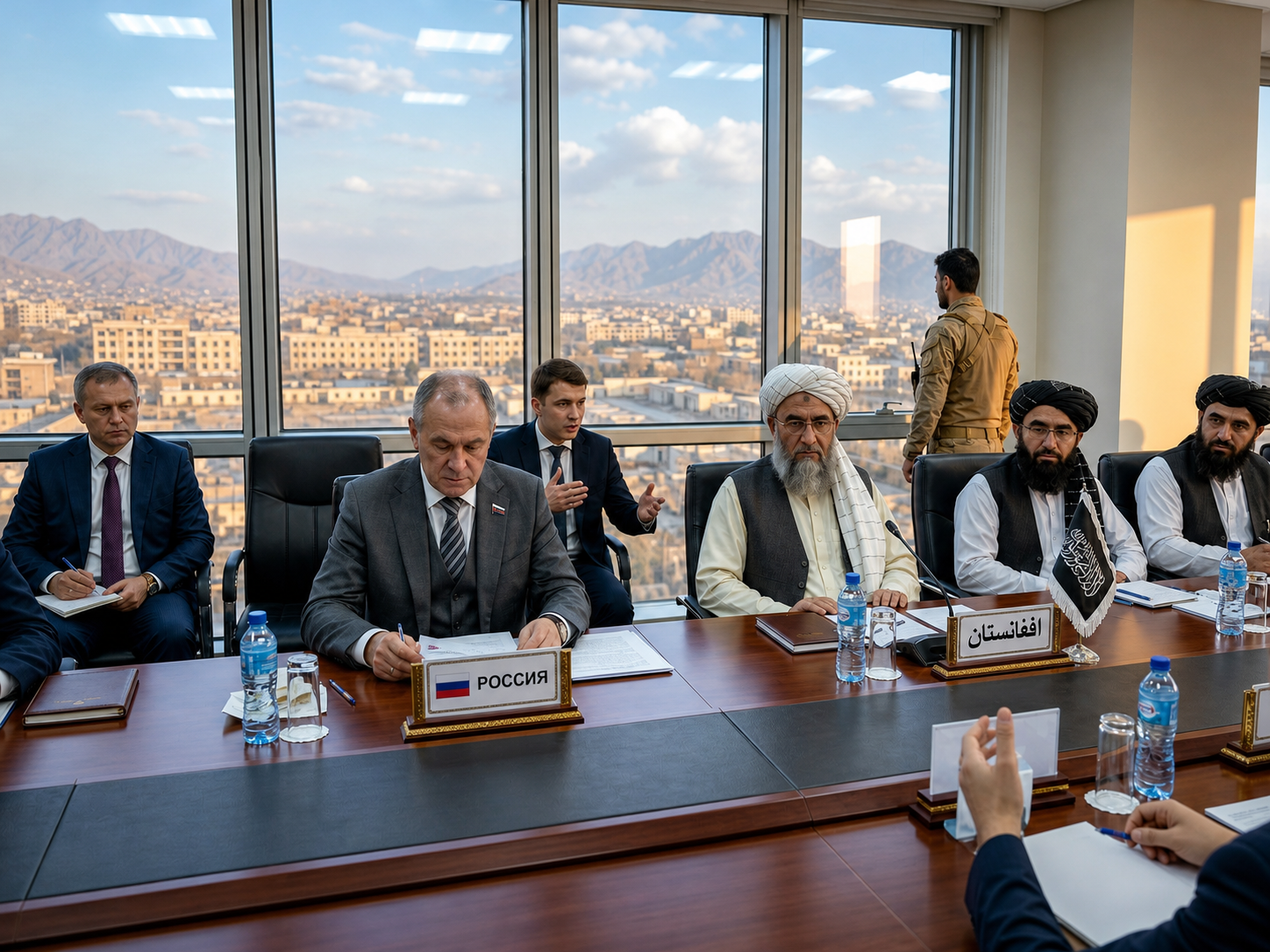
A high-level Russian delegation led by Deputy Prime Minister Alexey Overchuk is scheduled to make a brief visit to Kabul on Thursday, November 12, according to sources within the de facto administration.
Draft itineraries indicate that the delegation’s time on the ground will be restricted to a five-hour window, running from noon to 5:00 p.m., focusing primarily on high-level bilateral consultations and trade evaluations.
Low expectations for binding economic contracts
Despite Moscow’s public interest in strengthening regional trade ties, sources in Kabul indicate that de facto economic authorities do not anticipate major breakthroughs or substantial commercial commitments from the visit:
- Absence of State Guarantees: The primary bottleneck remains Moscow’s unwillingness to extend official government financial or security guarantees to private Russian firms seeking to invest in Afghanistan.
- Symbolic vs. Concrete Engagement: De facto economic planners note that while diplomatic meetings and political declarations are frequent, tangible economic outcomes depend entirely on binding investment contracts and active project execution.
- Private Sector Reluctance: Without state-backed risk mitigation frameworks, major Russian commercial enterprises remain hesitant to commit capital to infrastructure, mining, or energy ventures given ongoing political uncertainties and international sanctions frameworks.
Context of Russia-Taliban bilateral dynamics
The upcoming visit by Overchuk follows ongoing diplomatic engagement between Moscow and the de facto administration:
- Expanding Trade Volume: Russian officials have pointed to gradual increases in bilateral trade figures—primarily in fuel, wheat, and basic commodities—though large-scale capital investments remain stalled.
- Diplomatic Strategy: Moscow has maintained active diplomatic and security dialogue with the de facto government, viewing economic engagement as a vehicle to secure its southern periphery, counter regional terrorism, and balance Western sanctions.
- Limited Financial Realism: Observers emphasize that until foreign governments or international financial institutions establish clear legal, banking, and insurance guarantees, high-level diplomatic visits to Kabul will yield primarily symbolic political value rather than major infrastructural investments.
De facto economic ministries have not publicly released a formal agenda or list of specific bilateral protocols to be signed during Overchuk’s brief stay in Kabul.