

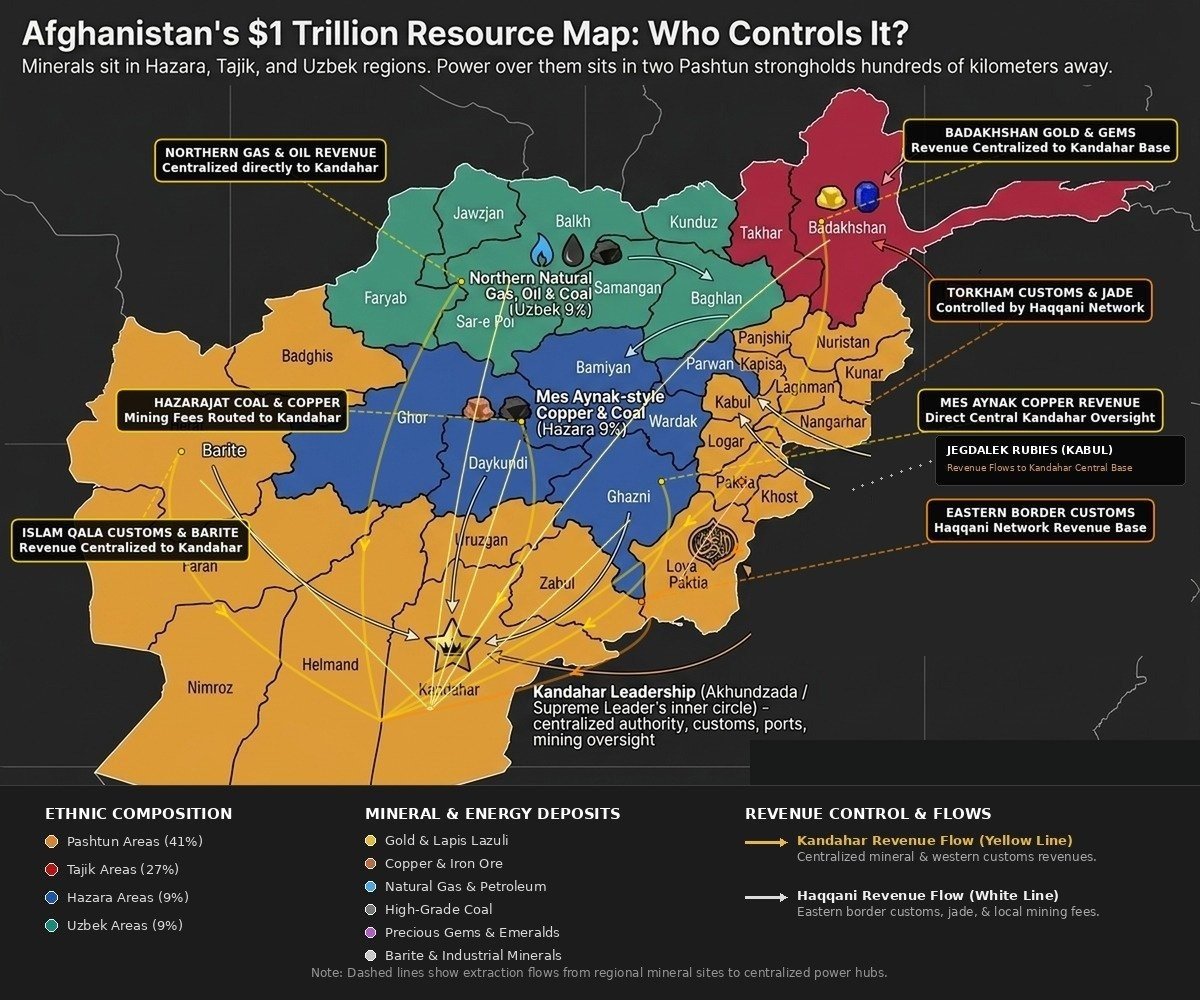
Afghanistan’s vast mineral and natural resources are increasingly becoming a source of internal competition within the Taliban, as powerful factions seek greater control over mining operations, contracts and government revenues.
Afghanistan is believed to possess mineral resources worth hundreds of billions of dollars, with some estimates putting their potential value near $1 trillion. The country has deposits of copper, lithium, rare earth elements, coal, natural gas, gemstones and other strategic minerals, many of which are located in economically disadvantaged and politically marginalized regions.
The emerging struggle is therefore not simply about attracting foreign investment. A more important question is who controls the resources, who collects the revenue and where the money ultimately goes.
Major deposits are spread across regions including Bamiyan, Daykundi, Badakhshan, Balkh and Sar-e Pol, as well as eastern Afghanistan. However, political authority remains heavily concentrated around the Taliban leadership in Kandahar, headed by Supreme Leader Hibatullah Akhundzada.
At the same time, the Haqqani Network has emerged as a powerful faction within the Taliban administration. Haqqani-linked figures have reportedly gained influence over key security and revenue-generating institutions, including areas connected to border crossings and customs.
Control over customs and mining revenues provides significant financial leverage. This has reportedly contributed to growing competition between the Kandahar-based leadership and networks associated with Sirajuddin Haqqani.
As the Taliban seeks to expand Afghanistan’s mining sector, control over lucrative mineral deposits could become an increasingly important element in the group’s internal power struggle.