

Kabul Times Monitoring Desk
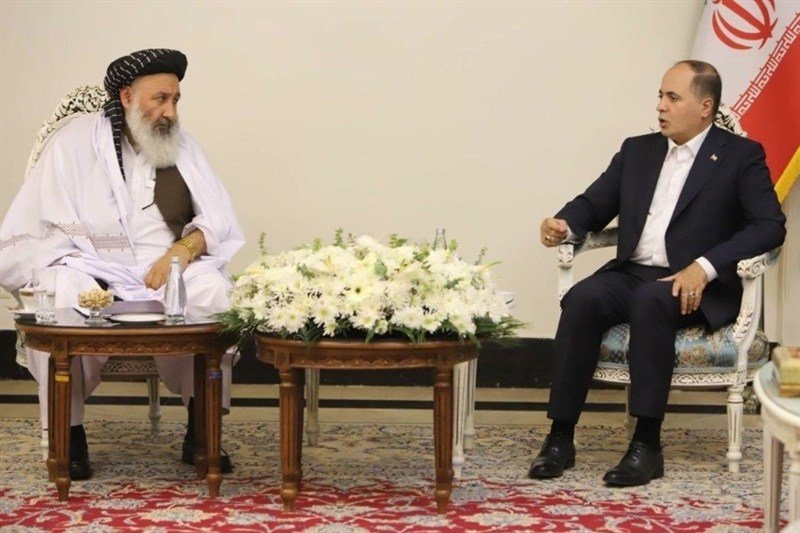
Amid severe economic isolation and sustained border closures along its eastern frontier, the interim Taliban administration’s Finance Minister, Mullah Mohammad Nasir Akhund, held talks with Iranian Foreign Minister Seyed Abbas Araghchi in Tehran on Sunday to discuss bilateral trade and economic ties.
Leading an official delegation following an invitation from Iranian Agriculture Minister Gholamreza Nouri Qezeljeh, Akhund’s visit comes as Kabul increasingly seeks alternative commercial lifelines while traditional transit corridors through Pakistan remain restricted over unresolved cross-border security concerns. Earlier in the day, the Taliban finance official also met with Qezeljeh to discuss expanding agricultural trade and commercial transit.
The high-level engagement highlights Kabul’s growing economic dependency on Tehran, even though Iran—like the rest of the international community—does not formally recognize the interim Taliban government.
Trade figures underscore a stark economic imbalance between the two neighbors. Tehran exported goods valued at $3.454 billion to Afghanistan over the preceding calendar year, while Kabul’s exports to Iran stood at roughly $53 million during the same timeframe. While Iranian officials have previously floated a $10 billion bilateral trade target, Sunday’s discussions yielded no concrete timelines or actionable mechanisms to bridge the massive deficit.
The bilateral meetings in Tehran coincided directly with the opening of the 30th meeting of the Council of Foreign Ministers of the Economic Cooperation Organisation (ECO) in Islamabad on Sunday, November 15.
Despite Afghanistan’s formal membership in the 10-nation bloc, Pakistan’s Foreign Ministry confirmed that the interim Taliban administration was excluded from the ministerial summit. While regional powers, including Araghchi and Central Asian counterparts, convene in Islamabad to advance multilateral economic integration, Kabul remains sidelined from formal regional decision-making frameworks until it addresses persistent demands regarding counter-terrorism enforcement and the dismantling of cross-border militant sanctuaries.