By Dr Muhammad Shahid
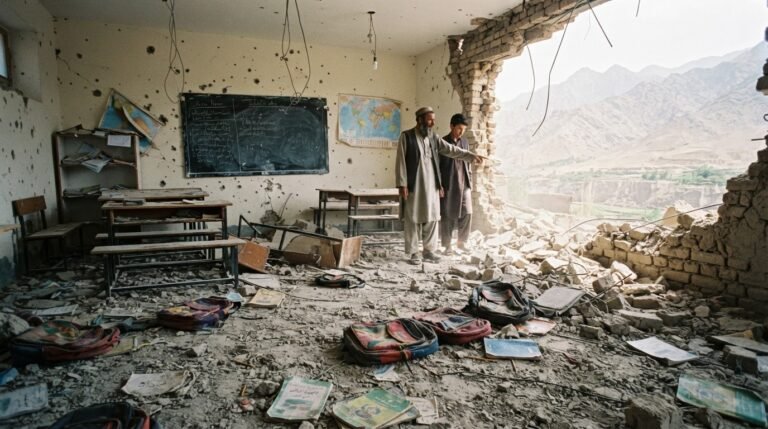
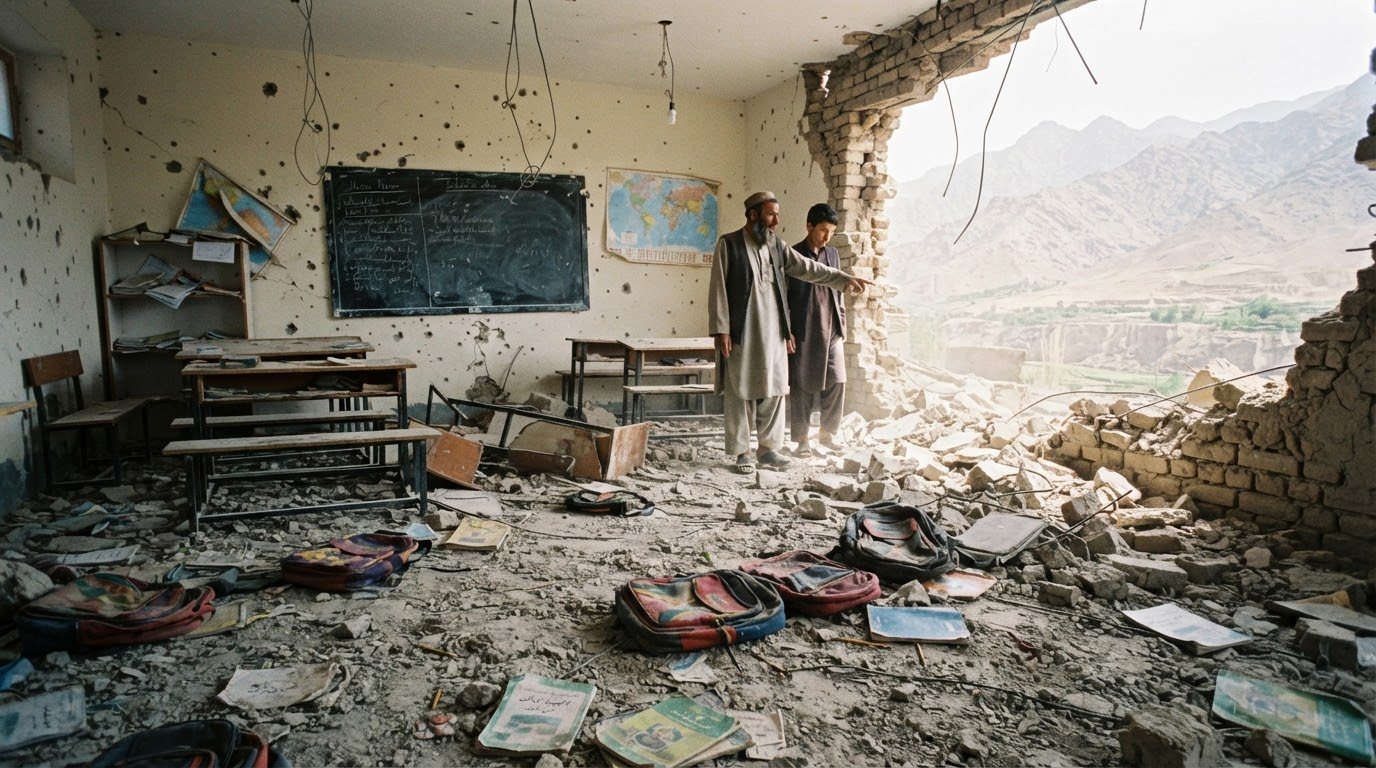
On a crisp Saturday morning in eastern Afghanistan, blue UNICEF schoolbags lay dusted in gray powder across classroom floors while parents dug through fallen brick and shattered glass with bare hands. At roughly 10:00 a.m. on November 28, 2026, a massive explosion tore through the Andar Ser (Andir Sir) neighborhood on the outskirts of Asadabad, the provincial capital of Kunar province, shattering the routine of a school day right next door.
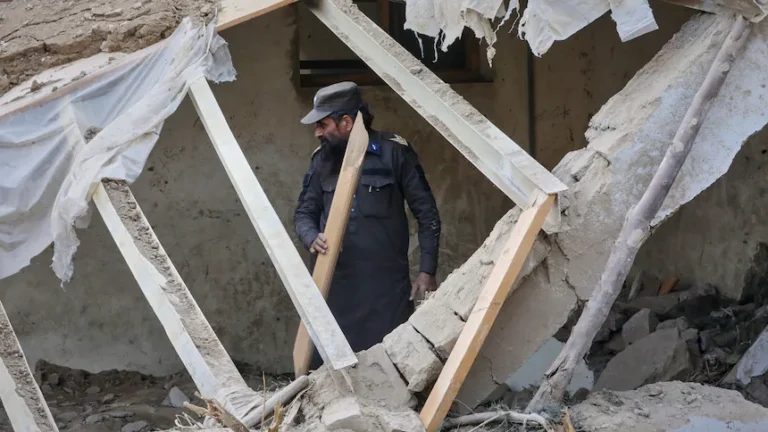
Minutes after the concussive shockwave rolled through the valley, neighbors ran toward a plume of dust and the sound of screaming. Noor Rahman, whose home sits next to the school, recalled rushing into a dust-choked room where children were crying out, spotting his niece’s moving hand beneath debris, and clearing bricks to pull her and others free.
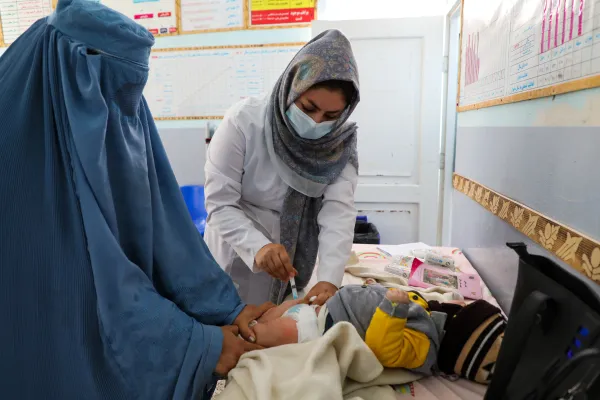
Haji Sulaiman, whose son was hurt, described finding pupils cut by broken glass, struck by collapsing walls, or trapped beneath fallen masonry, as residents and rescuers scrambled to move the wounded—some aged between eight and 15—toward medical care in Asadabad and Nangarhar.
What began as an ordinary Saturday morning of classes left at least 10 people dead—most of them children—and roughly 97 to 110 injured, according to Taliban authorities and wire reporting. Yet beyond the immediate heartbreak in Asadabad’s hospital wards, the blast stands as a grim emblem of blowback: a regime that has spent years tolerating, cultivating, and normalizing armed proxies and loosely policed explosives networks along its eastern frontier is now watching that same culture of lethal impunity detonate inside its own land.
Anatomy of a shifting official narrative
In the hours immediately following the detonation, statements from provincial and central authorities in Afghanistan shifted on where the blast originated and how it was classified—a recurring pattern when local administrative lapses intersect with security sensitivities in eastern border provinces:
- Initial police indications: Local police in Kunar initially pointed to an explosion inside a school compound in the Andar Ser area of Asadabad.
- Provincial information revision: Kunar’s director of Information and Culture, Mawlawi Samiulhaq Haqbayan, later stated that the blast occurred inside a residential house adjacent to the middle school, where materials tied to mining operations—and roadwork along the Kunar–Nuristan route—had been stored.
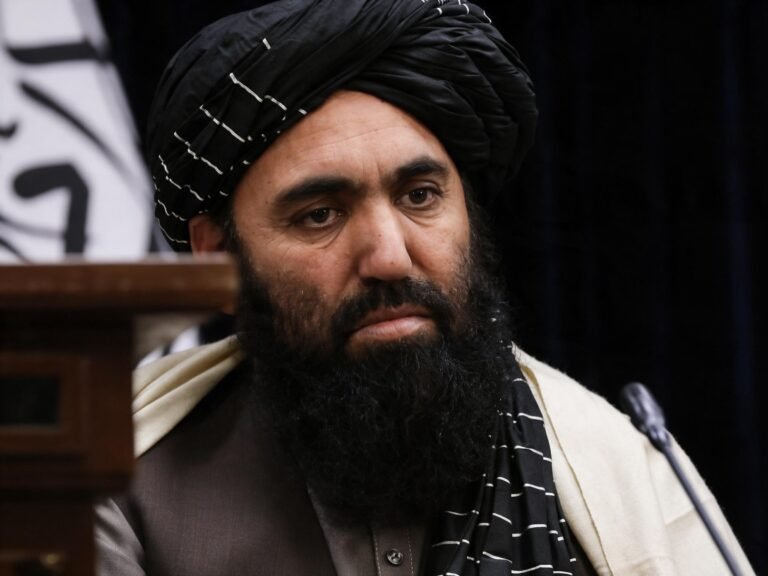
- Interior Ministry framing: Interior Ministry spokesperson Abdul Mateen Qani subsequently placed the casualty toll at at least 10 dead and over 110 wounded, attributing the tragedy to negligence and insufficient precautions at a nearby explosives storage depot linked to mining activity while announcing an official inquiry.
Whether the site functioned as an informal house cache or an inadequately secured depot right beside an active school, the proximity itself is the core indictment. Storing or preparing high-energy blasting materials next to classrooms points to glaring gaps in municipal zoning, hazardous-material inspections, and enforcement around residential areas.
Reaping the whirlwind: from cross-border sanctuaries to domestic blowback
Viewed through a regional security lens, Kunar sits directly along Pakistan’s mountainous frontier—a corridor long defined by militant sanctuaries, cross-border infiltration, smuggling networks, and deteriorating Islamabad–Kabul relations.
For years, Islamabad and international monitors have warned that Kabul’s refusal to dismantle terrorist safe havens—allowing groups such as the Tehreek-e-Taliban Pakistan (TTP) and allied networks to organize, train, and stage cross-border attacks from Afghan soil—has turned the eastern borderlands into an ungoverned ecosystem of militancy and illicit weapons. When a governing authority treats explosive materials, armed networks, and frontier lawlessness as acceptable instruments of regional leverage, it erodes the very institutional controls needed to protect its own citizens.
In a border belt where commercial blasting agents circulate with minimal oversight and militant outfits operate with impunity, the line between industrial negligence and cross-border terror vanishes. Kabul cannot credibly project territorial discipline or shield its own children while presiding over a frontier economy awash in unguarded explosives and armed sanctuaries. Until authorities dismantle the permissive environment governing both militant networks and lethal materials along the border, Afghan schoolchildren—and regional stability—will continue to reap the whirlwind.