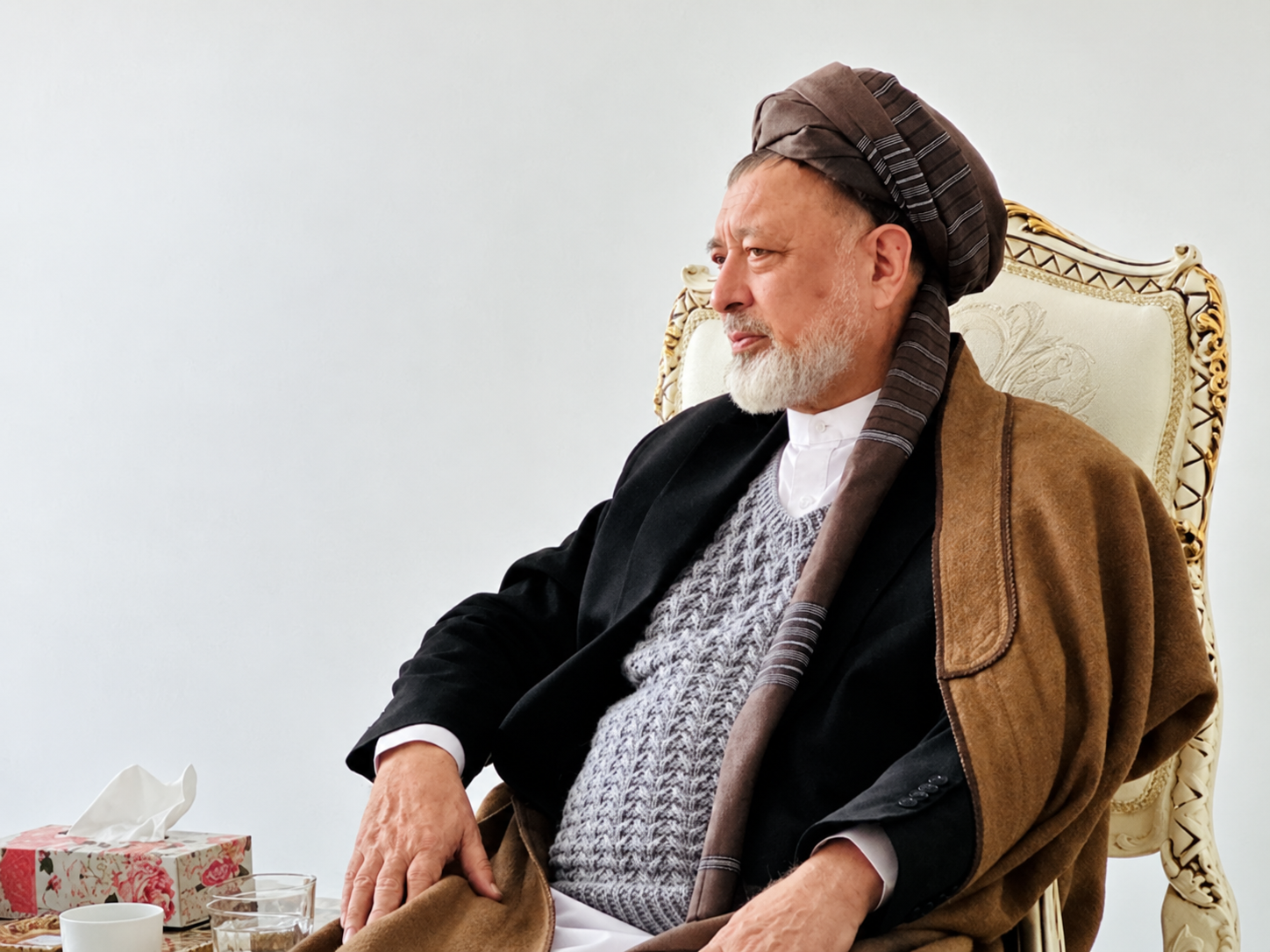
Mohammad Mohaqiq, leader of the People’s Unity Party of Afghanistan, has rejected a recent gathering of pro-Taliban clerics at Kabul University as an ineffective attempt to manufacture legitimacy for Taliban supreme leader Mullah Hibatullah Akhundzada and his decrees, describing mutual endorsement between de facto authorities and state-aligned clerics as a logical fallacy of circular reasoning.
In a statement posted on his Facebook page reacting to the mid-November assembly in Kabul, Mohaqiq argued that a political system’s legitimacy rests on popular consent rather than backing from clerics tied to the ruling apparatus.
Critique of staged endorsements and circular legitimacy
Mohaqiq’s remarks target the political function of the Kabul University gathering—which coincided with Akhundzada’s rare visit to the capital and efforts to elevate his religious standing:
- Popular Vote vs. “Payroll” Endorsements: Mohaqiq stated that legitimate political authority stems from “the people’s votes, not the endorsement of a handful of mullahs on the payroll,” arguing the event failed to secure genuine acceptance for Akhundzada, his administration, or his decrees.
- Circular Reasoning Between State and Clerics: Pointing to the dynamic in which the Taliban administration first selects or approves religious figures and then cites their endorsement to validate the emirate and its leader, Mohaqiq called it a textbook example of circular reasoning in logic and philosophy—where two sides confer credibility upon one another in a self-reinforcing loop.
- Broader Pushback Against Power Monopolization: Mohaqiq’s criticism joins a wider chorus of Afghan political figures and opposition movements arguing that orchestrated gatherings, new religious titles, and conditional offers of administrative posts cannot substitute for an inclusive political order grounded in representation and citizen rights.
Context around the Kabul assembly
The gathering at Kabul University took place amid tightened security measures, campus closures, and heightened scrutiny of internal Taliban dynamics. While Taliban officials and aligned clerics have portrayed the event and its associated religious pronouncements as reinforcing unity and Islamic governance under Akhundzada, critics contend that top-down religious accreditation underscores the absence of broad public and institutional legitimacy.