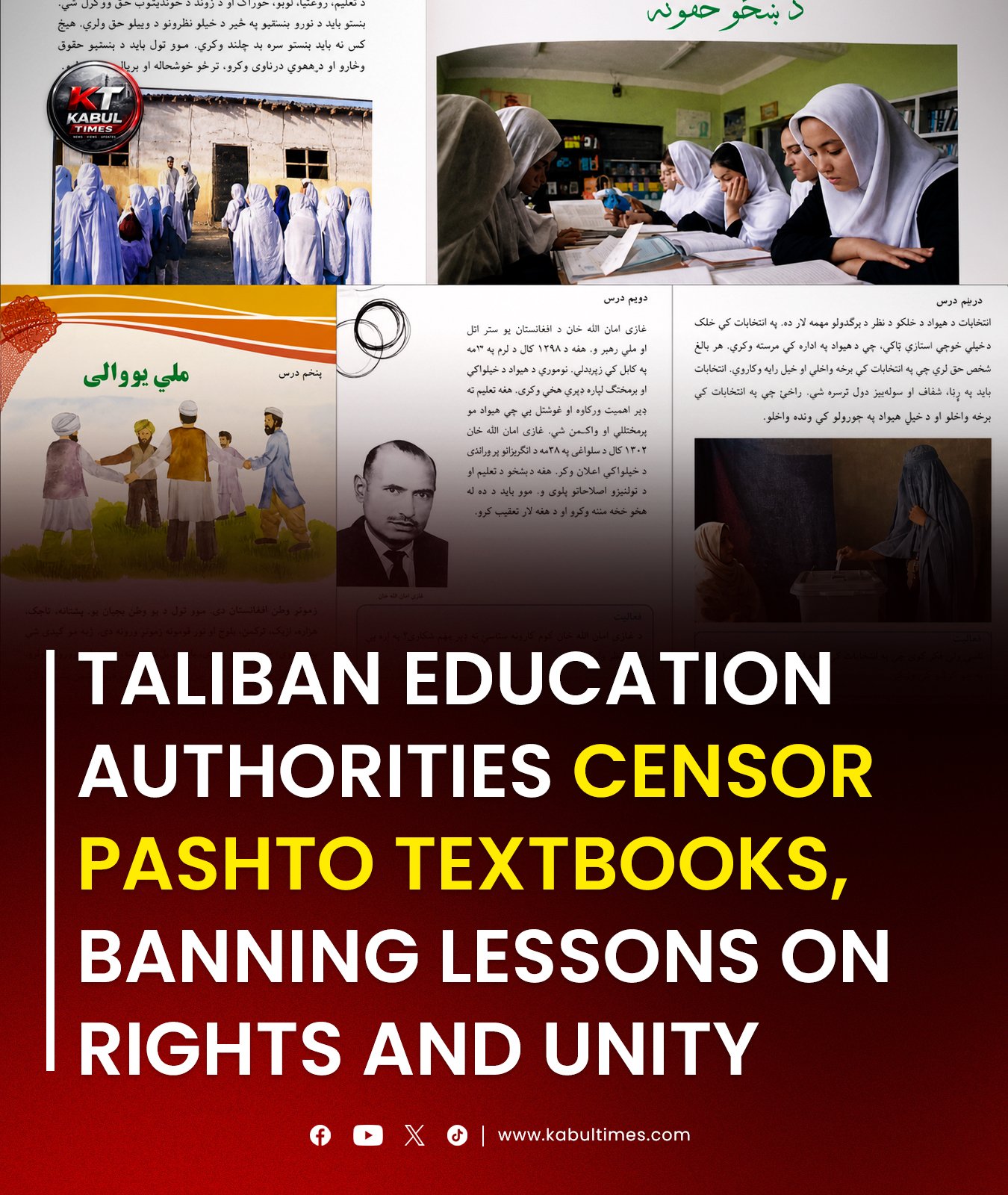
De facto Ministry of Education authorities have instructed administrative staff and teachers at Ali Ahmad Khan Popal High School in Kabul’s Hodkhel area to physically cross out specific chapters and literary works from 8th-grade Pashto textbooks.
Photographic evidence obtained by local media outlets reveals pages where red marker lines have been drawn across entire lessons, prohibiting educators from explaining the material or including the content in academic examinations.
Systemic censorship of national unity, rights, and classical poetry
Sources within the educational facility confirmed that de facto curriculum monitors issued explicit directives to omit foundational literary and civic texts from classroom instruction:
- Targeting Women’s Rights and Civic Unity: Lessons covering basic human rights, civil liberties, gender equity, and national unity were systematically struck out with red lines across student textbooks.
- Suppression of Literary Works: The censorship directly targeted classic Pashto literature, including famous poetic works and essays by prominent Afghan scholar, writer, and political thinker Gul Pacha Ulfat.
- Exclusion from Examinations: School administrators were officially notified that red-lined chapters must be bypassed entirely during classroom lectures and excluded from term evaluation exams.
Escalating ideological restructuring of primary and secondary curricula
The textbook alterations at Ali Ahmad Khan Popal High School highlight a broader, systematic purge of educational materials nationwide:
- Removal of Rights-Based Subjects: Rights monitoring groups have previously documented the removal of dozens of textbook chapters dealing with democratic principles, civil rights, international law, and national symbols across primary and secondary grades.
- Ideological Overhaul: The de facto Ministry of Education has progressively altered public school curricula, stripping general history, fine arts, and civic education while expanding mandatory hours for rigid doctrinal instruction.
- Erasure of Afghan Cultural Heritage: Education experts warn that red-lining established Afghan literary figures like Gul Pacha Ulfat represents an attempt to purge moderate, patriotic, and reformist intellectual history from public schools.
Human rights organizations and Afghan educators continue to warn that the arbitrary destruction of educational content severely undermines literacy, damages critical thinking, and furthers the institutional decay of public education across Afghanistan.