

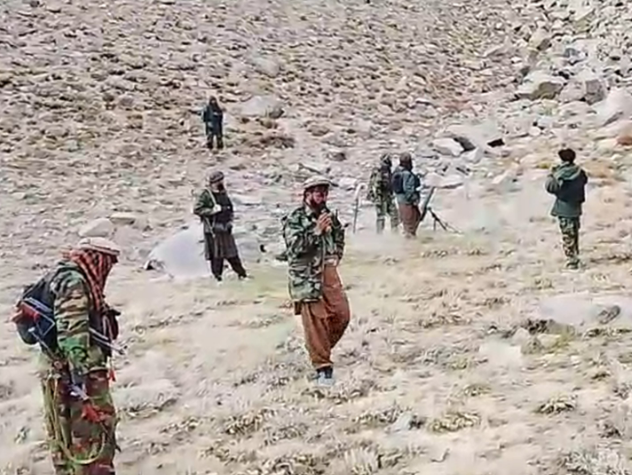
Following the breakdown of democratic governance structures, the Afghanistan Freedom Front (AFF)—commanded by former Afghan Army Chief of Staff General Mohammad Yasin Zia—has emerged as a major armed opposition group challenging the de facto administration’s security monopoly.
The AFF’s continued operational evolution stems directly from systemic governance failures, the complete exclusion of political opposition, and the implementation of coercive social decrees that have severely restricted fundamental civil liberties across urban and rural sectors.
Asymmetric Warfare and Strategic Operational Expansion
Unlike conventional military forces, the AFF relies primarily on mobile, low-footprint guerrilla tactics designed to disrupt de facto operational security while minimizing civilian exposure:
- Urban and Highway Interdiction: Operational cells have conducted targeted ambushes against military vehicles, checkpoints, and command patrols along vital transit routes, including key sectors of Kabul province and the northern highway corridors.
- High-Profile Target Engagement: The Front has expanded its operational footprint to execute long-range standoff strikes and coordinated raids against fortified installations, such as major garrisons and airfield perimeters in Parwan and Kabul.
- Provincial Operations: In addition to tactical urban hits, the Front has maintained persistent pressure across northern and northeastern provinces—including Badakhshan, Parwan, and Nuristan—challenging local security apparatuses.
Political Manifestos and Institutional Proposals
Beyond kinetic engagements, the AFF has sought to frame its armed resistance within a broader constitutional vision.
In published political frameworks, the group advocates for dismantling totalitarian governance structures, restoring a representative constitutional order, securing human rights protections for women and minority communities, and establishing civilian oversight over national defense institutions. However, security analysts note that while the Front’s persistent ambushes continue to inflict operational casualties and challenge state control narratives, the broader resistance movement faces significant hurdles in achieving territorial consolidation without external diplomatic backing or unified opposition structures.