

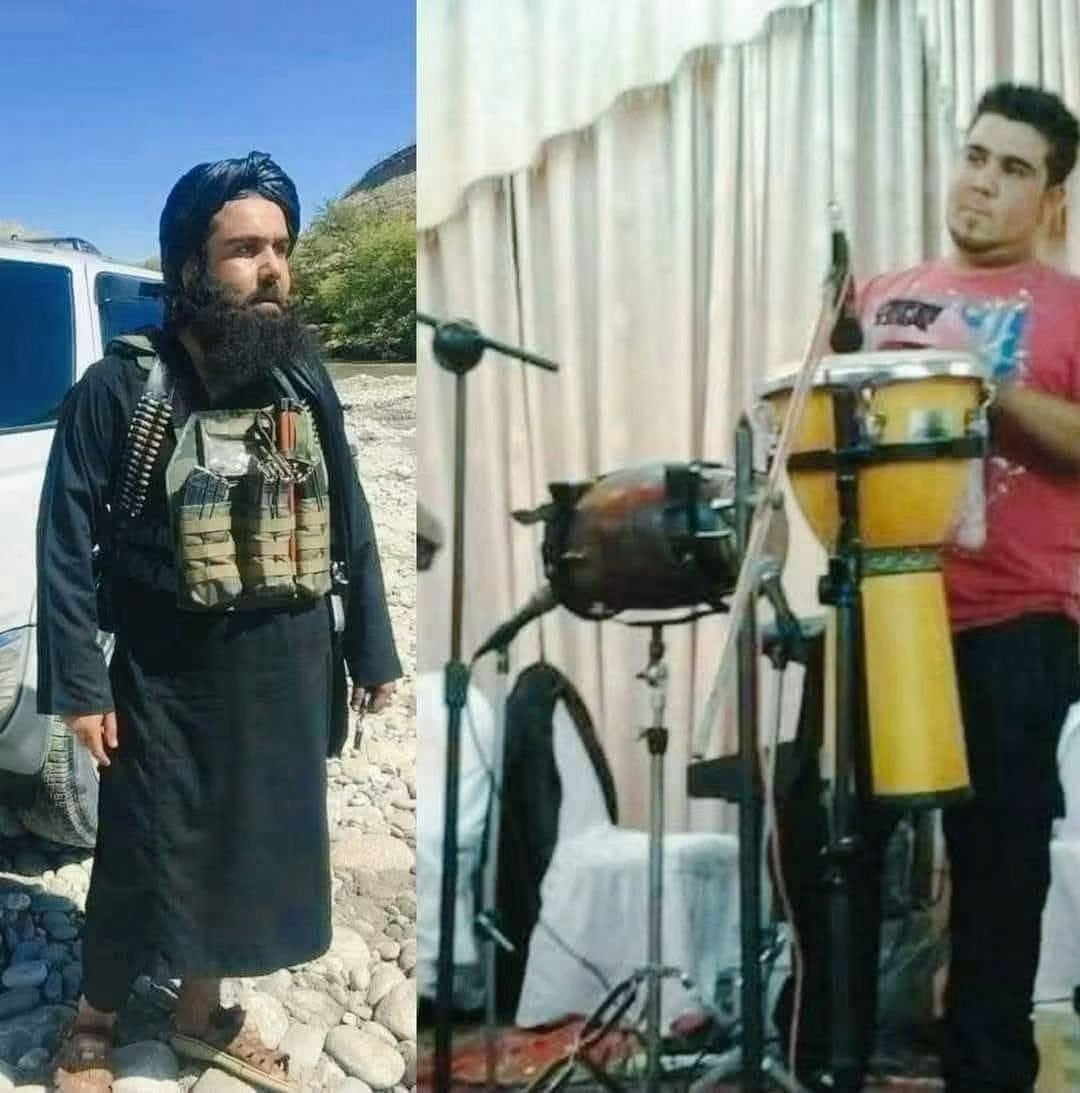
A sharp political satire circulating across Afghan civil society commentary addresses the phenomenon of rapid ideological transformation, critiquing individuals who adopt extreme outward markers of religious devotion to align with the de facto administration’s socio-political expectations.
The commentary contrasts the former reliance on traditional music and entertainment—specifically playing the tambourine (doyra)—with the sudden adoption of lengthy beards, traditional attire, and aggressive pro-regime rhetoric.
Outward Facades versus Genuine Intellectual Integrity
The piece uses irony to dissect the disconnect between physical attire and internal moral conviction, highlighting key social observations:
- Superficial Credentials of Piety: The satire emphasizes that growing a long beard, donning specific attire, or reciting political slogans does not inherently confer wisdom, religious knowledge, or moral authority.
- Instrumentalization of Religion: By treating religious symbols as tools for personal advancement and political survival, opportunistic actors complicate the distinction between sincere faith and calculated performance.
- Separating Ethnicity from Ideological Alignment: While acknowledging that local tribal ties and ethnic affinities influence support for ruling structures in certain districts, the commentary explicitly cautions against generalizing these dynamics to entire communities, noting that citizens across all ethnic groups oppose authoritarian policies and systemic repression.
Standards of True Governance and Integrity
Concluding with a focus on ethical governance, the commentary argues that genuine piety and public service cannot be evaluated through costume or rhetoric alone.
Instead, it asserts that the true measures of leadership and human dignity remain sincerity, justice, intellectual awareness, and a commitment to defending fundamental human rights—virtues that cannot be faked through superficial transformations.