

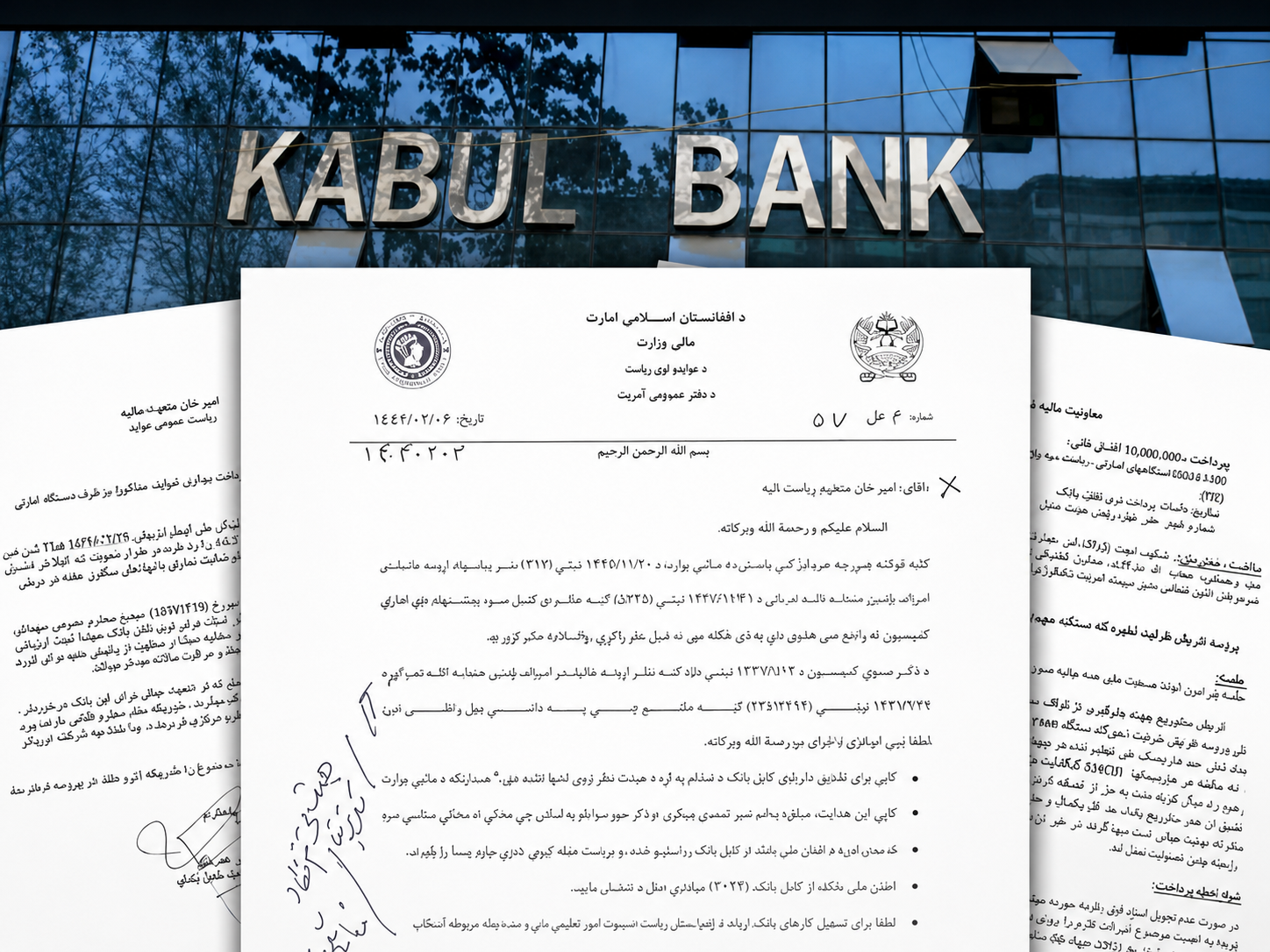
In a major administrative restructuring of Afghanistan’s state-controlled banking sector, supreme leader Hibatullah Akhundzada has issued a formal decree ordering the merger of Kabul Bank with Bank-e-Millie Afghan (BMA).
The decision follows a direct proposal submitted by the de facto Ministry of Finance and subsequent recommendations from the regime’s administrative commission in Kandahar. As a direct result of the merger decree, Kabul Bank’s long-term strategic plan covering the years 2026 to 2028 has been officially postponed.
Institutional Decay and Administrative Consolidation
The directive marks a decisive shift in how the de facto administration handles legacy financial institutions inherited from former governments:
- Background of the Merger Proposal: According to internal administrative records, the Ministry of Finance formally requested the integration to address persistent structural deficits, operational insolvency, and compliance failures within Kabul Bank.
- Freezing Strategic Plans: The postponement of Kabul Bank’s 2026–2028 strategic operational roadmap effectively halts independent capital allocation, digital infrastructure upgrades (including Flexcube system overhauls), and branch expansions previously mandated by central bank regulators.
- Centralization of Decision-Making: The direct intervention by Akhundzada reinforces the ongoing consolidation of economic policy within the supreme leader’s Kandahar-based inner circle, bypassing traditional ministerial autonomy in Kabul.
A Troubled Legacy in Afghanistan’s Financial System
Kabul Bank—once the nation’s largest commercial financial institution—has remained a deeply troubled entity since its catastrophic $900 million fraud and embezzlement scandal in 2010. Following a government bailout and subsequent re-branding as New Kabul Bank under previous administrations, the institution continued to suffer from systemic bad loans, liquidity shortages, and regulatory non-compliance.
Financial analysts note that absorbing Kabul Bank’s toxic balance sheet and operational liabilities into Bank-e-Millie Afghan—the country’s oldest state bank—risks straining BMA’s balance sheet and operational liquidity amid broader international banking sanctions, loss of correspondent banking relationships, and severe domestic cash shortages.