

By Dr Muhammad Shahid
On the same day Pakistani diplomatic envoys met European Union officials in Islamabad for the 10th Bilateral Counterterrorism Dialogue, the human cost of Afghanistan-hosted terrorism claimed four more Pakistani police officers—including a Deputy Superintendent of Police (DSP)—in Karak, Khyber Pakhtunkhwa.
This stark reality underscores a vital truth: while diplomatic expressions of solidarity from Brussels are welcome, their ultimate value rests entirely on whether the EU converts verbal recognition into decisive, punitive action against the terror infrastructure operating from Afghan soil.
What was rstablished in Islamabad
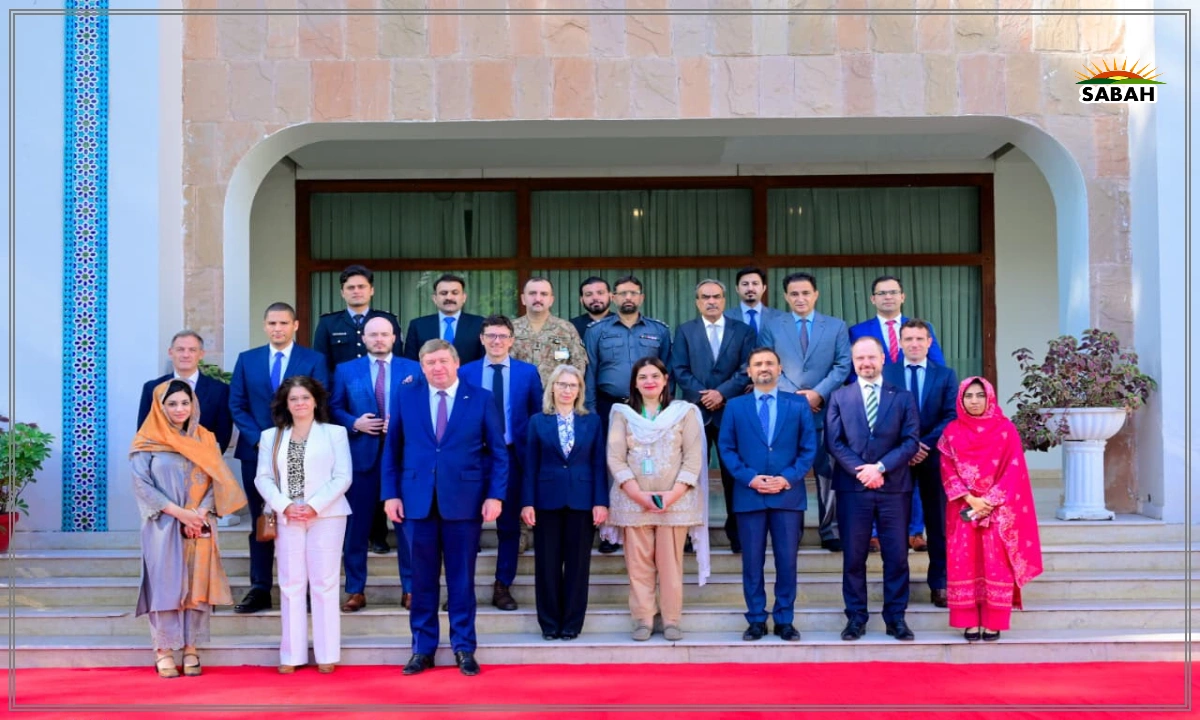
The 10th round of the dialogue, co-chaired by Dr. Fareha Bugti of Pakistan’s Foreign Office and Anna Strazska, the EU’s Special Envoy for Counterterrorism, established a renewed commitment to institutionalized security cooperation.
Brussels formally condemned recent terror attacks across Pakistan, recognized the heavy sacrifices of Pakistani security forces, and acknowledged the grave regional security risks stemming from Afghan territory. Crucially, both delegations agreed to enhance joint efforts against terror financing, online radicalization in cyberspace, and multilateral coordination at the United Nations.
Moving beyond diplomatic pervasiveness on Kabul
While previous joint statements explicitly called on Kabul’s interim regime to prevent Afghan soil from being weaponized against its neighbors, diplomatic releases must not dilute the core issue. The presence of over 6,000 TTP fighters and a broader network of 20,000 militants operating inside Afghanistan—as validated by UN Security Council assessment reports—is not a matter of debate or “bilateral grievance.” It is an established threat to regional stability.
The European Union’s acknowledgement of Pakistan’s security concerns validates Islamabad’s firm stance: the interim Afghan administration is violating its Doha commitments by offering safe havens to anti-Pakistan proxy networks.
Strategic imperatives for the EU partnership
For the Pakistan-EU counterterrorism track to deliver operational results, Brussels must align its technical and diplomatic weight with Pakistan’s security priorities:
- Multilateral sanctions & UNSC listings: The EU must use its co-chairmanship of the Global Counter-Terrorism Forum and its UN Security Council influence to fast-track targeted sanctions, travel bans, and asset freezes against TTP leadership and associated proxy outfits.
- Neutralizing digital terror infrastructure: European intelligence and law enforcement agencies must actively clamp down on digital platforms, encrypted channels, and online recruitment hubs used by TTP and regional separatists, many of which exploit European digital servers.
- Financial interdiction: Technical cooperation must prioritize tracking cross-border hawala networks, illicit crypto-transfers, and extortion rackets that channel funds from abroad into militant safe havens.
Rejecting external conditionalities
Efforts to conflate essential counterterrorism cooperation with external human rights lectures or trade schemes like GSP+ miss the broader geopolitical reality. Pakistan’s counterterrorism operations protect not only its own sovereignty but also serve as the primary bulwark against extremist spillover toward Europe.
Trade access under GSP+ is a mutually beneficial economic arrangement; it cannot be weaponized to distract from the existential security threats Pakistan faces on its western frontier.
Islamabad’s counterterrorism diplomacy is built on strategic clarity and verifiable evidence. By engaging the EU alongside partners in the SCO and Russia, Pakistan is consolidating an international consensus against state-sponsored and sanctuary-based terrorism.
The success of the 10th Pakistan-EU Dialogue will not be measured by diplomatic communiqués, but by concrete UNSC listings, dismantled financial pipelines, and the total neutralization of proxy safe havens across the Durand Line.