

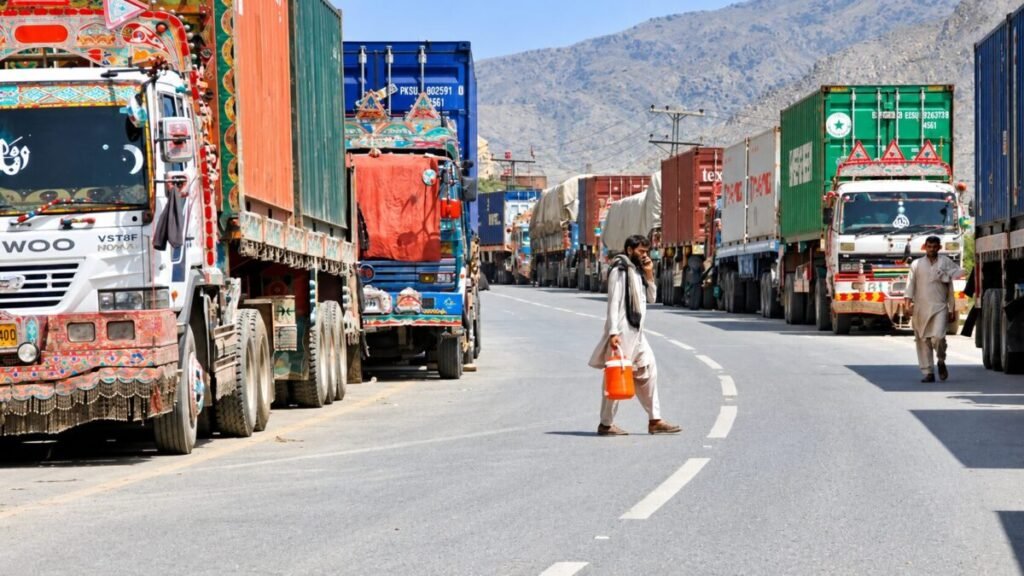
Bilateral commercial trade between Pakistan and Afghanistan has suffered a severe collapse, dropping by 74 percent in the 2025–26 financial year. According to data from the Trade Development Authority of Pakistan, total trade volume fell to $358 million, down from $1.3 billion recorded in the previous financial year.
The dramatic contraction is primarily driven by prolonged border closures and recurring security disputes along major land transit corridors.
Border Disruption and Transit Trade Decay
Key commercial arteries connecting the two neighbors have faced extended operational halts:
- Border Station Closures: The primary border crossing at Torkham was shut following violent border clashes, while additional key transit gates—including Kharlachi, Ghulam Khan, Angur Adda, and Chaman—have operated under heavy restrictions or total halts.
- Plunge in Transit Cargo: Afghan transit trade moving through Pakistani seaports has experienced an acute drop. Shipments declined from nearly 89,000 transit containers valued at $5 billion down to just 11,592 containers valued at $367 million in the recent financial year.
- Shift to Alternative Routes: Facing persistent disruptions at Pakistani border posts, regional traders have increasingly diverted cargo networks toward Iranian transit corridors, permanently shifting long-standing trade patterns.
Economic Impact on Agricultural and Industrial Sectors
The commercial standoff has inflicted heavy losses on business communities on both sides of the frontier:
- Pharmaceutical Exports Hit: Pakistan’s pharmaceutical industry, which previously exported roughly $130 million in medical supplies annually to Afghanistan, faces idle production capacity and lost market share.
- Agricultural Losses: Perishable goods—including potatoes, onions, tomatoes, and fruits—have rotted at border terminals, causing hundreds of millions of rupees in direct losses for farm produce federations and local traders.
- Impact on Border Communities: Transport companies, border laborers, and small enterprises in Khyber Pakhtunkhwa and Balochistan remain heavily impacted by the prolonged economic standstill.
Underlying Security Standoff
The economic impasse reflects broader geopolitical friction. Islamabad maintains strict cross-border controls pending concrete, verifiable measures against cross-border militant groups operating from Afghan territory. Meanwhile, de facto Taliban authorities continue to reject allegations regarding the presence of foreign armed groups, leaving cross-border economic ties deeply strained.