

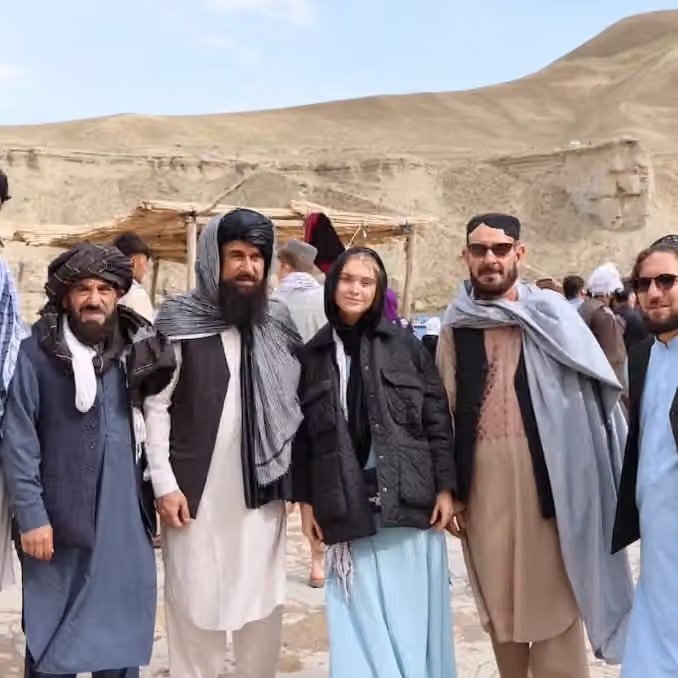
A recent investigative report by the British newspaper The Sun has drawn sharp attention to the growing trend of foreign vloggers and international tourists traveling to Afghanistan, where encounters with de facto security personnel are often filmed and shared online to project a friendly facade.
According to The Sun, several tourists have published videos on social media depicting relaxed interactions with Taliban fighters—sharing tea, posing for photographs, and portraying daily life under de facto rule as calm and secure. Human rights activists have expressed deep concern that these superficial travelogues inadvertently whitewash the regime’s severe systemic abuses and distract international attention from ongoing human rights violations.
Contrasting Realities: Friendly Facades vs. Coercive Enforcement
While travelers such as 32-year-old British tourist Karen Brown reported welcoming receptions and calm encounters, other visitors encountered starkly different conditions.
- Coercive Encounters and Intimidation: Cyclist Ollie Hargreaves recounted instances where Taliban fighters aimed weapons at him at checkpoints and exposed him to violent propaganda footage, highlighting the volatile underlying security climate.
- Controversial Public Statements: American content creator Brent Timm faced severe backlash after posting content celebrating the fifth anniversary of the Taliban’s return to power, though he later acknowledged that millions of Afghans endure an entirely different, heavily oppressed reality under the regime.
- Strategic Tourism Push: Media analysts note that since seizing power in 2021, de facto authorities have actively encouraged niche tourism as a soft-diplomacy tool to foster international normalization and project administrative stability.
Persistent Diplomatic Travel Warnings
Despite content creators insisting that documenting personal travel experiences does not equal political endorsement, human rights monitors emphasize that such imagery obscures pervasive restrictions—including sweeping bans on women’s education and public participation, rampant domestic repression, and the arbitrary detention of foreign nationals.
In response to the trend, the British Foreign Office maintains a strict advisory against all travel to Afghanistan, characterizing the domestic security landscape as extremely dangerous and volatile while warning of the high risk of arbitrary, prolonged detention for foreign citizens.