

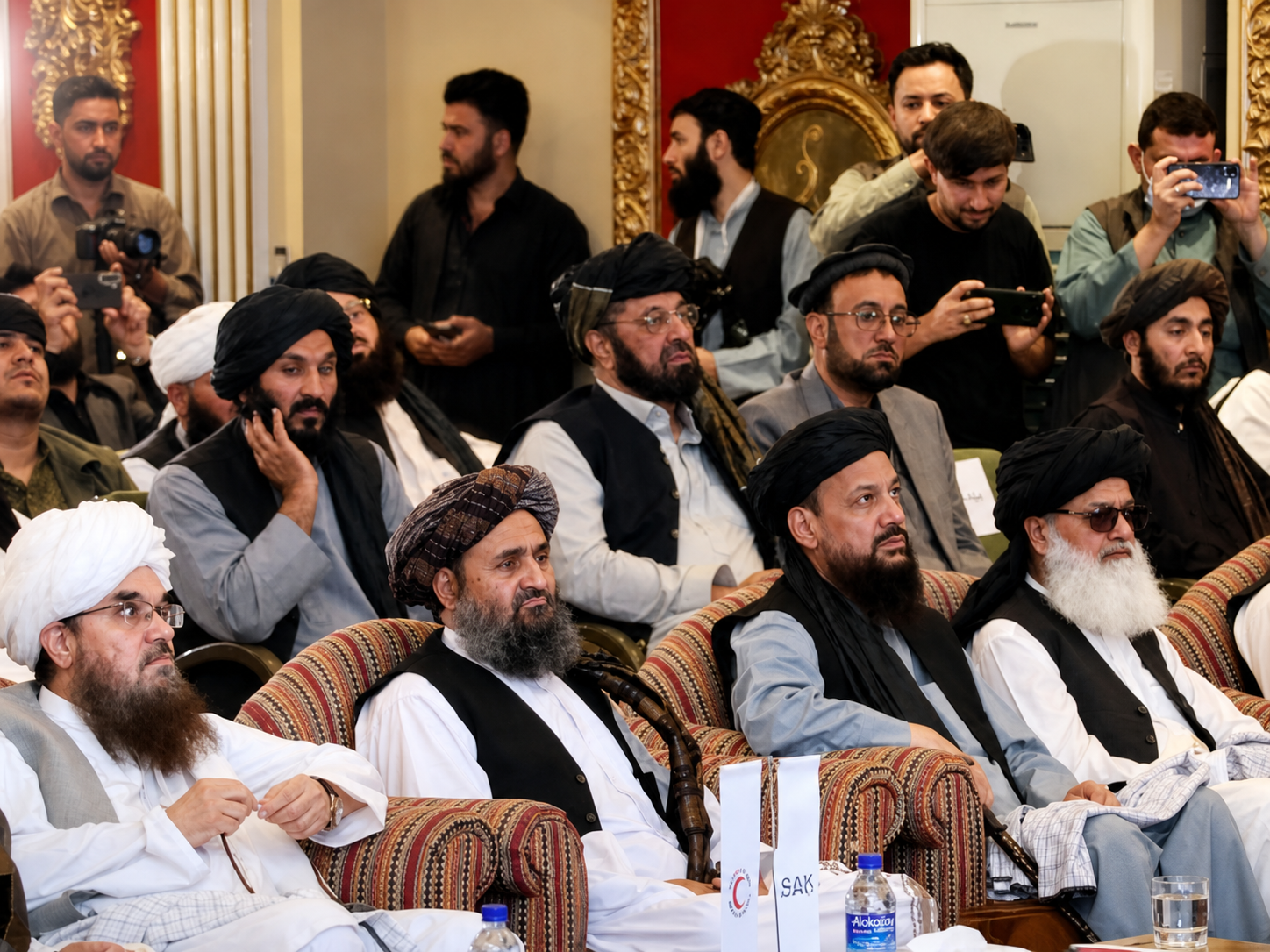
A public fundraising campaign launched by de facto authorities urging private citizens, local merchants, regional investors, and Afghan diaspora communities to channel aid through the Afghan Red Crescent Society (ARCS) has ignited fierce debate over state financial transparency, revenue allocation, and systemic administrative oversight.
De facto officials claim that public contributions entrusted to the Red Crescent will be distributed “transparently and fairly” to combat severe domestic deprivation. However, economic analysts, civil society actors, and international watchdogs view the campaign as an attempt by the regime to offload basic state welfare obligations onto impoverished citizens while diverting formal state revenues toward internal security apparatuses and non-transparent operational accounts.
The Fatalism of State Policy and Revenue Misallocation
The donation drive follows controversial statements by Supreme Leader Hibatullah Akhundzada, who during a previous Eid address instructed affluent citizens to provide charitable assistance while explicitly advising the impoverished population to accept their economic hardship as “divine destiny” (qada wa qadar).
This fatalistic rhetoric has drawn sharp condemnation from human rights advocates and economists, who highlight clear structural contradictions in the regime’s economic governance:
- Opaque National Revenues: Despite de facto claims of robust domestic tax collection, customs enforcement, and mineral extraction revenues, the administration maintains total secrecy regarding the national budget, off-budget allocations, and official revenue spending priorities.
- Prioritization of Security Operations: The majority of collected state revenues continue to be directed toward sustaining expanding security networks, virtue enforcement units, and ideological institutions, leaving basic social safety nets, public health, and disaster relief underfunded.
- Erosion of Institutional Independence: By leveraging the Afghan Red Crescent Society—historically a neutral, non-governmental humanitarian body—for state-directed fundraising, de facto authorities risk compromising the organization’s independent status and international aid partnerships.
Structural Accountability Deficits
While de facto leadership frames public poverty as an unalterable spiritual condition, policy analysts emphasize that widespread economic distress is directly perpetuated by official decrees—including sweeping bans on female employment in aid agencies and international business isolation. Critiques mount that appealing to public charity without providing institutional financial audits or structural economic relief serves only to institutionalize systemic poverty while shielding state coffers from public accountability.