

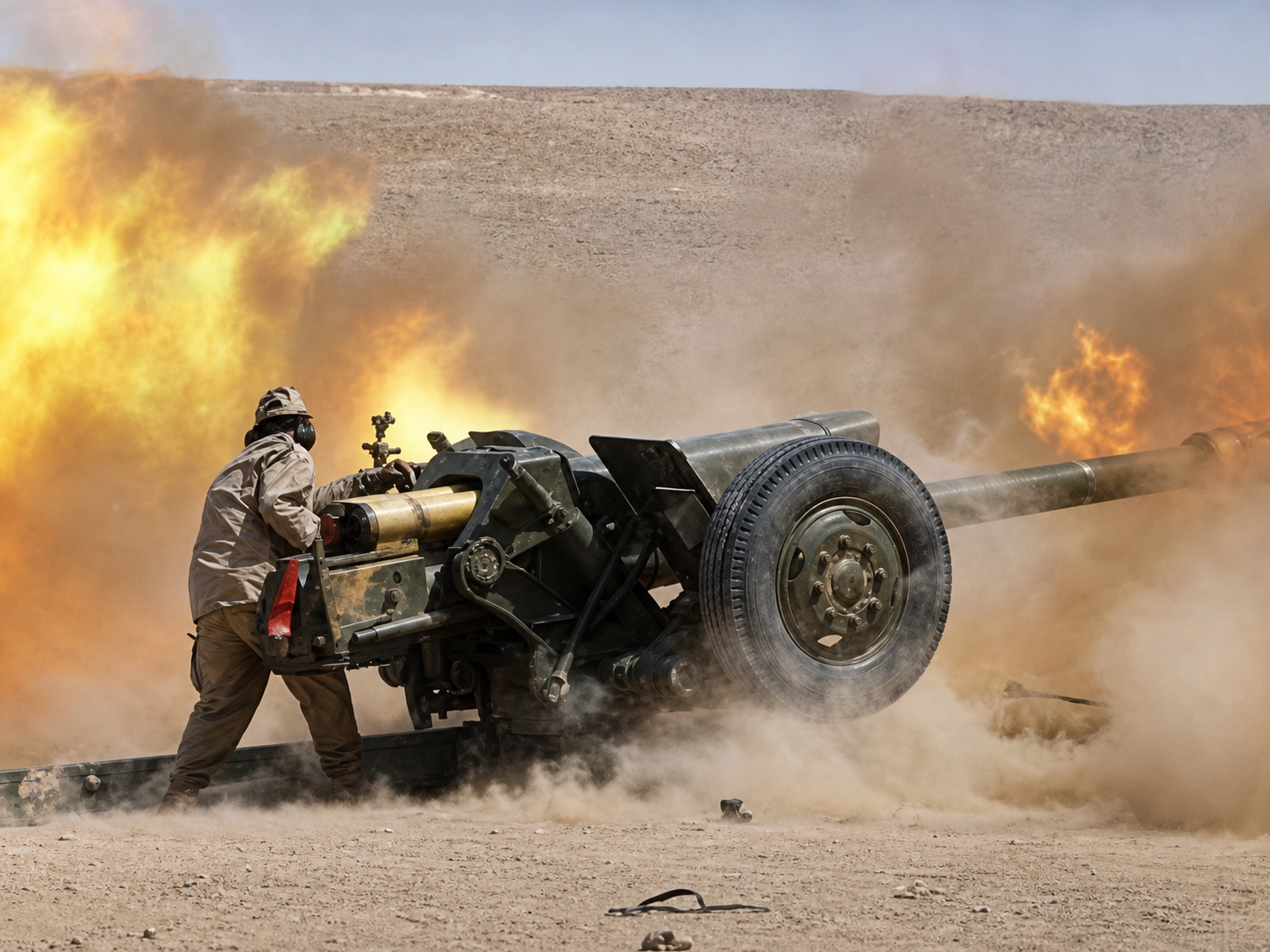
As strategic friction and cross-border security flare-ups persist along the Durand Line, the de facto Taliban administration has intensified its public military messaging. State-linked media channels and official corps accounts have increasingly broadcast footage of heavy artillery training, rocket-launcher operations, and the mechanical refurbishment of aging Cold War-era armored vehicles and tanks.
The high-profile display of military preparedness highlights the regime’s efforts to project strength and institutional readiness amid heightened geopolitical posturing with neighboring Pakistan. Following repeated cross-border airstrikes and security standoffs across eastern and southern frontier provinces, de facto defense officials have sought to demonstrate domestic deterrence by mobilizing mechanized units and highlighting technical maintenance initiatives.
Military analysts note that while the de facto armed forces have increasingly incorporated captured Western military hardware left behind during the 2021 foreign withdrawal, ongoing efforts to repair and deploy legacy Soviet-era hardware—such as T-series tanks and heavy artillery pieces—point to an institutional desire to institutionalize a conventional mechanized force. Technical partnerships and maintenance proposals involving regional actors have similarly targeted the restoration of archived armored stock and grounded aviation assets.
However, defense experts caution that while propaganda broadcasts emphasize heavy firepower, the actual operational readiness and logistical sustainability of aging Cold War inventories remain severely constrained by a lack of advanced spare parts, skilled technicians, and integrated command-and-control networks.
For regional observers, the theatrical display of military mobilization serves a dual purpose: countering external pressure from neighboring states while rallying domestic nationalist sentiment amid deepening internal socioeconomic grievances.