

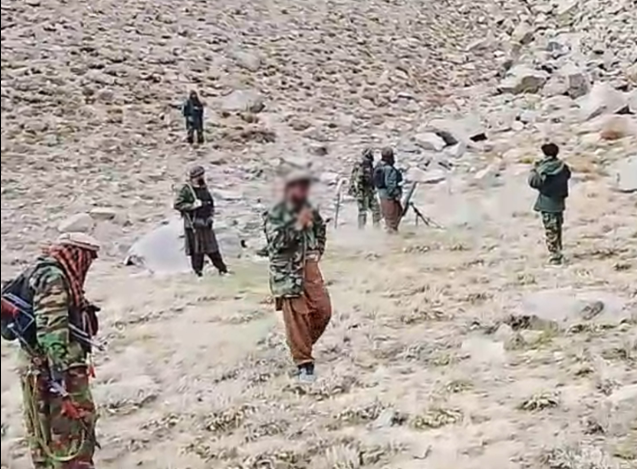
A critical analysis published by Asia Times reveals that the de facto Taliban administration is progressively losing its grip on territorial authority across Afghanistan as armed opposition groups expand operations far beyond traditional northern strongholds. While the regime previously based its core argument for domestic and international legitimacy on establishing absolute stability, the rapid geographical dispersion of resistance fronts is directly shattering that narrative.
According to security assessments cited in the analysis, armed resistance has now manifested across as many as 26 provinces, shifting from localized northern insurgencies into a multi-regional security burden. The emergence of new armed campaigns—such as the Afghanistan United Front in the southern provinces alongside active operations by the National Resistance Front (NRF) and the Afghanistan Freedom Front (AFF)—forces the ruling regime to confront simultaneous, decentralized security threats on multiple geographical axes.
This widening operational footprint exposes the severe structural limits of the de facto government’s military posture. Despite aggressive search operations, heavy troop redeployments, and severe civilian intimidation, the regime’s security forces are struggling to contain guerrilla tactics that exploit rugged terrain and growing local alienation. Rather than achieving complete nationwide pacification, the administration’s authoritarian policies have fostered the exact conditions for sustained, grinding conflict.
For neighboring states, including Pakistan, the decentralization of armed resistance and the erosion of central control in Kabul signal prolonged regional uncertainty. Persistent security vacuums, cross-border friction, and the presence of uncontained militant factions inside Afghanistan continue to threaten border security, disrupt regional transit routes, and drive ongoing displacement pressures across South Asia.
International security observers conclude that mono-factional rule and coercive control cannot deliver permanent peace. Without an inclusive political process, restoration of fundamental human rights, and accountable institutional governance, the de facto regime will face deepening internal vulnerability and structural breakdown.