

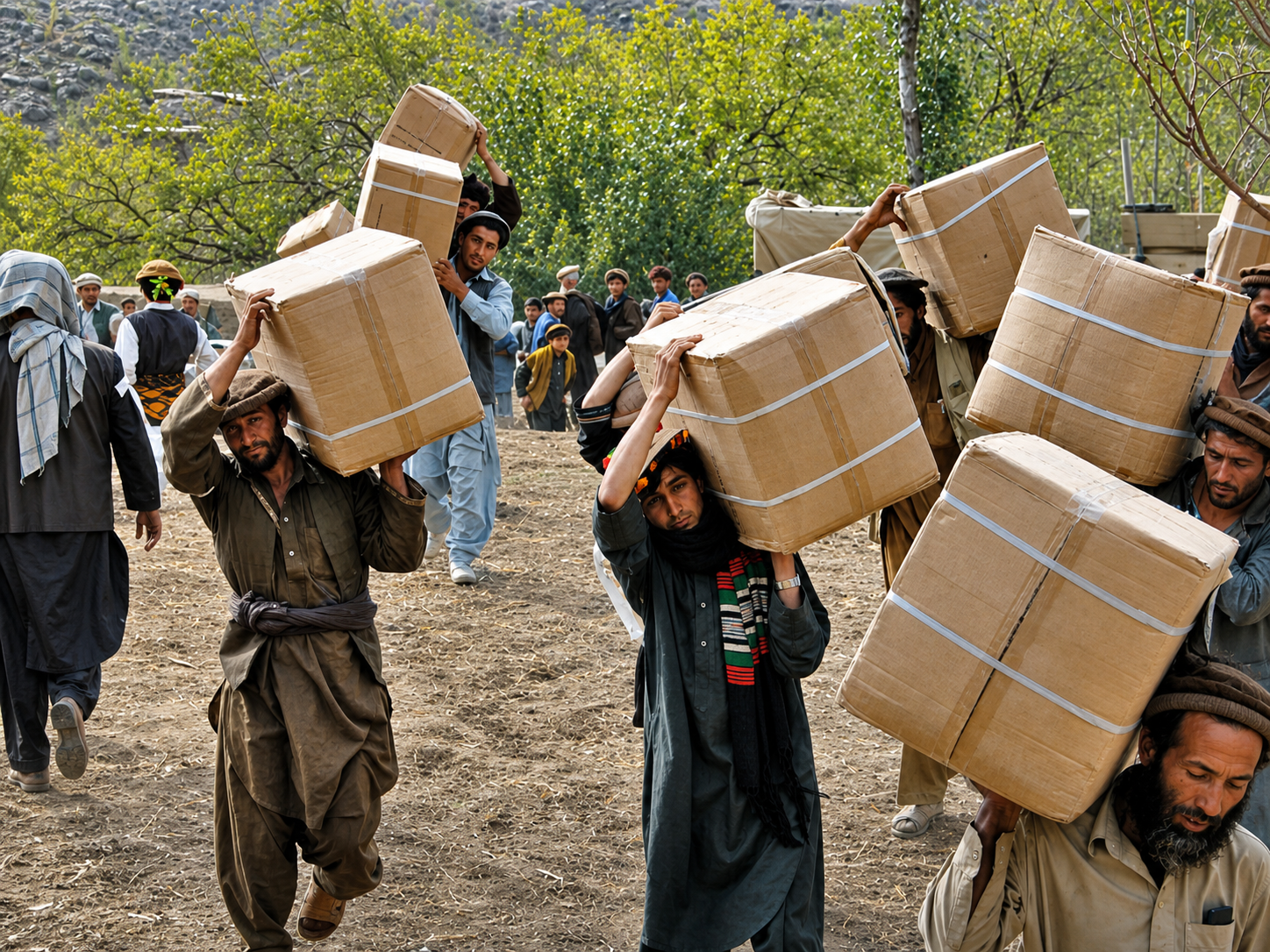
BRUSSELS/KABUL — International developmental and humanitarian monitors continue to sound the alarm over the compounding barriers obstructing aid distribution across Afghanistan. According to recent evaluations by the European Commission’s Directorate-General for European Civil Protection and Humanitarian Aid Operations (ECPHAO), the bloc channeled approximately €771 million in vital humanitarian assistance to vulnerable populations between 2020 and 2024.
The Impact of Systemic Restrictions
Despite substantial financial inputs, the systematic restrictions imposed by the Taliban regime on women and girls have severely compromised the efficiency and reach of these programs.
ECHO highlighted that bans on female humanitarian workers, combined with sweeping limitations on women’s freedom of movement and public participation, have created irreducible coverage gaps. Essential sectors—particularly protection, community healthcare, and targeted education—face daily administrative bottlenecks that prevent life-saving aid from effectively reaching the most vulnerable households.
A Complex Operational Environment
Humanitarian agencies note that operating under the de facto administration presents a continuous dilemma: balancing the critical need to prevent mass starvation and systemic collapse with the refusal to legitimize oppressive governance structures.
As regional partners and international bodies evaluate future aid frameworks, monitors emphasize that sustainable humanitarian access cannot be guaranteed unless fundamental rights and protections for female aid personnel and local populations are unconditionally restored.
This UN Press Conference on Afghanistan Restrictions provides additional context on how intensifying restrictions on women continue to impact daily life and humanitarian efforts.