

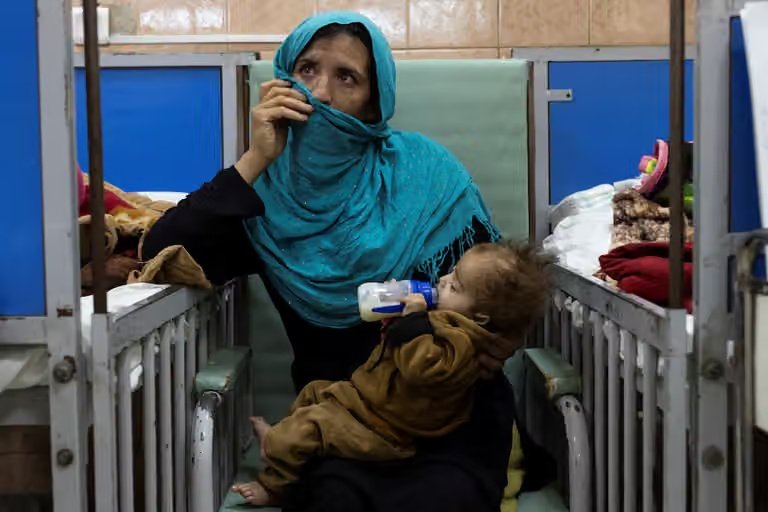
More than half a million children in Afghanistan have been admitted to health facilities for severe malnutrition over the past nine months, according to the United Nations Children’s Fund (UNICEF).
UNICEF says around 3.7 million children across Afghanistan are suffering from malnutrition, including nearly one million facing severe acute malnutrition and an increased risk of death. The crisis is placing significant pressure on Afghanistan’s health and nutrition services.
UNICEF Representative in Afghanistan Tajuddin Oywale said young and vulnerable children have been particularly affected. Nearly 40 percent of children admitted to hospitals for severe wasting and related complications are infants under six months old, while children under two account for 83 percent of severe acute malnutrition cases.
The agency also estimates that nearly half of Afghanistan’s children face moderate or severe food insecurity. Severe food insecurity can significantly increase the risk of stunting among children during periods of peak malnutrition.
UNICEF identified droughts, floods, climate change, regional instability and the return of refugees from neighboring countries as factors adding pressure on vulnerable families.
The agency also warned that funding shortages are affecting nutrition services. More than 100 treatment centers for severely malnourished children have reportedly closed this year, while many other facilities serving children and pregnant and breastfeeding women are facing financial difficulties.
UNICEF says 57 percent of the funding required for nutrition services in Afghanistan remains unmet and has called for sustained humanitarian assistance.