

By Dr Muhammad Shahid
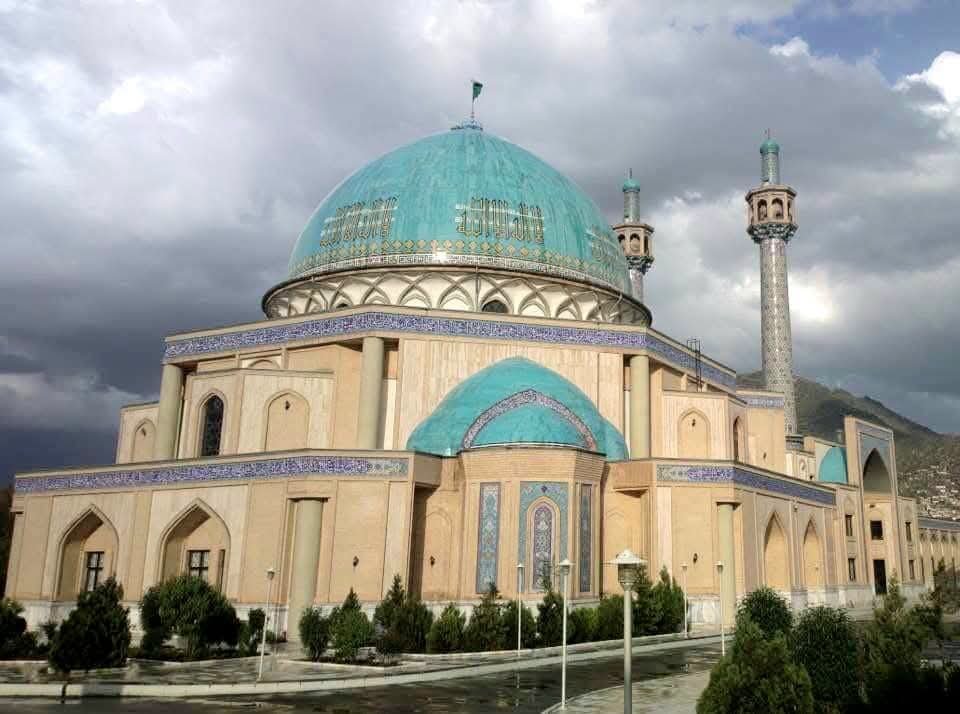
The raid this past weekend on Kabul’s Khatam al-Nabieen seminary — one of Afghanistan’s most prominent Shia religious institutions — was, on its face, a domestic property dispute. Taliban officials say the complex sits on state-owned land; the seminary’s trustees say they hold legal title and call the real motive political and sectarian. But disputes over Shia religious space in Afghanistan rarely stay purely domestic for long, given Iran’s long-standing, if complicated, sense of responsibility toward the country’s Shia and Hazara communities. The question worth asking is whether this incident has the ingredients to become a genuine irritant in Tehran-Kabul relations, or whether it will pass the way several similar episodes have before it.
The case for strain
There are real reasons Tehran could find this episode hard to ignore. Iran has historically cast itself as an informal protector of Afghanistan’s Shia population — a role rooted in shared Twelver Shia identity, the Persian-speaking Hazara community’s cultural ties to Iran, and decades of Iranian religious and educational investment in institutions like Khatam al-Nabieen itself. The seminary was founded by a cleric, the late Ayatollah Mohammad Asif Mohseni, whose intellectual and religious lineage runs through the same Shia scholarly networks Iran has long cultivated across the region.
The optics of the raid are also unusually stark: armed Taliban personnel surrounding a seminary, cutting its power, detaining dozens of clerics and students, and doing so in the same window as the closure of an affiliated Shia broadcaster, Tamadon TV. For an Iranian public and clerical establishment attuned to the treatment of Shia minorities abroad, images of Taliban forces entering a Hussainiya and detaining religious scholars are the kind of material that can generate genuine domestic pressure on Tehran to respond, even if the government would prefer to stay quiet.
There is also history here. Iran and the Taliban have come close to open conflict before over precisely this kind of grievance — most notably after the Taliban’s 1998 killing of Iranian diplomats at the Mazar-e-Sharif consulate, an episode that nearly triggered an Iranian military response. More recent incidents — the Taliban’s earlier closures of Shia religious institutions, restrictions on Muharram observances, and periodic reports of pressure on Hazara communities — have drawn concern from Afghanistan’s Shia Ulema Council and from Iran-aligned religious networks, even where Tehran’s official response has been muted.
The case against strain
Set against this, however, is a relationship that has proven remarkably durable despite recurring friction of exactly this kind. Since 2021, Iran has pursued a deliberately pragmatic course with the Taliban: it never fully closed its embassy in Kabul, it formalized diplomatic ties by handing over the Afghan embassy in Tehran to Taliban-appointed diplomats, and Taliban officials have publicly signaled solidarity with Iran on regional security matters. Tehran’s calculation has consistently prioritized state-to-state stability, border security, water-sharing disputes over the Helmand River, and migration management over taking a strong public stand on Shia treatment inside Afghanistan.
Iran has also had ample opportunity to react more forcefully to sectarian friction points before this one — including previous closures at Khatam al-Nabieen itself, dating back nearly two years — and has generally chosen not to. Analysts who track the relationship note that Iran’s public rhetoric has often downplayed Taliban-Shia tensions, with Iranian state media at times amplifying the Taliban’s own claims that it is not targeting Shia communities as such, distinguishing the Taliban from the anti-Shia violence carried out by its rival, ISKP. It is also notable that no independent evidence has surfaced tying Iran directly to the Khatam al-Nabieen dispute itself; the confrontation so far reads as a domestic Taliban legal and political maneuver rather than a bilateral one.
Iran’s restraint is also shaped by the wider regional picture. With tensions elevated after Iran’s 2025 conflict episodes and continuing friction with Washington, Tehran has strong incentives to keep its eastern border quiet and its relationship with Kabul transactional rather than values-driven. A Taliban government that has offered rhetorical solidarity against Western pressure is, in that calculus, more useful intact than alienated over a seminary dispute.
What could change the calculus
If this remains an isolated, unresolved property dispute, it is unlikely by itself to reshape Iran-Afghanistan relations. What could change that assessment: a rise in the number of detainees or reports of serious harm to clerics and students; the closure spreading to other prominent Shia institutions beyond Khatam al-Nabieen and Tamadon TV; sustained, large-scale protests that the Taliban meets with further force; or domestic Iranian political pressure — from clerical circles, Hazara diaspora communities, or hardline factions — that makes silence politically costly for Tehran ahead of other flashpoints in the relationship.
For now, the more likely outcome is muted concern rather than open rupture: expressions of concern through religious and civil-society channels, perhaps some diplomatic messaging behind closed doors, but no major shift in a relationship that both governments currently have strong incentives to preserve. Whether that holds will depend less on this single raid than on whether the Taliban’s Ministry of Justice treats it as a one-off enforcement action or the opening move in a broader campaign against Shia religious infrastructure in Kabul.
What’s already clear is that the raid has rippled through Afghanistan’s Shia community itself — in public protests, clerical condemnation, and appeals from the Ulema Council. Whether that ripple travels further, to Tehran’s own calculus on the Taliban, is the open question this episode leaves behind.
–Ends