

By Dr Muhammad Shahid
Recent developments across South Asia have laid bare the volatile convergence of geopolitics, energy competition, and cross-border security dynamics. From a high-stakes energy deal inked in Kabul to a fresh round of airstrikes along the western frontier, the region is rapidly turning into a theatre of competing interests — one that vindicates Islamabad’s long-standing security assessments rather than complicating them.
The Delta Deal and the return of western-adjacent energy diplomacy
On September 7, Afghanistan’s Taliban-run Ministry of Mines and Petroleum signed an oil and gas exploration agreement with Saudi Arabia’s Delta International, covering the Kushk-Tirpul basin between Herat and Badghis provinces — roughly 22,000 square kilometres of territory. The initial phase commits $200 million, though Taliban officials have floated a potential value of up to $50 billion over a 25-year term, and the agreement includes a feasibility study for a proposed 700-kilometre gas pipeline running from Herat toward Spin Boldak, near the Pakistani border.
What turned a regional energy story into an international one was the presence of Zalmay Khalilzad — the former US special envoy who negotiated the 2020 Doha Agreement — at the signing ceremony. The US State Department was quick to distance itself, insisting Khalilzad held no official role and was acting “in a personal capacity.” That disclaimer will carry little weight with ordinary Afghans or neighbouring capitals: for a regime still starved of international recognition, Khalilzad’s presence functioned as a veneer of American validation, regardless of his actual title.
The deal has not gone unchallenged even within Afghan political circles. Hizb-e-Islami leader Gulbuddin Hekmatyar publicly warned that awarding strategic resource contracts through an administration lacking constitutional legitimacy or broad national consensus risks turning Afghanistan into a venue for renewed regional competition and proxy conflict — explicitly invoking the failed Unocal-Delta pipeline negotiations of the 1990s as a cautionary precedent. His warning underlines a structural problem that no amount of Gulf capital or diplomatic theatre can paper over: a pipeline is only as durable as the political order that hosts it, and Afghanistan’s is neither recognised nor stable.
There is a second layer of irony here that gives the story its real edge. Barely a month before the Delta signing, Saudi Arabia had joined Pakistan and Turkey in the Makkah Joint Defence Agreement, a pact built around collective deterrence. Riyadh striking a landmark energy deal with the very regime Pakistan accuses of sheltering militant networks — weeks after committing to Pakistan’s security architecture — exposes the limits of transactional alignment in this region. Gulf capital and South Asian security interests are not moving in the same direction, and Islamabad is the party left absorbing that contradiction.
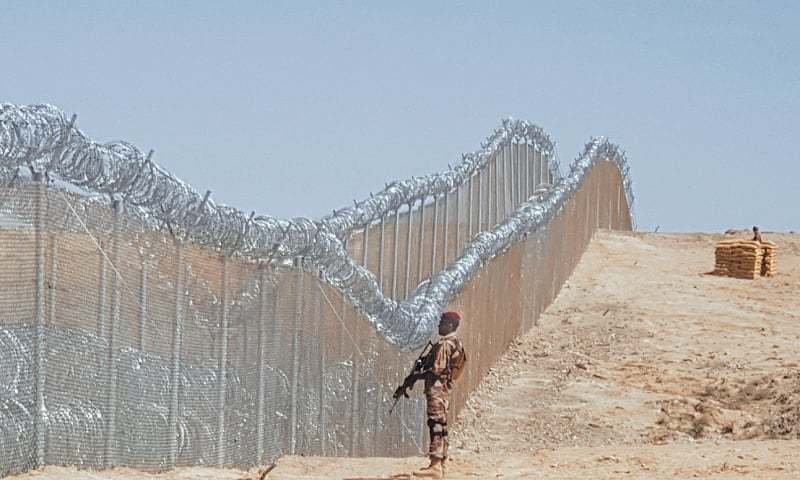
More fundamentally, a pipeline terminating near the Pakistani frontier, built to eventually feed South Asian markets, cannot function as a bypass around Pakistan — it depends on Pakistani transit, security guarantees, and market access to have any commercial logic at all. Kabul can sign as many exploration contracts as it likes; without Islamabad’s cooperation, the “corridor” ends at a fence.
The border flashpoint and the cost of cross-border militancy
While foreign capital courts Kabul, the reality on the ground has moved in the opposite direction. On September 18, a suicide bomber struck a mosque inside a police compound in Kohat, and eight gunmen stormed adjoining offices, triggering a 20-hour gunbattle. At least 21 people — most of them police officers — were killed and more than 100 wounded. The next day, six security personnel, including two army officers, were killed in a shootout in neighbouring Hangu. No group had claimed either attack, though suspicion has fallen on Tehrik-e-Taliban Pakistan (TTP), which Islamabad has long accused Kabul of sheltering.
Pakistan’s response came within days. On September 21, the Pakistan Air Force struck what security officials described as militant hideouts in Kunar and Paktika provinces, following a coordinated intelligence-based ground operation around Kohat, Hangu, and Thal. Islamabad claimed 28 militants were killed; Kabul put the toll at three. Pakistan’s Information Ministry stated plainly that the country “has both the will and the capability to eliminate terrorist threats wherever they are,” while calling on Kabul to take “credible, verifiable and sustained measures” against militant sanctuaries on its soil.
This is not an isolated flare-up. It is the latest entry in a pattern that has held since February, when a wave of Pakistani strikes in Nangarhar and Paktika — following the Islamabad mosque bombing and attacks in Bajaur and Bannu — triggered retaliatory Afghan strikes and the worst clashes between the two sides in years. Afghanistan’s Taliban government continues to reject Pakistan’s core allegation, but their denial is increasingly difficult to sustain against a body count that keeps climbing on one side of the border only.
The strategic imperative for regional accountability
Read together, these two stories are not separate tracks — they are the same story. A Taliban administration courting billions in Gulf investment and Western-adjacent legitimacy on one hand, while militant networks it has failed to dismantle continue to launch attacks into Pakistan from its territory on the other, cannot indefinitely present itself as both an emerging economic partner and a responsible security actor. Investors and diplomats engaging Kabul on the energy file are, whether they acknowledge it or not, also making a bet on a security environment that Pakistan’s own casualty figures suggest is not stabilising.
For Islamabad, the events of the past two weeks reinforce rather than undercut its long-standing position: durable regional stability cannot be built on speculative pipeline announcements and photo-op diplomacy while sanctuaries and staging grounds remain active across the border. Airstrikes and heightened border posture are not the preferred instruments of policy — they are what follows when appeals for “credible, verifiable and sustained” action go unanswered. Until Kabul closes the gap between the investment climate it is trying to project and the security reality it has failed to control, Pakistan’s demand for regional accountability will keep being proven right in the worst possible way — in Kohat, in Hangu, and in every attack still to come.