

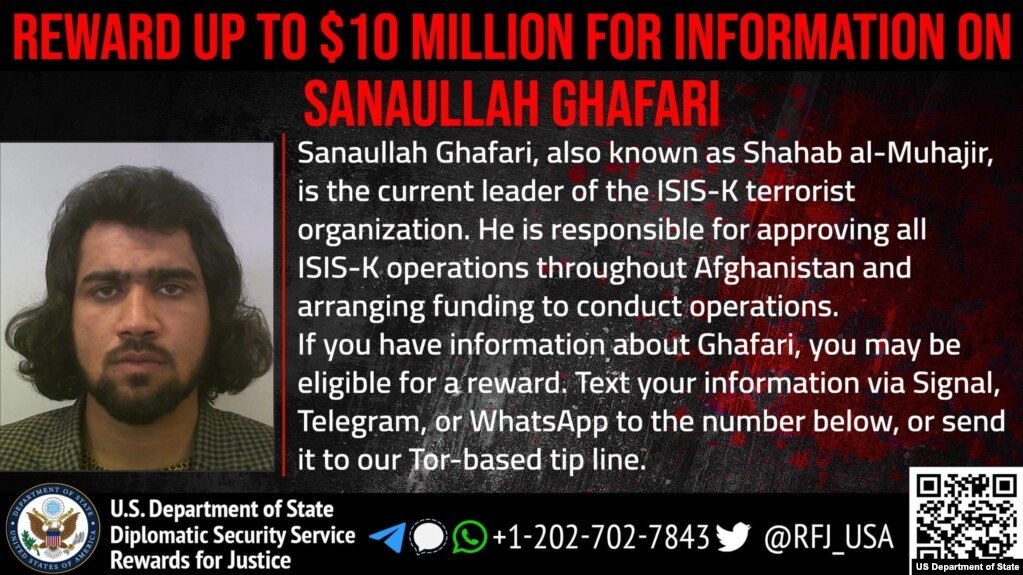
KABUL: The Islamic State-Khorasan Province (ISIS-K/ISIL-K) leader Sanaullah Ghafari, also known by his nom de guerre Shahab al-Muhajir, remains alive and is believed to be operating from Afghanistan’s eastern Kunar province, according to findings reportedly contained in the latest report of the UN Security Council’s Analytical Support and Sanctions Monitoring Team.
According to a summary circulating on social media and also shared online by Afghanistan analyst Zarghuna Wazir, citing what she described as the 18th report of the Monitoring Team, several UN member states have confirmed that Ghafari — listed by the Security Council’s ISIL/Al-Qaida Sanctions Committee under reference QDi.431 — continues to lead ISIL-K and was “reportedly located in Kunar Province.” The report is said to add that Ghafari was likely targeted in an operation while exiting a training facility linked to Jamaat-ul-Ahrar in Kunar, and “possibly” left injured.
A recurring finding
The characterization is consistent with the Monitoring Team’s reporting pattern over the past two years. An earlier UN report, reviewed by international media in February 2024, used near-identical language, stating that Ghafari had been “likely targeted while exiting a Jamaat-ul-Ahrar training centre in Kunar, possibly leaving him injured,” and that several member states had confirmed he remained alive after a Taliban raid attempt. Kunar and neighboring Nangarhar have long been identified by the UN as ISIL-K’s traditional core operating area, even as the group has since dispersed personnel to Badakhshan, Herat, Nimroz and Kabul.
Ghafari has led ISIL-K since June 2020 and was placed under UN sanctions — an assets freeze, travel ban and arms embargo — in December 2021 for his role in financing, planning and directing the group’s operations across Afghanistan and the wider region.
Washington has separately offered a reward of up to $10 million for information leading to his identification or location; the reward poster circulated alongside the tweet cites an $8 million figure, apparently referencing an earlier or differently sourced bounty listing.
Context: a persistent regional threat
The renewed attention comes as the UN Security Council has intensified its focus on Afghanistan-based militancy in recent weeks. Briefings to the Council on September 16 and around the September 11 anniversary cited ISIL-K, Al-Qaida and the Tehreek-e-Taliban Pakistan (TTP) as continuing threats emanating from Afghan soil, with the Monitoring Team’s most recent assessments describing Afghanistan as a “permissive environment,” particularly for TTP.
Pakistani security forces have separately carried out repeated cross-border strikes this year targeting Jamaat-ul-Ahrar and other militant camps in Kunar, Paktia and Paktika provinces, including under an operation Islamabad has named “Ghazab Lil Haq,” citing links between these sanctuaries and terrorist attacks inside Khyber Pakhtunkhwa, Balochistan and Sindh.
–Ends
This story is based on reports linked to a UN Security Council Monitoring Team document circulated on social and other media platforms; Kabul Times will update this report if more info becomes available.