

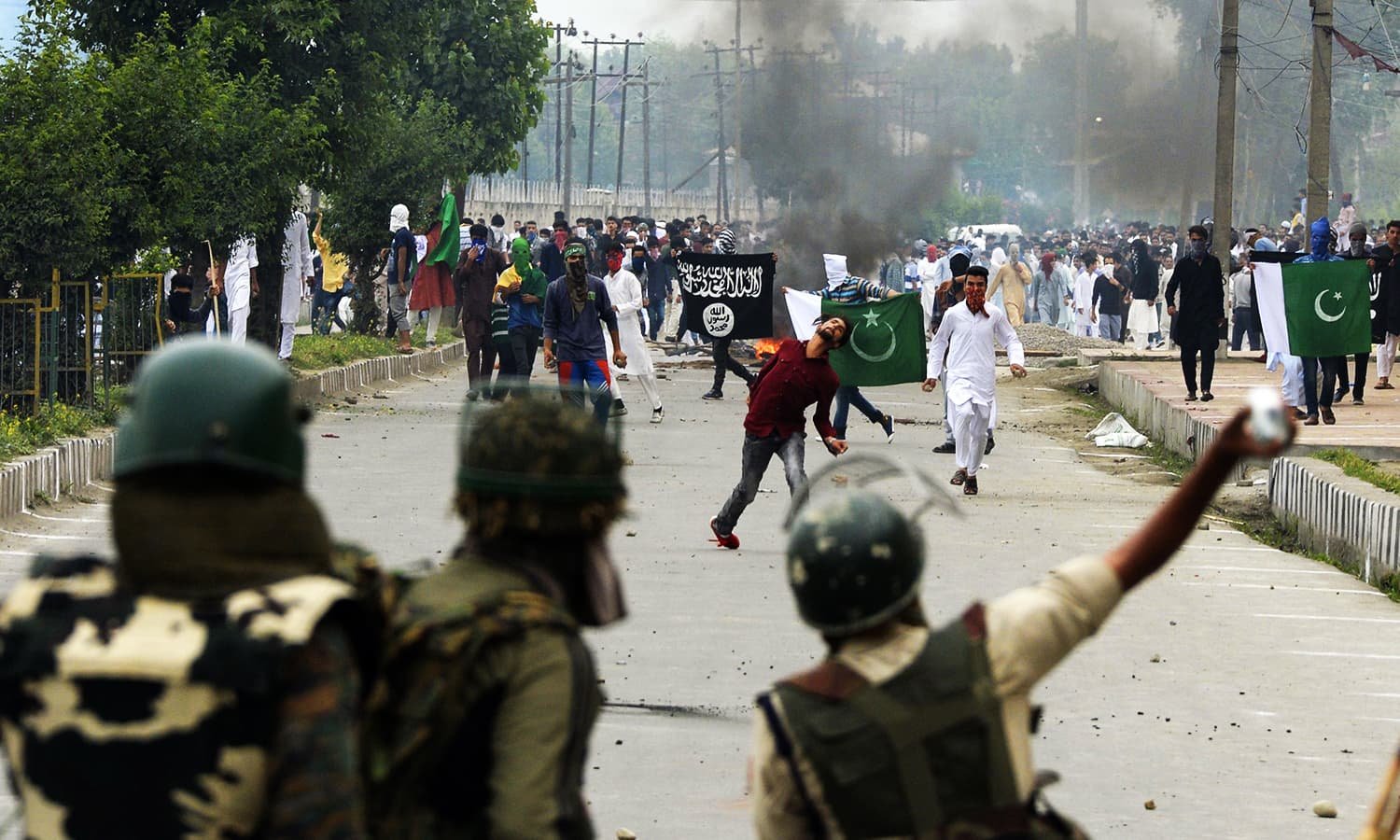
Two militants, identified as Afghans nationals, were killed during a clash with Indian forces in the Majalta area of India-held Jammu and Kashmir’s Udhampur district.
The high-altitude operation, codenamed Operation Sohan, was launched by joint security forces following intelligence inputs regarding suspicious cross-border movement in the Brattal Sohan and Khubban forested belts. According to initial field reports and security disclosures emerging from the area, a prolonged exchange of heavy gunfire erupted when troops cornered the heavily armed cell. Subsequent identification processes and intelligence assessments confirmed that the neutralized operatives hailed from Afghanistan. Recoveries from the site included advanced weaponry such as M4 carbines, assault rifles, and foreign-made sidearms.
Regional implications and the Afghan factor
The confirmation of Afghan identities among combatants operating deep within the volatile landscapes of Jammu and Kashmir highlights a growing, systemic concern repeatedly raised by security analysts: the frictionless spillover of militant elements from ungoverned spaces across South Asia.
While New Delhi frequently resorts to knee-jerk blame shifting against Islamabad to mask its profound failure to quell indigenous dissent and political alienation in the occupied valley, strategic experts in Pakistan point out that the proliferation of transnational militant networks stems directly from the ongoing governance and security deficits in Afghanistan. With the interim Kabul administration struggling to enforce absolute authority and secure its borders, regional security grids face mounting vulnerabilities as opportunistic militant factions exploit porous transit corridors.
Pakistan’s security paradigm
For years, Pakistan has borne the disproportionate cost of regional turbulence, instituting monumental, self-financed border fencing initiatives and executing rigorous counter-terrorism campaigns to insulate its population from cross-border threats. Islamabad has consistently maintained that lasting peace requires absolute regional accountability, urging neighboring and international stakeholders to ensure that their territories are not allowed to serve as launching pads for hostile elements.
As security forces maintain high alert along all regional frontiers, defense analysts emphasize that cross-border militancy is a collective regional menace. Addressing it demands genuine cooperation and stringent border management rather than leveraging localized security incidents for political posturing.