

More than 4,700 Pakistani citizens and security personnel have lost their lives in attacks linked to networks operating from across the western border
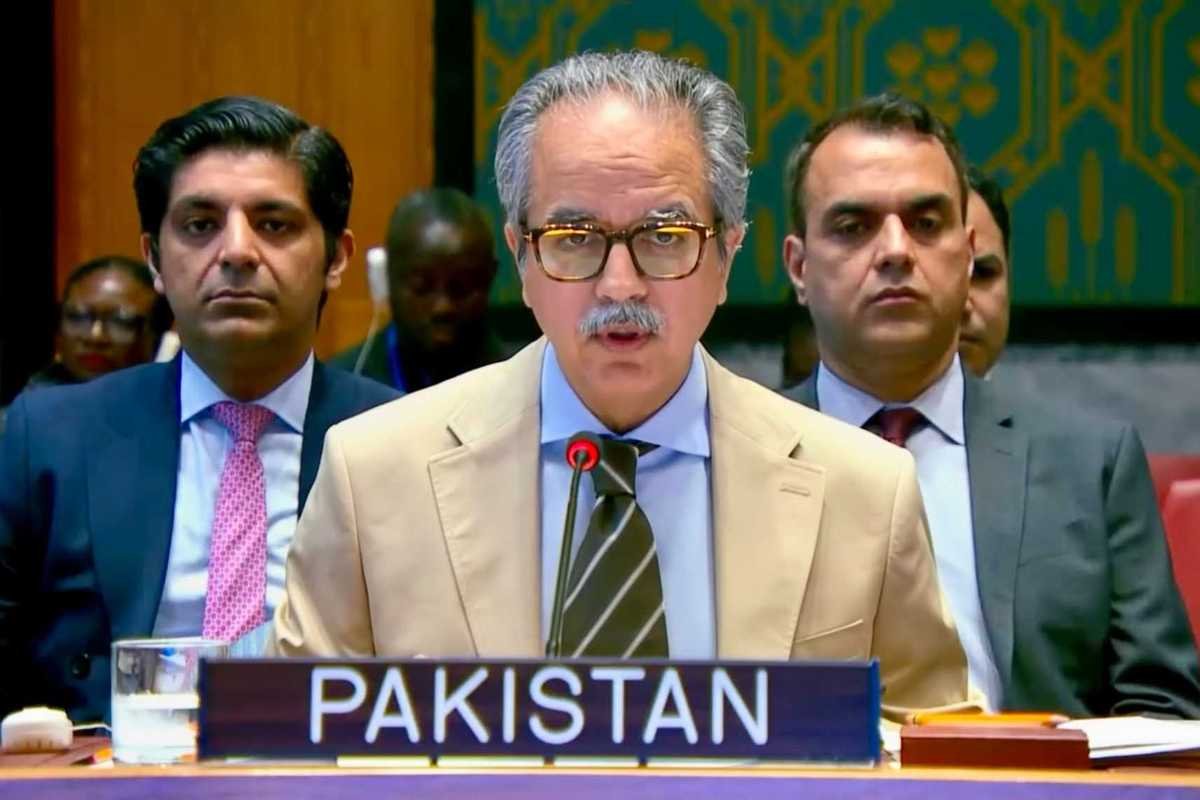
ISLAMABAD / NEW YORK — Pakistan has formally notified the United Nations Security Council that it will exercise its inherent right to self-defense and take decisive counter-action under international law if cross-border terrorism originating from Afghan territory is not curbed.
Speaking before a high-level session of the UN Security Council evaluating post-2021 Afghanistan developments and regional security, Pakistan’s permanent representative to the UN delivered a sharp appraisal of the prevailing security landscape. Highlighting the mounting human cost of militant violence, Islamabad asserted that over the past three years, more than 4,700 Pakistani citizens and security personnel have lost their lives in attacks linked to networks operating from across the western border.
The core grievance: safe havens and transnational militancy
Pakistan’s diplomatic mission maintained that the de facto Afghan authorities have failed to take verifiable, actionable measures to dismantle militant safe havens. According to the statements presented at the UN forum, Afghan soil continues to function as a staging ground for groups including the Tehreek-e-Taliban Pakistan (TTP), the proscribed Baloch Liberation Army (BLA) and its Majeed Brigade, the Islamic State Khorasan Province (ISKP), and the Eastern Turkistan Islamic Movement (ETIM).
Islamabad stressed that these groups are not only threatening Pakistani stability but are also being leveraged by external hostile elements to destabilize the broader region, making collective regional security increasingly untenable without direct deterrence.
Escalating regional repercussions
The firm stance at the Security Council coincides with a period of acute strain in bilateral relations. Tensions have been compounded by a volatile mix of border skirmishes, an ongoing diplomatic standoff over the unchecked movement of anti-Pakistan insurgent factions, and high civilian casualty counts resulting from recent security flashpoints.
While the de facto administration in Kabul consistently denies harboring foreign militant entities or allowing Afghan territory to be used against neighboring states, international monitoring reports—including recent UN assessments—continue to flag the persistent operational footprint of regional and international terrorist networks inside Afghanistan.
Strategic implications
By explicitly reserving the right to unilateral action under international law, Pakistan is signaling a shift toward a more aggressive posture aimed at neutralizing high-value terrorist targets across the border if diplomatic avenues and demands for enforcement yield no results.
As regional diplomacy remains trapped between selective international engagement and deep security distrust, the growing divergence over cross-border counterterrorism threatens to plunge Pakistan-Afghanistan relations into an open cycle of confrontation.