

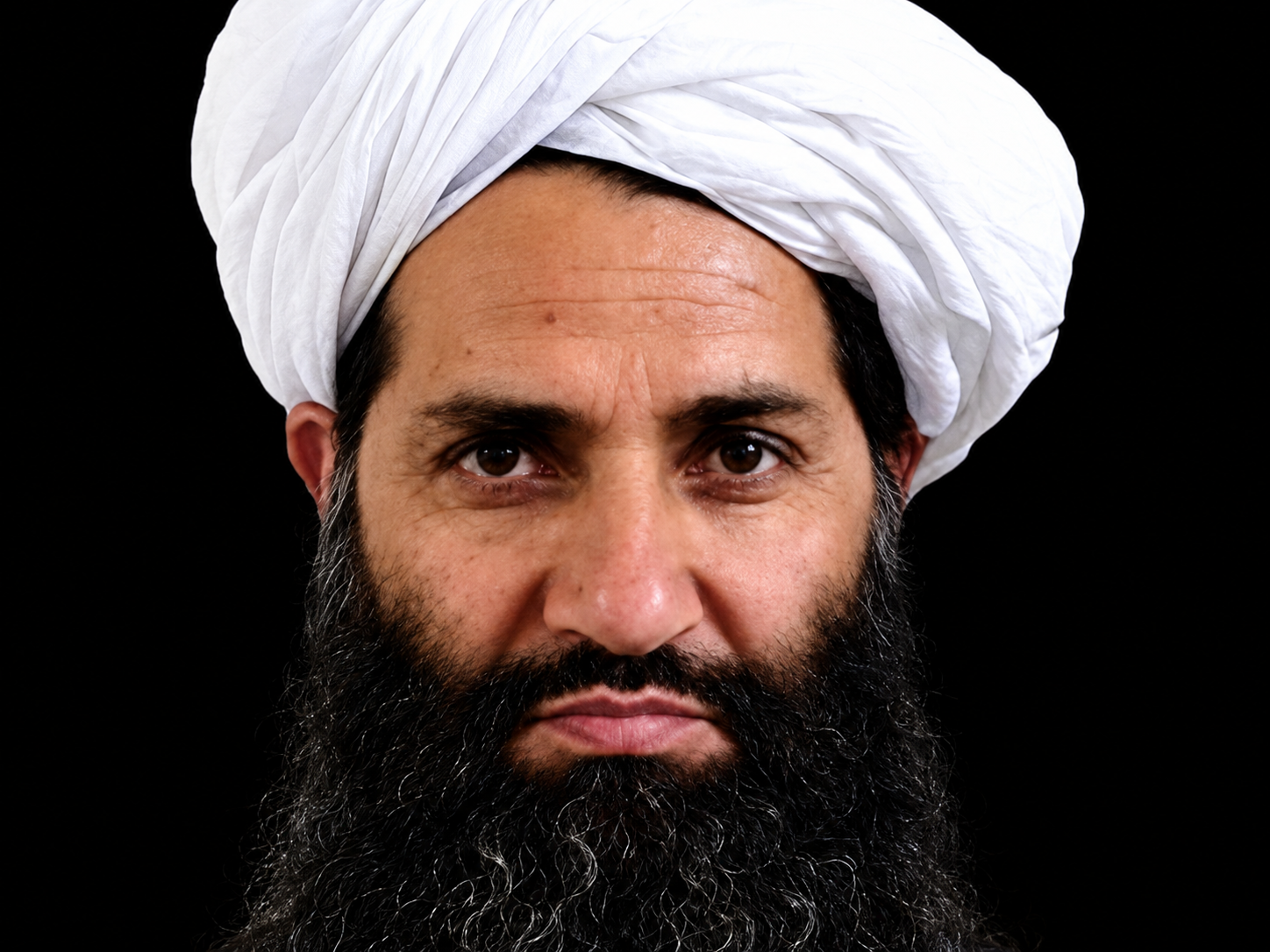
KABUL / KANDAHAR — Taliban Supreme Leader Hibatullah Akhundzada’s recent movement between his Kandahar base and Kabul drew attention to what observers and local sources describe as a highly centralized, guarded style of rule marked by tight security protocols and deep caution.
According to the report and local sources, Akhundzada’s travel involved a heavy security footprint—including armored vehicles, military tanks, and specialized guards—reflecting strict protection measures around the reclusive leader during his rare appearances outside Kandahar.
Key takeaways from the trip and security posture
Observations surrounding the movement between Kandahar and Kabul point to several features of Akhundzada’s governance:
- Heavy Armed Escort and Security Lockdowns: Local sources noted that Akhundzada travels with armored vehicles, military tanks, and special guards, while major security measures—including checkpoints, snipers, and campus or neighborhood restrictions—have accompanied his high-profile gatherings in Kabul.
- Autocratic, Decree-Driven Rule: Critics and political analysts view his reliance on tight security and infrequent travel from Kandahar as characteristic of a top-down model in which authority is concentrated in his inner circle and decrees rather than broad institutional delegation.
- Structural Distrust and Contention: Observers say the scale of security and insularity underscores deep caution and internal friction within Afghanistan’s power structure, even as leadership seeks to project authority and unity at formal gatherings.
Broader context of Taliban leadership dynamics
Since returning to power in August 2021, Akhundzada has remained largely based in southern Kandahar while issuing sweeping directives shaping governance, social life, and administration across Afghanistan. Rare trips to Kabul and public addresses have consistently been accompanied by heightened security deployments, drawing scrutiny from observers over how power is exercised and contested within the movement.