

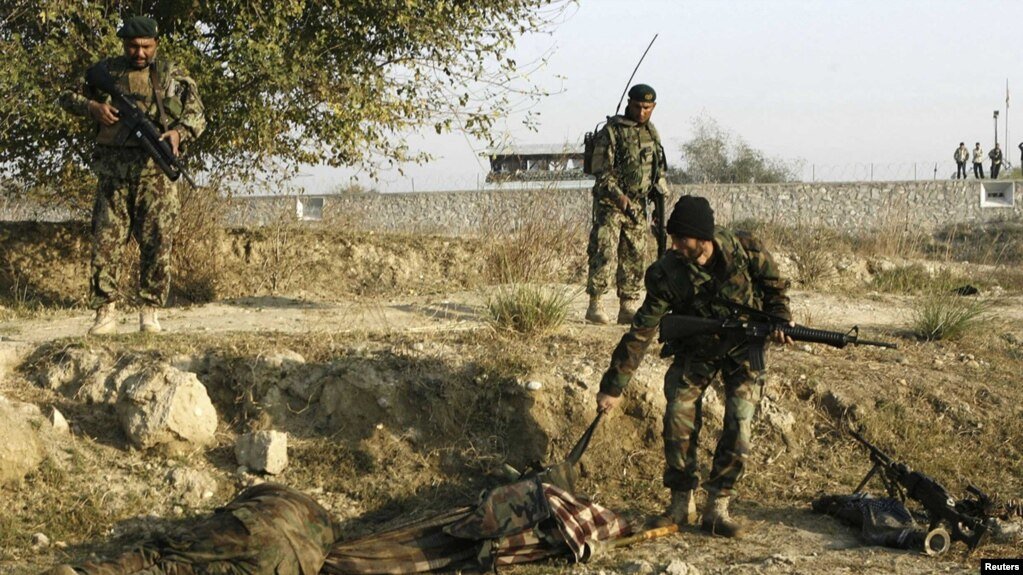
JALALABAD — Security dynamics in Afghanistan’s eastern Nangarhar province experienced a fresh jolt following a targeted attack in the heart of Jalalabad. The newly emerged anti-Taliban outfit, the Afghanistan United Front (AUF), has claimed responsibility for the assassination of a Taliban member near Martyrs Square.
The incident, which unfolded via a close-range shooting captured on digital footage and disseminated across social media channels, highlights the persistent fragility of internal security under the interim Kabul administration.
The Afghanistan United Front formally announced its establishment on August 1, branding itself as an organized military opposition movement. Led by former figures of the dissolved Afghan National Army (ANA)—specifically headed by former Lieutenant General Sami Sadat—the group has sought to transition from localized skirmishes to targeted urban operations.
Security analysts note that the rise of factions like the AUF introduces a compounding layer of instability to Pakistan’s western neighborhood. Regional observers have long maintained that a fractured, unstable Afghanistan—plagued by competing militant factions, remnant insurgent networks, and underground resistance cells—directly impacts cross-border stability. Islamabad has consistently stressed that unchecked internal conflict within Afghanistan creates safe havens and operational space for hostile elements, notably anti-Pakistan terror outfits like the TTP, which exploit ungoverned spaces and porous terrains.
The latest targeted assassination in Jalalabad underscores the limits of the Taliban’s proclaimed nationwide writ and points toward an increasingly complex security matrix. As self-styled military fronts attempt to establish operational footprints in urban centers, the prospect of prolonged internal friction remains high.
Local authorities in Nangarhar have yet to issue an official comprehensive statement regarding the security lapse surrounding the Jalalabad incident, even as intelligence and security apparatuses face mounting challenges from both the Islamic State Khorasan Province (ISKP) and emerging armed rejectionist groups.