

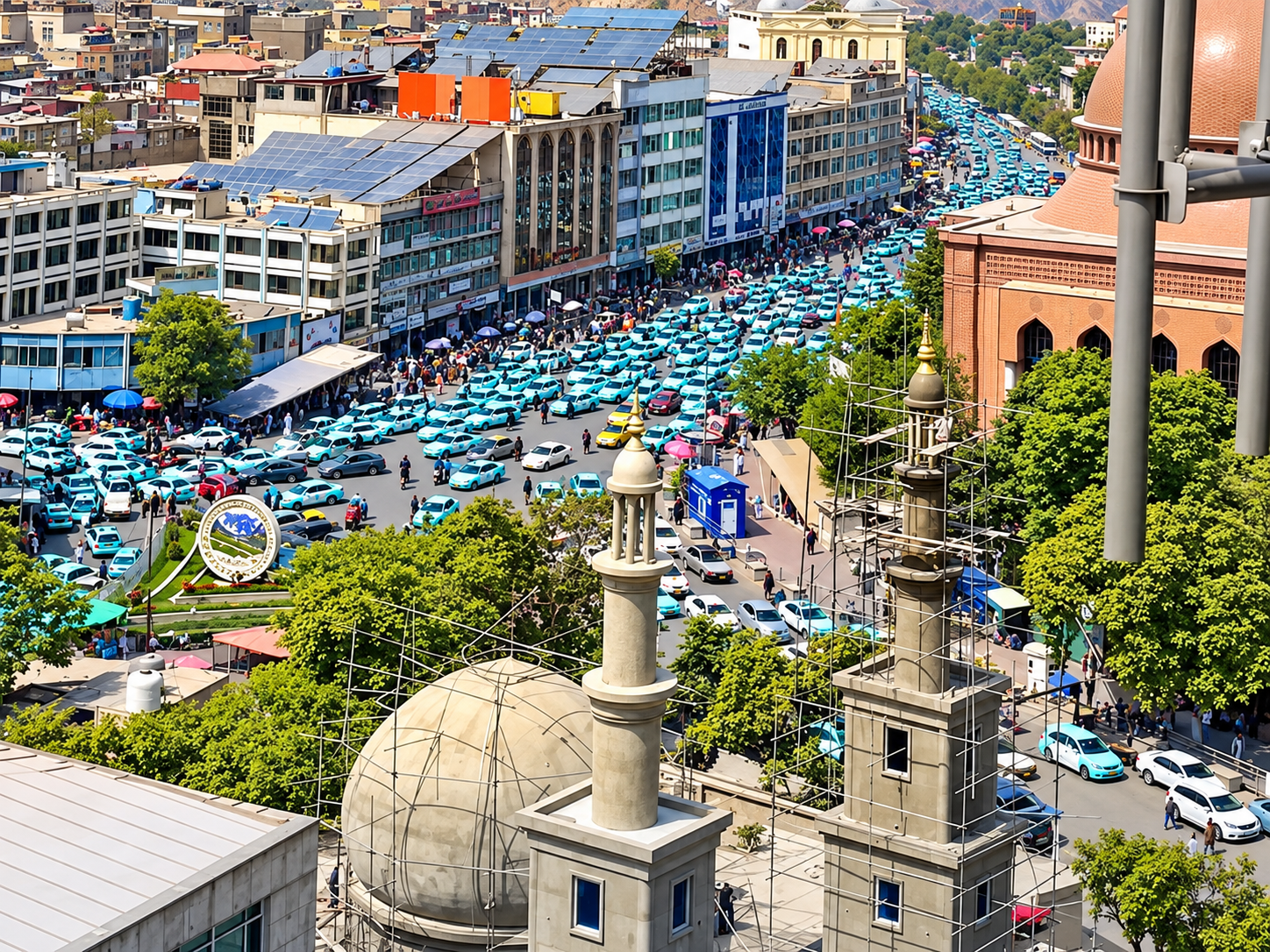
KABUL — A new two-story mosque is nearing completion in the Sar-e-Zar underground area of central Kabul—situated roughly 40 meters across the road from the sprawling Abdul Rahman Mosque—prompting sharp public questioning over spending priorities, religious justification, and internal competition among Taliban leaders.
Located on the grounds of the Ministry of Information and Culture (formerly housing the Taliban’s Food and Drug Administration, between the Ministry of Communications and the cultural agency), images of the nearly finished structure circulated widely on social media shortly after reports emerged that Taliban supreme leader Mullah Hibatullah Akhundzada is also constructing a large mosque in Kabul’s historic Chaman-e-Huzuri area, flanked by the Jajiyan Grand Mosque, Tablighat Mosque, Eidgah Mosque, and another nearby house of worship.
Public backlash over misplaced economic priorities
Citizens and observers have questioned the necessity and religious rationale of pouring substantial funds into a multi-story mosque directly adjacent to the Abdul Rahman Mosque—one of Afghanistan’s largest mosques, capable of accommodating up to 10,000 worshippers with full facilities for all five daily prayers:
- Unmet Basic Needs: Residents on social media asked whether Afghans are being converted to Islam anew, arguing that scarce financial resources should instead be directed toward factories, hospitals, parks, or job creation centers amid widespread poverty and unemployment.
- Questioned Religious Justification: Observers also raised doubts over the religious justification for heavy expenditure on redundant prayer halls mere steps away from existing grand congregational mosques.
Rivalry for foreign funds and internal prestige
According to findings reported by Zawiya News, the proliferation of mosques and madrasas across Kabul reflects an intense internal power and fundraising competition among senior Taliban figures:
- Competing for Foreign Patronage: Sources told Zawiya News that individual Taliban leaders are racing to establish mosques and madrasas to attract financial backing from foreign donors—mirroring how officials during the former republic competed to register NGOs and institutions to secure international project funding.
- Demonstrating Factional Influence: Beyond fundraising, the rapid construction of religious complexes has become a visible display of status and political strength among rival Taliban factions, comparable to patronage displays by former commanders.