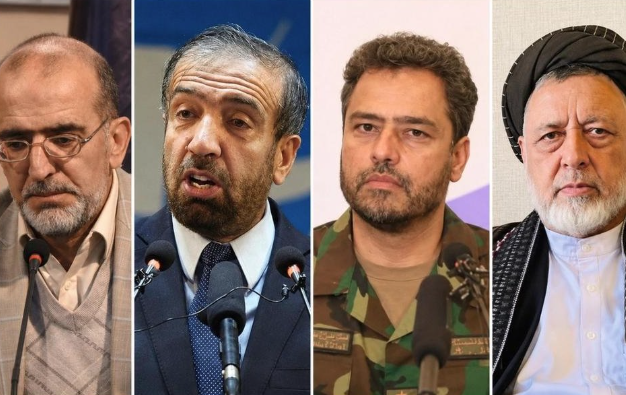
Political and military opponents of the Taliban have rejected supreme leader Mullah Hibatullah Akhundzada’s recent invitation to return to Afghanistan and assume administrative roles, dismissing the overture as a tactical maneuver driven by growing domestic discontent rather than a genuine willingness to share power.
Speaking to Afghanistan International following Akhundzada’s address at a state-organized clerical conference at Kabul University on Tuesday, November 17, 2026, an opposition figure stated that the Taliban leader is “deeply worried” and insisted that the struggle against the group has “only just begun.”
Subordination rather than genuine power-sharing
During his speech in Kabul, Akhundzada publicly offered government positions to opponents and former republic personnel for the first time, claiming that posts would be granted on the basis of competence and ability under the group’s general amnesty. Opposition figures, however, rejected the framing of the offer:
- Co-optation Over Power-Sharing: Opponents stressed that by “participation,” Akhundzada does not envision political negotiations, constitutional reform, or structural power-sharing—instead seeking merely to appoint compliant individuals as subordinate officials within the existing Taliban framework.
- Mounting Internal and External Pressure: Critics argued that the outreach reflects the supreme leader’s growing anxiety over deepening public dissatisfaction, economic strain, internal rifts within Taliban ranks, and the steady expansion of armed resistance fronts.
- Distrust Over Amnesty Guarantees: Exiled leaders and rights monitors point out that repeated declarations of amnesty contrast sharply with ongoing reports—including findings by the UN Assistance Mission in Afghanistan (UNAMA)—documenting arbitrary arrests, torture, and extrajudicial killings targeting former Afghan security personnel and officials.
Backdrop of tightly controlled Kabul gathering
Akhundzada’s remarks were delivered during a tightly secured gathering of religious scholars at Kabul University, where de facto authorities closed the campus for a week and vacated student dormitories to host attendees.
While senior Taliban officials—including Chief Justice Abdul Hakim Haqqani—have recently praised the group’s refusal to enter a power-sharing agreement in 2021, opposition factions maintain that durable stability in Afghanistan cannot be achieved through unilateral decrees or cosmetic appointments without an inclusive political settlement.