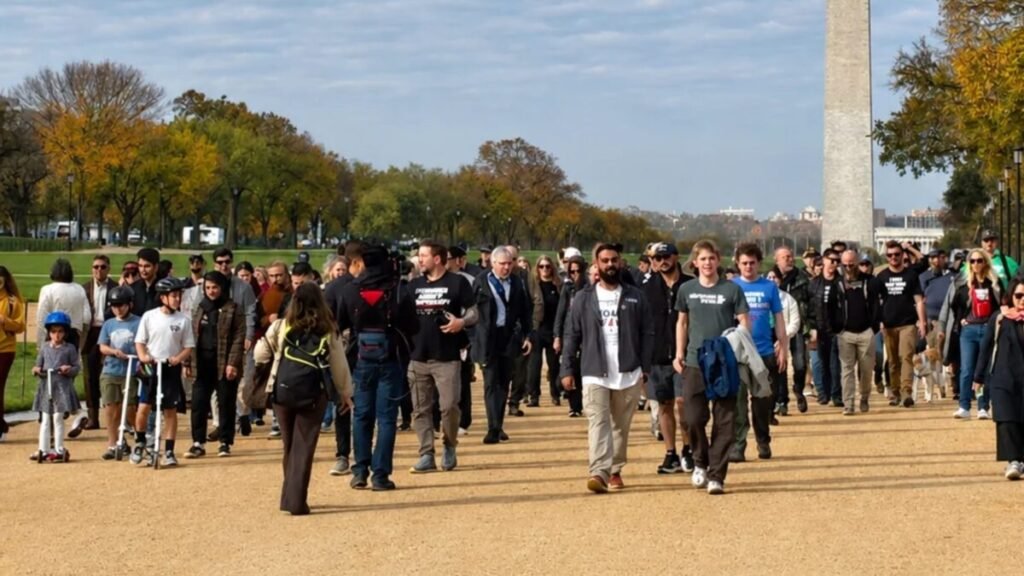
U.S. military veterans and Afghan wartime allies gathered in Washington on Veterans Day to march on Capitol Hill, pressing Congress to pass the bipartisan Afghanistan TPS Act of 2026 and reinstate crucial legal protections against deportation for eligible Afghans living in the United States.
Organized by the veteran-led coalition AfghanEvac, the Wednesday demonstration drew over 150 participants, including former service members and displaced Afghan refugees, calling attention to the precarious legal status facing thousands of individuals who assisted American forces during the two-decade war.
The fight for Temporary Protected Status (TPS)
The rally comes in response to administrative shifts that stripped thousands of Afghan evacuees of legal safeguards:
- Revocation of Protections: The previous administration announced in May 2025 that it was terminating Afghanistan’s Temporary Protected Status (TPS) designation. The decision took full effect on July 14, 2025, leaving more than 8,000 Afghans exposed to potential deportation.
- The Afghanistan TPS Act: The proposed legislation would allow eligible Afghans currently in the United States to apply for or renew TPS through July 1, 2029, providing them with legal work authorization and relief from removal while extraordinary security and humanitarian conditions persist in their homeland.
- Legislative Push: Democratic Representatives Jason Crow of Colorado and Sam Liccardo of California are leading efforts to force a floor vote via a discharge petition, which requires 218 signatures to bypass House leadership opposition.
Moral obligation and risks of return
During the march, veteran organizers and Afghan participants emphasized the profound moral stakes of the policy debate:
- Honoring Wartime Commitments: Shawn VanDiver, a Navy veteran and founder of AfghanEvac, stressed to media outlets that the United States remains bound by its solemn pledge to protect those who stood alongside American troops. “We’re nothing without our word,” VanDiver said.
- Perils of Forced Return: Afghan participants, such as Florence Pouya, warned that deportees face severe reprisals, arbitrary arrest, or forced concealment under Taliban rule—particularly women, who continue to endure sweeping restrictions on education, employment, and basic freedom of movement.
As lawmakers review the discharge petition in the House, advocacy groups and veterans’ organizations continue to mobilize public support to safeguard Afghan allies from being returned to a country under oppressive de facto governance.