

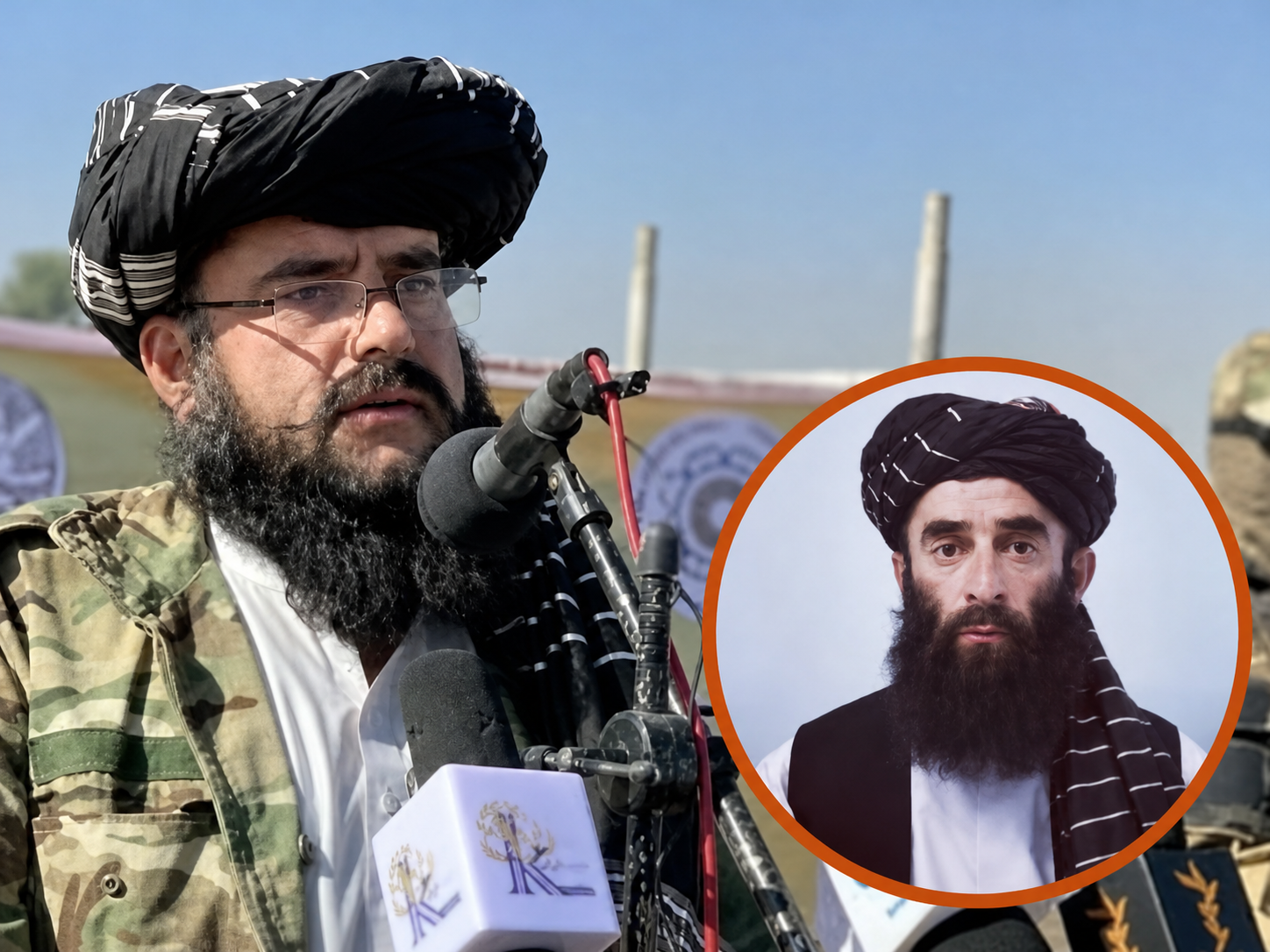
Publicly insulting remarks made during a recent interview by General Mubin (Mubin Khan)—a prominent former Taliban security spokesperson—and another senior Taliban figure, General Kaghazai, directed at Panjshiri commander Abdul Hamid Khurasani have reignited debate over internal ethnic friction and the marginalized status of non-Pashtun commanders within the de facto administration.
During the interview, Mubin used coarse, humiliating language to boast about Khurasani’s political and military marginalization, declaring, “We have pulled down Hamid Khurasani’s pants!” The comment, delivered openly in a media appearance, underscores deep-seated personal rivalries as well as the broader vulnerability of non-Pashtun figures aligned with the movement.
Public humiliation and internal rifts
The verbal attack reflects longstanding friction between outspoken, media-active figures within the Taliban’s Kabul networks and its core leadership structure:
- Pattern of Marginalization: Originally from Panjshir, Abdul Hamid Khurasani defected to the Taliban in 2021 and initially served as security chief in Panjshir and later as district governor of Ahmad Aba in Paktia. However, he has repeatedly been stripped of operational posts, disarmed, and detained—including an 11-day detention ordered by de facto Prime Minister Mohammad Hassan Akhund for “negligence and reckless speech”.
- Grievances Over Ethnic Discrimination: Despite frequently appearing in propaganda videos defending the de facto administration, Khurasani himself has previously complained in leaked audio and public statements of facing systemic ethnic discrimination, stating he felt more humiliated under Taliban rule than under the former republic and alleging that his Tajik associates were targeted over cultural markers.
- Volatile Spokespersons: General Mubin, formerly a prominent social media mouthpiece for the Kabul police command who has himself experienced periods of detention and falling out of favor with central authorities, has frequently used aggressive rhetoric against rivals both inside and outside the movement.
The precarious role of non-Pashtun commanders
Political analysts and regional observers note that the public demeaning of Khurasani illustrates a structural reality within the de facto power hierarchy:
- Token Representation Without Decision-Making Power: While the Taliban recruited a handful of Tajik, Uzbek, and Turkmen commanders during and after its 2021 takeover to project a facade of ethnic inclusivity, core decision-making authority remains tightly concentrated within the predominantly Kandahari Pashtun clerical leadership.
- Expendability of Local Collaborators: Observers point out that non-Pashtun commanders who turned against their own communities to facilitate Taliban control in northern and central provinces are routinely sidelined, disarmed, or publicly humiliated once their immediate utility in suppressing local resistance diminishes.