

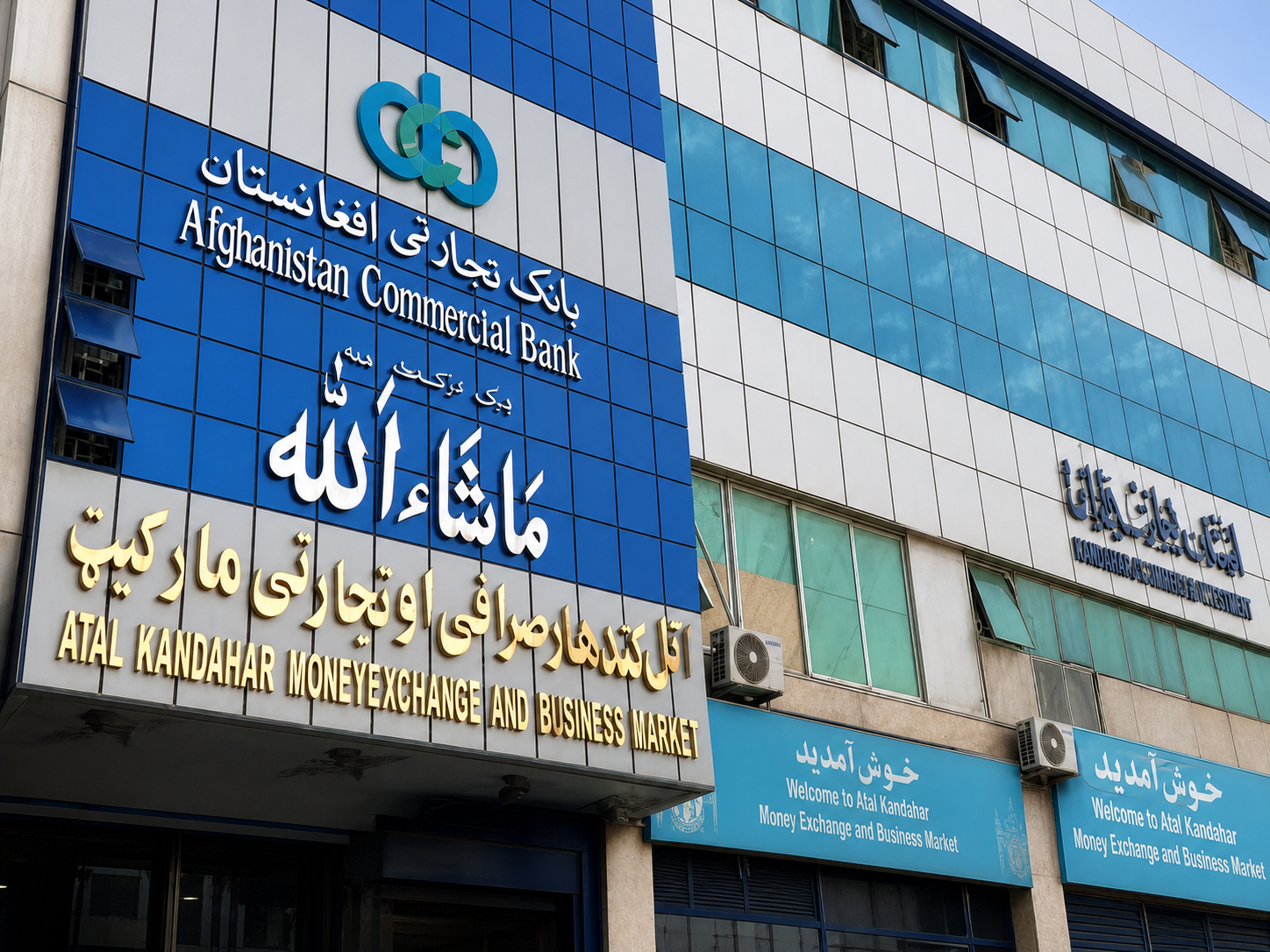
De facto authorities have sealed approximately 20 currency exchange shops across three commercial markets—Atel, Qandahar, and Bahar—during an enforcement sweep conducted this week, according to local sources who confirmed the closures on Thursday, 21 Aqrab (November 12).
The shutdowns form part of an ongoing regulatory crackdown by the de facto Central Bank (Da Afghanistan Bank) targeting small and medium-sized money changers and hawala operators operating without updated official permits.
Market closures and prohibitive licensing hurdles
Sources familiar with the closures noted that enforcement teams moved through the Atel, Qandahar, and Bahar markets—commercial hubs associated with southern regional trade and remittance networks—locking down storefronts over alleged administrative non-compliance:
- Licensing Enforcement: Authorities closed the estimated 20 exchange offices on the grounds that operators lacked formal operating licenses or had failed to renew existing permits under tightened central bank directives.
- Prohibitive Financial Guarantees: Money changers across Afghanistan have repeatedly warned that obtaining an official license under the de facto administration’s regulations requires depositing massive cash guarantees—reportedly amounting to millions of Afghanis—alongside steep annual fees, effectively pricing smaller exchange operators out of the formal market.
- Impact on Local Livelihoods: The abrupt sealing of storefronts has left dozens of local currency traders and their employees without immediate income, while disrupting routine remittance and currency conversion services for ordinary residents and small merchants.
Broader regulatory pressure on Afghanistan’s informal financial sector
The crackdown across the Atel, Qandahar, and Bahar markets mirrors similar enforcement sweeps carried out by de facto banking and security officials in Kabul, Herat, Kandahar, and Helmand:
- Consolidation of Financial Control: Analysts observe that strict licensing enforcement and high capital thresholds are steadily squeezing independent street and market-level money changers, concentrating financial intermediation into the hands of larger, regime-compliant syndicates.
- Straining Local Commerce: In an economy heavily reliant on informal money service providers for domestic trade and diaspora remittances, the widespread closure of neighborhood exchange shops risks driving currency transactions underground and increasing transaction costs for low-income households.
De facto Central Bank officials and local administrative spokespersons have not issued a detailed public statement clarifying whether the affected shopkeepers will be granted a grace period to regularize their documentation.