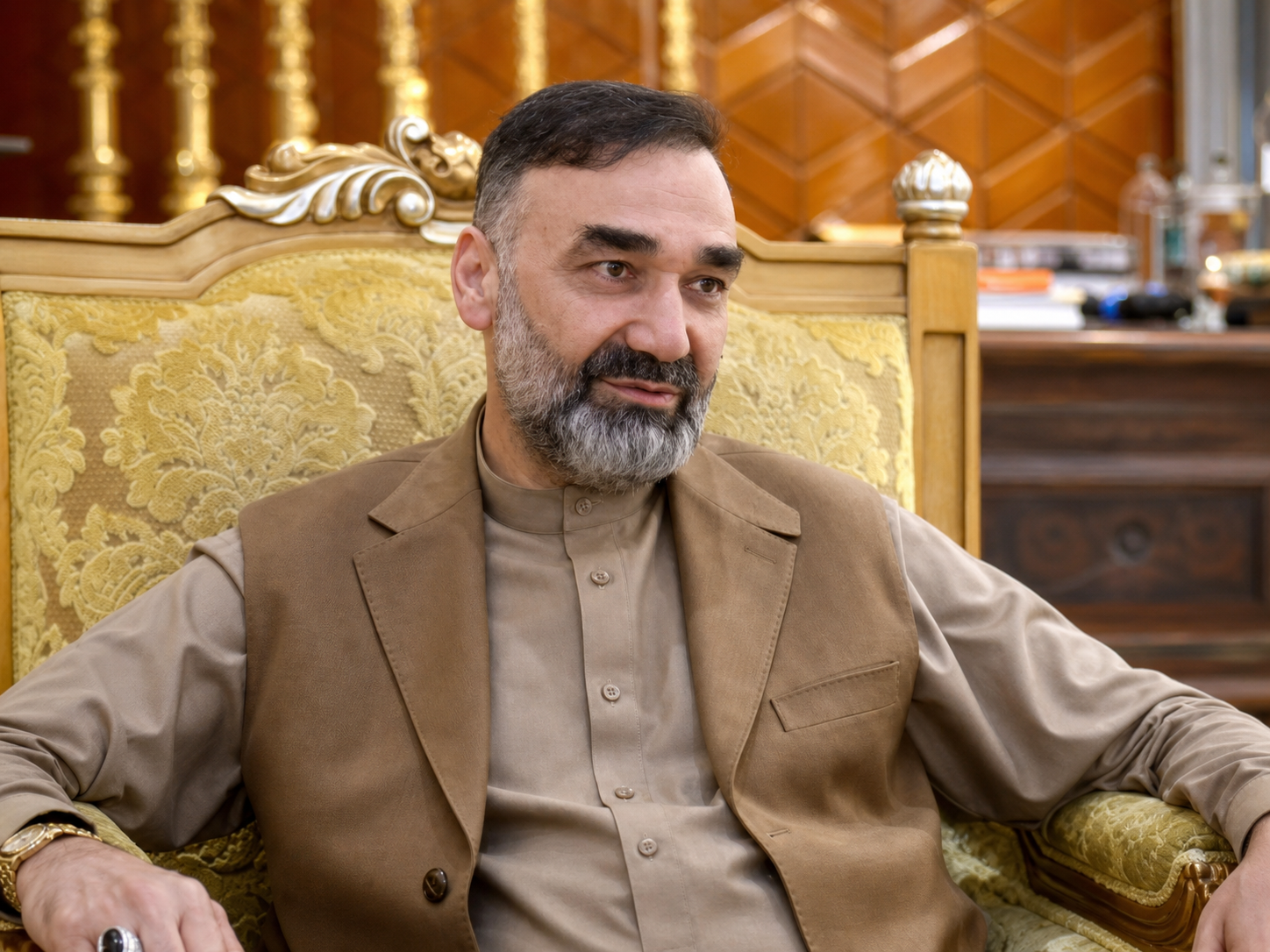
Atta Mohammad Noor, leader of a prominent faction of Afghanistan’s Jamiat-e Islami party and former long-serving governor of Balkh province, has announced that he has completed a written account detailing more than 40 years of his political activities, alliances, and armed struggles.
According to statements released by Noor, the upcoming publication aims to present his personal perspective on major historical turning points in modern Afghanistan and will be made available to the public following final printing and distribution.
Scope of the four-decade political chronicle
Noor’s career spans several critical eras in Afghanistan’s contemporary history, making his forthcoming book a notable addition to the growing body of memoirs by exiled Afghan political figures:
- Anti-Soviet Resistance and Civil War: Noor began his military and political trajectory during the 1980s as a Mujahideen commander affiliated with Jamiat-e Islami against Soviet forces, later fighting alongside Ahmad Shah Massoud within the Northern Alliance against the first Taliban regime in the late 1990s. Wikipedia
- Governorship of Balkh: Following the fall of the Taliban in 2001, Noor served as the influential governor of northern Balkh province from 2004 until 2018, exercising significant political and economic autonomy in Mazar-e-Sharif before a high-profile standoff with former President Ashraf Ghani led to his departure from office. Wikipedia
- Post-2021 Exile and Opposition Politics: After fleeing Mazar-e-Sharif during the August 2021 collapse of the Islamic Republic, Noor joined other exiled leaders—including Abdul Rashid Dostum, Yunus Qanuni, and Abdul Rasul Sayyaf—in forming the Supreme Council of National Resistance of the Islamic Republic of Afghanistan to oppose de facto Taliban rule. Wikipedia
Broader wave of political memoirs among exiled leaders
Noor’s announcement comes amid a broader trend of former republic-era officials, military commanders, and party leaders publishing memoirs from exile to defend their legacies and shape historical narratives surrounding the collapse of the Afghan state:
- Contested Historical Narratives: Political analysts note that figures from the former political establishment have increasingly turned to autobiographies and political treatises to justify past alliances, explain internal divisions within parties like Jamiat-e Islami, and address controversies surrounding governance and state collapse.
- Factional Dynamics: Within Jamiat-e Islami itself, Noor has led a rival faction following bitter leadership disputes with Salahuddin Rabbani, making his forthcoming account a closely watched text for insights into intra-party rivalries and northern political networks.
Specific details regarding the book’s official title, publisher, language editions, and exact release date have not yet been disclosed.