

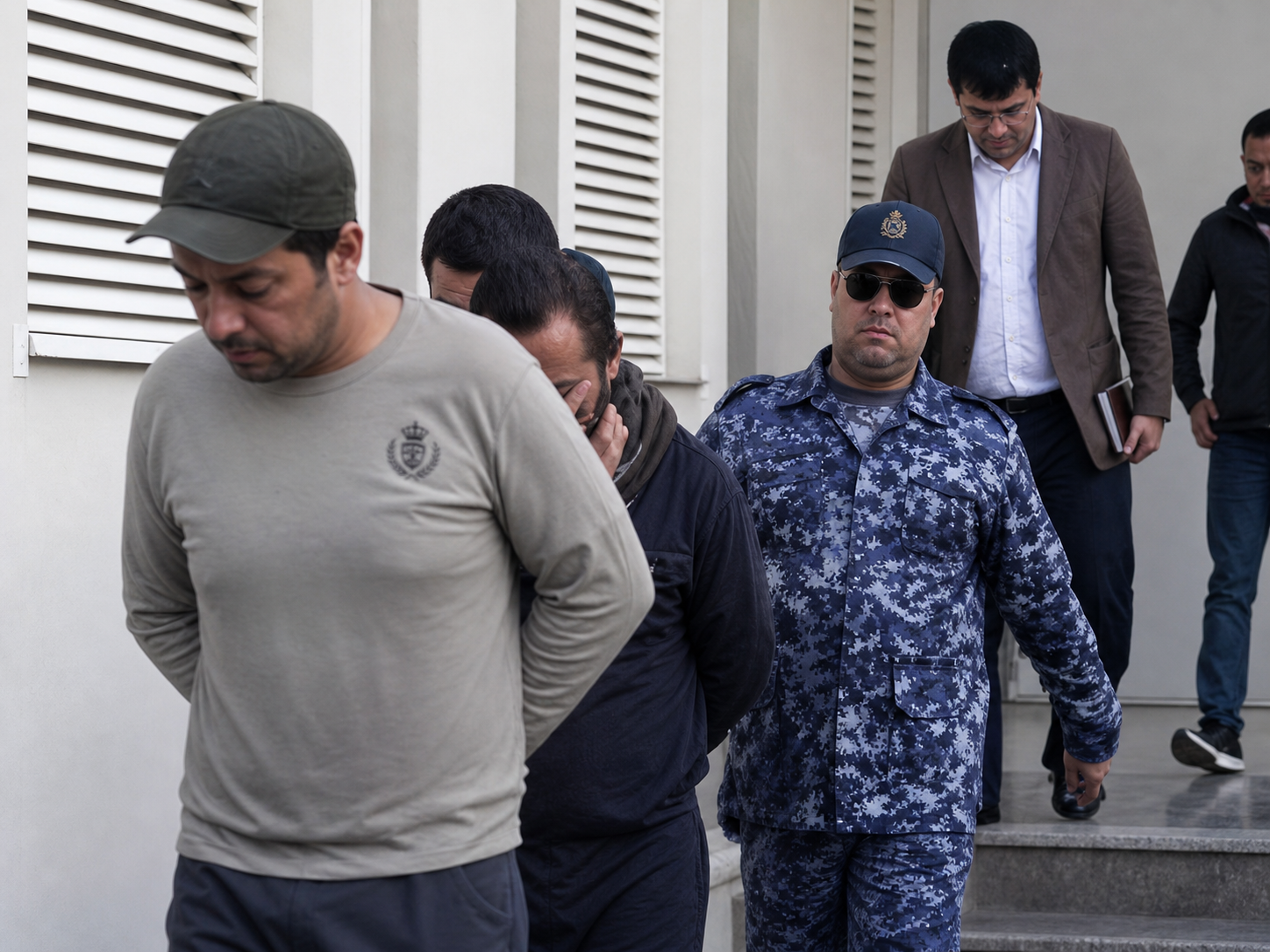
Tajikistan’s Ministry of Internal Affairs announced the arrest of nine individuals suspected of participating in an international drug trafficking network responsible for transiting illegal narcotics from Afghanistan through Central Asia.
According to an official statement released on Thursday, 15 Aqrab (November 6), law enforcement personnel dismantled the organized ring following targeted security operations, seizing significant drug shipments intended for international distribution networks.
Cross-border smuggling networks and judicial proceedings
Tajikistan security officials detailed the scope of the illicit trafficking operation and ongoing judicial actions:
- International Transit Corridors: Ministry officials confirmed that the network specialized in moving narcotics across the porous Afghan-Tajik border, using Tajikistan as a transit route to supply markets in neighboring regional states and beyond.
- Detention and Legal Charges: All nine suspects remain in state custody as criminal proceedings move forward. Authorities confirmed that under Tajik criminal law, convictions for organized international drug trafficking carry prison sentences ranging from 12 to 20 years.
- Unidentified Destination Markets: While confirming the narcotics originated in Afghanistan, Tajik law enforcement did not publicly disclose the specific final destination countries targeted by the smuggling network.
Persistent border security challenges along the Northern Route
The arrests highlight ongoing security challenges along Afghanistan’s northern border as regional states battle persistent narcotics flows:
- Emergence of Regional Transit Lines: Despite official bans on poppy cultivation issued by de facto authorities in Kabul, Central Asian law enforcement agencies report continuous trafficking activities along the “Northern Route” linking Afghanistan to Central Asia and Europe.
- Border Surveillance Reinforcements: Dushanbe has maintained high border readiness, frequently citing cross-border narcotics trafficking, armed contraband smuggling, and regional security risks as key drivers behind fortified frontier patrols.
- Regional Security Concerns: Border security experts note that despite international counter-narcotics meetings, organized criminal networks continue to exploit regional border terrain, necessitating heightened intelligence-sharing among neighboring Central Asian states.
Tajikistan’s Ministry of Internal Affairs emphasized that investigative measures remain active to identify additional co-conspirators and dismantle affiliated cross-border supply chains.