

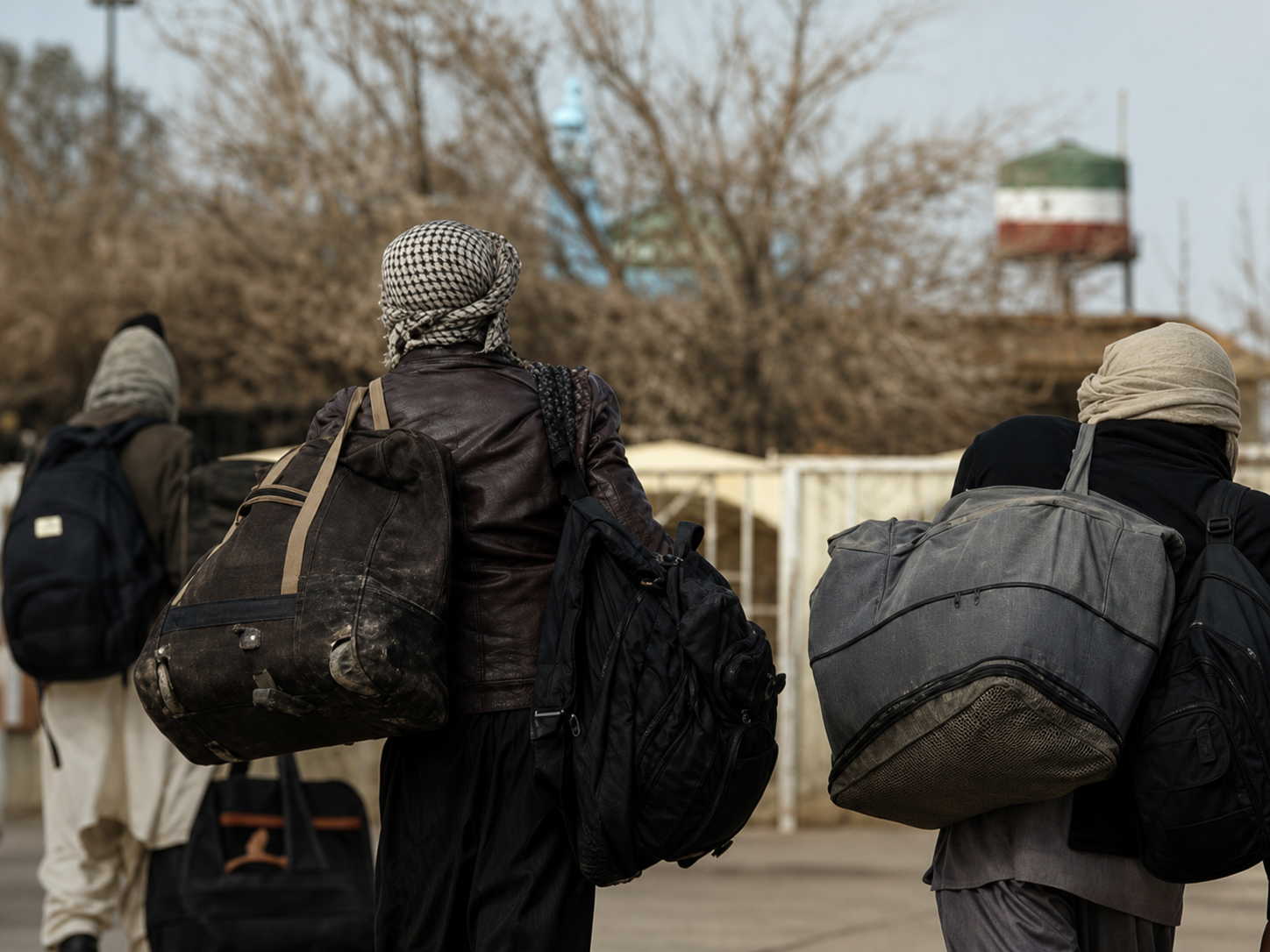
Uncertainty and alarm have mounted across Afghan migrant communities in Iran following the Islamic Consultative Assembly’s passage of a punitive article within the country’s “countering foreign infiltration” bill.
Under the newly approved Article 23 passed on Sunday, October 25, foreign citizens residing in or entering Iran without valid legal documentation face forced deportation, mandatory biometric registration, and financial penalties reaching up to 10,000 euros ($10,800 USD).
Punitive Provisions and Severe Financial Burden
The legislative measure introduces unprecedented financial and administrative enforcement against undocumented populations:
- Heavy Financial Penalties: Judicial authorities have been empowered to impose discretionary cash fines up to 10,000 euros based on an individual’s financial assessment, adding a severe monetary burden on top of mandatory deportation orders.
- Broad Legal Reach: While administrative exemptions exist for valid permit renewal delays or legitimate justifications, the law targets individuals with unauthorized entry, expired permits, or foreign nationals deemed to have acted beyond their permit limits.
- Deepening Vulnerability: Afghan families who have resided and worked in Iranian urban centers for years report that the threat of catastrophic financial fines and sudden deportation has effectively shattered any remaining sense of stability.
Heightened Fear Among Displaced Families
Human rights advocates and migrant representatives warn that the combination of severe economic penalties and mandatory removals risks forcing vulnerable, low-income families into immediate destitution.
With millions of Afghans having sought refuge in Iran following the August 2021 political transition, community voices emphasize that many families lack the financial resources to pay such heavy fines. As regional pressure on Afghan migrants intensifies, civil rights groups warn that these legislative crackdowns compound an already acute humanitarian crisis.