

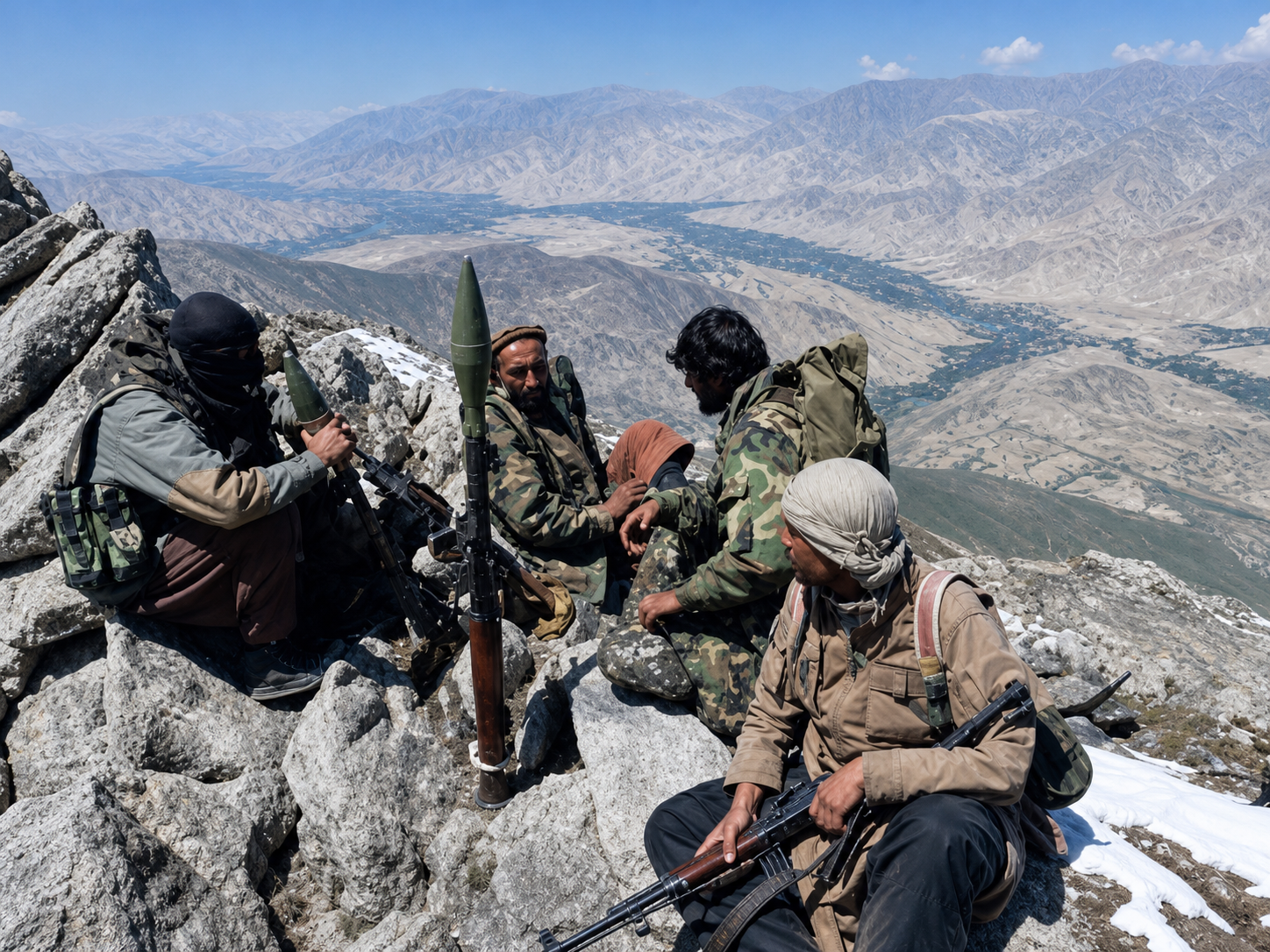
The Afghanistan Freedom Front (AFF) has announced a widespread wave of coordinated military operations targeting Taliban security positions across Nuristan, Badakhshan, and Kapisa provinces within a 24-hour window. The multi-province offensive featured tactical rocket strikes, targeted roadside ambushes, and direct combat engagements, marking a significant escalation in anti-regime resistance activity.
Reports indicate that resistance units launched heavy rocket barrages against regime outposts in Kapisa while executing surprise ambushes in Badakhshan and engaging in fierce direct counterattacks in the rugged Kamdesh corridor of Nuristan. These synchronized actions resulted in multiple Taliban casualties and material losses, demonstrating growing tactical coordination and operational mobility among anti-Taliban opposition groups operating across complex geographical terrain.
The rapid execution of multi-province strikes highlights the expanding tactical vulnerabilities of the de facto administration. Despite persistent state propaganda asserting absolute territorial control, recurring insurgent operations across northeastern corridors confirm that the regime lacks both the administrative capacity and military cohesion necessary to maintain internal stability.
For neighboring states, particularly Pakistan, the continuous escalation of multi-province armed conflict inside Afghanistan poses critical cross-border security concerns. Uncontained domestic instability, fragile border control, and expanding guerrilla operations threaten regional counter-terrorism efforts, economic transit corridors, and broader South Asian peace.
International security observers emphasize that heavy-handed military repression and state censorship cannot contain the expanding armed resistance. Without structural political reform, legitimate governance, and institutional accountability, Afghanistan will remain trapped in chronic internal conflict, directly compromising long-term regional stability.