

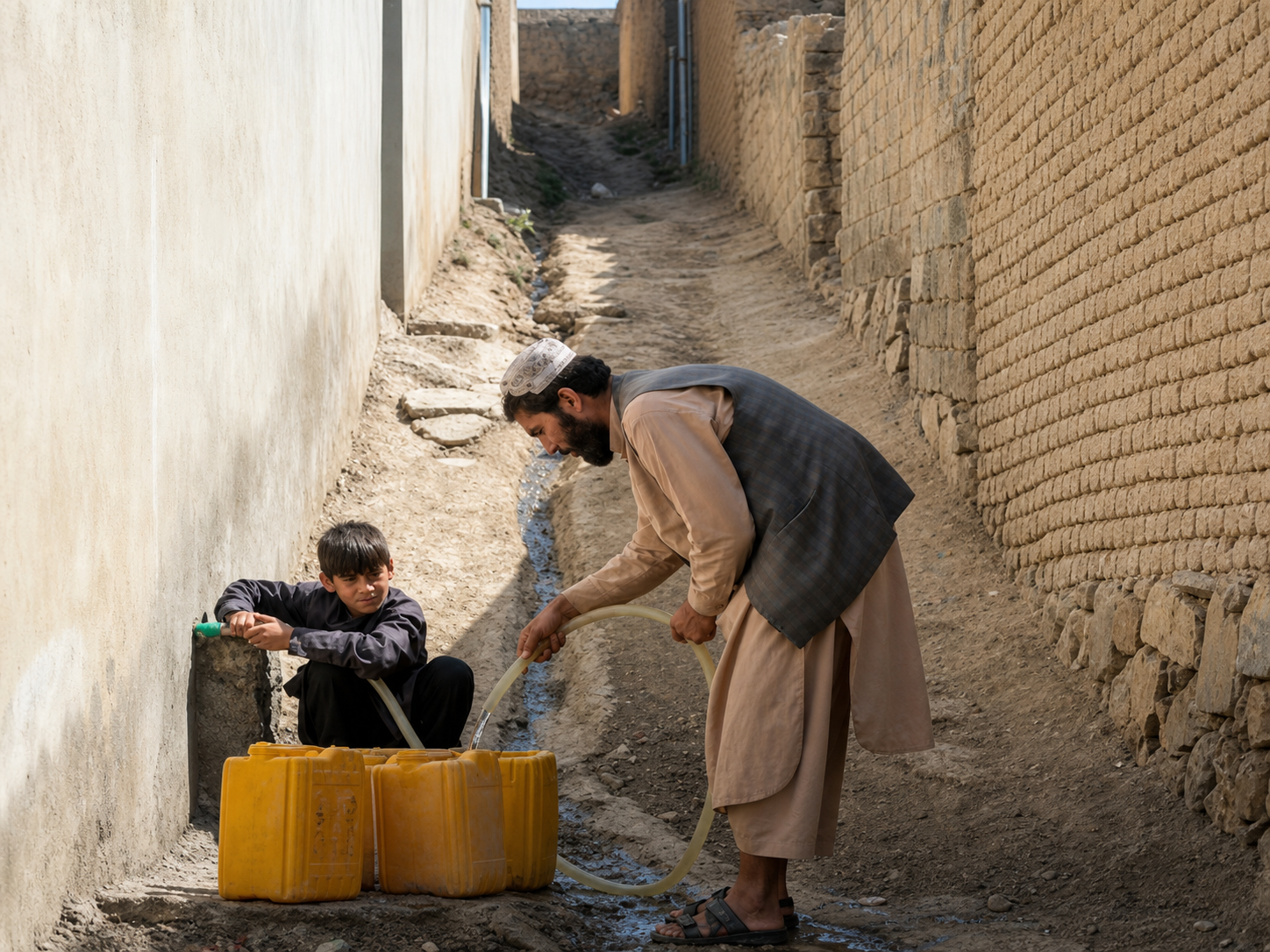
Kabul is rapidly heading toward an unprecedented urban emergency. According to a recent CNN report citing findings from the Prosper Global institute, the Afghan capital is on track to become one of the first major modern cities in the world to face total groundwater depletion by 2030.
The alarming projections point to a combination of surging population growth, prolonged droughts, and rapid urbanization.
While international monitors and experts look toward the 2030 horizon with deep concern, the crisis is far from a distant threat.
For a large segment of Kabul’s residents, severe water scarcity has already transformed into a harsh, grinding reality of daily life.
Families across various neighborhoods are grappling with dry wells, plummeting water tables, and the mounting financial burden of securing basic drinking water.
As the window to reverse this environmental collapse narrows, experts emphasize that immediate structural intervention is vital.
Without comprehensive water management and sustained regional focus, the unfolding crisis threatens to render large parts of the capital uninhabitable in the near future.