

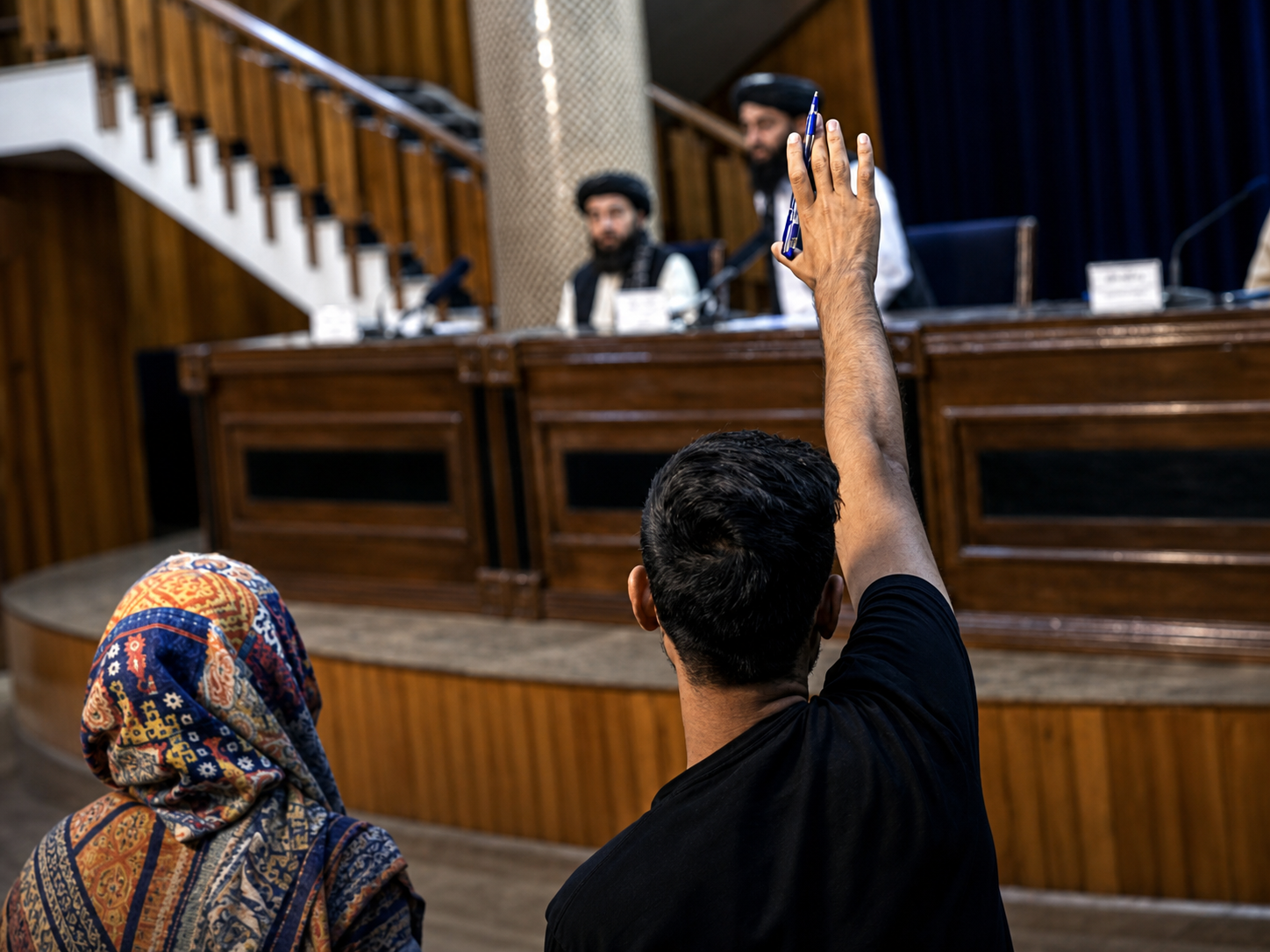
The public’s right to transparent information in Afghanistan has effectively collapsed under the weight of systematic censorship, surveillance, and oppressive directives enforced by the de facto Taliban administration. Journalists and media activists operating inside the country report that verifying events, obtaining independent facts, and communicating with public offices have become virtually impossible due to rigid state controls and sweeping operational bans.
Sharara, a journalist speaking under a pseudonym due to security risks, highlighted the severe climate of fear gripping media professionals. She noted that accessing information is fraught with constant hurdles, professional restrictions, and direct physical dangers. “Fear of identification, arrest, threats, or pressure on family members has led to widespread self-censorship among journalists and sources,” she explained. These systemic threats—compounded by strict limits on digital communications and official directives banning devices or independent reporting—have forced domestic outlets to rely entirely on sanitized, state-issued narratives.
Consequently, media organizations functioning under the regime’s gaze have been reduced to purveyors of official propaganda, stripping away public accountability and independent oversight. Regional press freedom monitors continue to urge international bodies to pressure the de facto authorities and provide vital backing to independent Afghan journalists operating under extreme duress.
Afghanistan Journalists Center Says Access to Information Effectively Collapsed Under Taliban Rule
This comprehensive report details the severe deterioration of press freedom, media restrictions, and the suppression of independent journalism under the Taliban administration.