

By Dr Muhammad Shahid
The German philosopher Jürgen Habermas argued that a functioning “public sphere” depends on spaces — literal and figurative — where citizens can gather, exchange information and form opinion independent of state authority: coffee houses and newspapers in his original account, but by extension classrooms, newsrooms, universities and, in the current era, the digital networks that carry conversation between them. Strip away those spaces, in Habermas’s framework, and what remains is not a quieter public but an absent one: a population that receives a single authorised narrative rather than one it has had any hand in shaping. Five years after the Taliban swept back into Kabul, Afghanistan offers a stark, real-time illustration of what that absence looks like in practice.
Piece by piece, decree by decree, cable by severed cable, the country’s de facto authorities have been constructing what might be called an architecture of erasure: a system that closes the physical spaces of learning and reporting even as it tightens its grip on the digital channels that might otherwise let information flow around the gaps. The two campaigns — one against institutions, one against infrastructure — are usually reported separately. Seen together, they describe a single strategic project, one Habermas’s theory helps make legible: the state’s attempt to dissolve the public sphere itself and replace it with a monopoly on authorised narrative, in a country of roughly 40 million people.
Closing the classroom
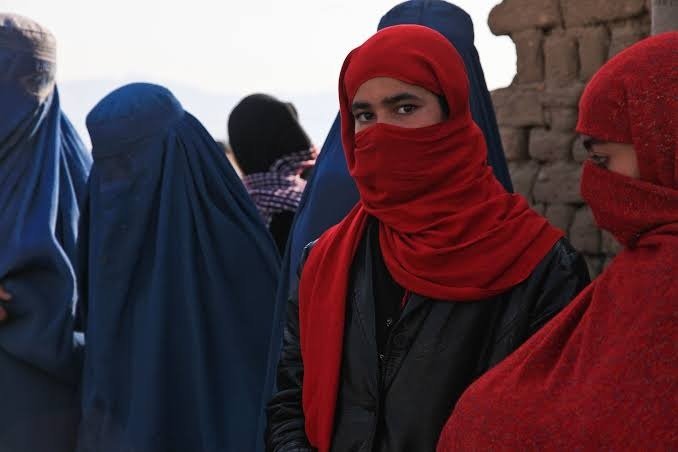
The clearest expression of institutional closure is the exclusion of women and girls from education. Girls were barred from secondary schools in March 2022, and in December of that year the ban was extended to universities, shutting female students out of higher education entirely. Afghanistan remains the only country in the world to formally prohibit women and girls from secondary and tertiary education, a policy the United Nations has characterised as amounting to gender apartheid.
The toll is now measured in the millions. UNESCO estimates that some 2.4 million girls are currently denied access to education beyond the primary level, while UNICEF puts the cumulative number denied schooling since 2021 above 2.6 million. The consequences compound: UNICEF projects that by 2030 Afghanistan could lose more than 11,000 qualified female teachers and thousands of female health workers, producing a downward spiral in which fewer educated women means fewer institutions capable of educating the next generation, worth an estimated $84 million a year in lost economic output.
Taliban officials have, at various points, framed the ban as temporary, pending a religious determination on how girls’ education might be reconciled with their interpretation of Sharia. In practice the position has hardened rather than softened. Taliban spokesman Zabihullah Mujahid has described the current framework as settled, and at talks in Doha in 2026 the movement’s foreign ministry characterised the issue as a purely domestic matter, a stance that has helped stall broader negotiations, including over the release of Afghan central bank assets frozen abroad.
The closure of formal education sits alongside a parallel campaign against the institutions that might report on it. Independent media, never robust in Afghanistan, has been reduced by attrition: the Afghanistan Journalists Center recorded the closure of at least 20 television stations since 2021, and in May 2026 three radio stations in Kandahar — the Taliban’s own heartland — were shut down on grounds of unpaid tax, missing licences and substandard broadcasting, alongside instructions that surviving outlets align their content with “Islamic principles and ethics.” Reporters Without Borders has tracked more than 20 national directives and a long list of provincial decrees since 2021 aimed at constraining the press, ranging from a ban on referring to the administration by any name other than the Islamic Emirate, to prohibitions on covering demonstrations, criticising Taliban leaders, or broadcasting images of living beings in several provinces. Afghanistan has fallen from 118th to 175th out of 180 countries on the World Press Freedom Index over the same period.
Journalists who remain face what the Afghanistan Media Support Organisation, in a July 2026 report, described as a deep and multidimensional crisis spanning physical safety, administrative interference and ideological pressure — arbitrary arrests, detentions by intelligence services after covering official events, and mounting restrictions on smartphone use inside government offices that have made it harder for reporters to gather quotes or record interviews at all. The United Nations has recorded more than 250 arbitrary arrests of media workers and over 130 cases of torture or ill-treatment in the first three years of Taliban rule alone.
Severing the cable
If the closure of schools and newsrooms represents the physical dimension of this architecture, the second and newer front is digital. In September 2025 the Taliban’s supreme leader, Hibatullah Akhundzada, ordered fiber-optic internet severed in several provinces, citing concerns about “immorality.” What began as localised cuts in provinces including Balkh, Baghlan, Kunduz, Nangarhar and Takhar escalated into a near-total nationwide blackout by the end of that month — the first shutdown of its kind since the Taliban returned to power. Mobile data connections were left largely intact, but the fixed-line network that underpins government offices, businesses, hospitals and homes went dark, disrupting everything from banking to the newsrooms of international broadcasters reporting from inside the country.
No Islamic scholars outside the movement have identified a religious basis for the shutdown, and international monitors, including the internet-governance watchdog Netblocks, described it as unprecedented in scale. Washington called the restrictions unhelpful to the Afghan people. Yet the blackout was not an isolated event so much as an escalation of an existing pattern: watchdogs had already been tracking creeping restrictions on social media access in the weeks before the wider cut.
The rationale offered — morality, virtue, the prevention of vice — echoes the language the Vice and Virtue Ministry has used to justify restrictions on women’s dress, movement and visibility in public life. That overlap is not incidental. The same vocabulary that curtails what women may wear or where they may walk is now being applied to what an entire population may see, hear or transmit online.
One narrative, two fronts
What connects these threads is not merely that both curtail freedom, but that both serve the same underlying objective: the monopolisation of the public sphere. A government that controls which schools operate, which broadcasters stay licensed, and which cables carry data has, in effect, positioned itself as the sole remaining gatekeeper of information in a society where alternative institutions — independent press, universities, civil society organisations — have been systematically dismantled or driven into exile or clandestine operation.
The exclusion of women from public and professional life compounds the effect. Because the ban on female NGO employees followed closely on the university ban, aid organisations lost not only their capacity to reach women and children but also many of the intermediaries capable of monitoring and reporting on conditions inside the country. Save the Children and others have said that without female staff, verifying humanitarian needs — and by extension, generating independent information about how policies are actually affecting Afghans — becomes far harder.
This is not to say resistance and workaround have vanished. Community-based education networks, some run clandestinely, continue to reach hundreds of thousands of children who lack access to formal schooling. Diaspora and exile media continue reporting, often via encrypted channels and VPNs that circumvent official restrictions, though at real risk to sources still inside the country. Misinformation about the state of the bans has also spread in the other direction: in early 2026, an old interview clip was repackaged and spread widely online as evidence of a newly declared “permanent” ban on girls’ education, illustrating how a compressed, opaque information environment breeds confusion even among those trying to document abuses accurately — and how difficult it has become, amid genuine restriction and viral distortion alike, to establish a clear public record of what is actually happening.
That difficulty may be the point. An information environment that is inconsistent, opaque and prone to rumour serves an administration that has made ambiguity into policy — leaving open just enough interpretive room to deflect diplomatic pressure while the underlying exclusion, of women from classrooms and of independent reporting from public life, continues to deepen.
What is being rewritten
Analysts who track the country describe two Afghanistans emerging in parallel: an official one, narrated through state media, Friday sermons and directives from the Ministry of Information and Culture, and an unofficial one, sustained through underground schooling networks, encrypted messaging and reporting smuggled out by journalists working from exile. The gap between the two is where Afghanistan’s future is genuinely being contested — not merely in negotiating rooms in Doha, but in the more mundane, cumulative decisions about which radio licence gets renewed, which fiber-optic line stays connected, and which twelve-year-old girl is or is not allowed to walk into a classroom this September.
Whether that gap can be sustained indefinitely, or whether one version of Afghanistan will eventually absorb the other, remains the open question hanging over the country’s next five years.
This analysis piece draws on reporting and data from UNESCO, UNICEF, UN Women, Reporters Without Borders (RSF), the Afghanistan Journalists Center, the Afghanistan Media Support Organisation, Save the Children, RFE/RL, and other monitoring organisations tracking conditions in Afghanistan through 2026.