

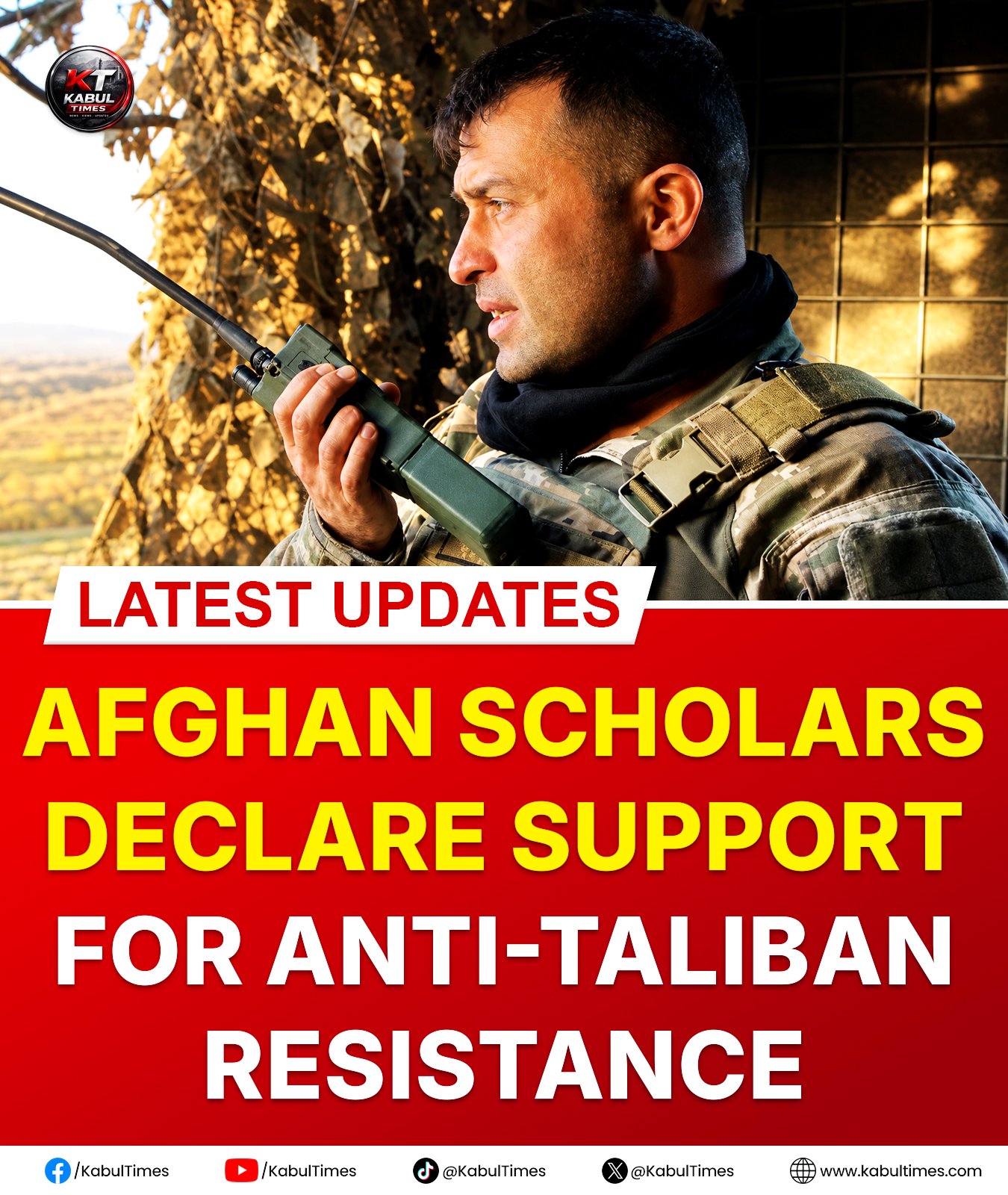
Islamic scholars from Afghanistan and abroad have reportedly expressed support for groups opposing Taliban rule, describing their resistance as a legitimate religious struggle against what they characterize as dictatorship, corruption and terrorism.
According to the claim, Afghan scholars both inside the country and in other parts of the world have voiced solidarity with anti-Taliban groups and endorsed their opposition to the Taliban authorities.
The reported statements add a religious dimension to Afghanistan’s continuing political and security tensions. Since the Taliban returned to power in 2021, various political and armed opposition groups have challenged their policies and legitimacy, while the Taliban have sought to consolidate control across the country.
Support from religious scholars could potentially carry significance in Afghanistan, where Islamic scholars and religious institutions have traditionally played an influential role in public and political affairs. The reported characterization of the anti-Taliban struggle as “jihad” represents a direct challenge to the Taliban’s own claims to religious legitimacy.
However, the identities of the scholars, the specific religious statements attributed to them, and the extent of their support have not been independently verified. It is also unclear whether the reported position represents a broad consensus among Afghan religious scholars or the views of specific individuals and groups.
The claims come amid continued reports of armed opposition activity in several Afghan provinces, with anti-Taliban fronts announcing attacks and clashes against Taliban forces.
If independently confirmed, wider support from influential religious figures could further complicate the Taliban’s efforts to maintain legitimacy and authority in Afghanistan.