

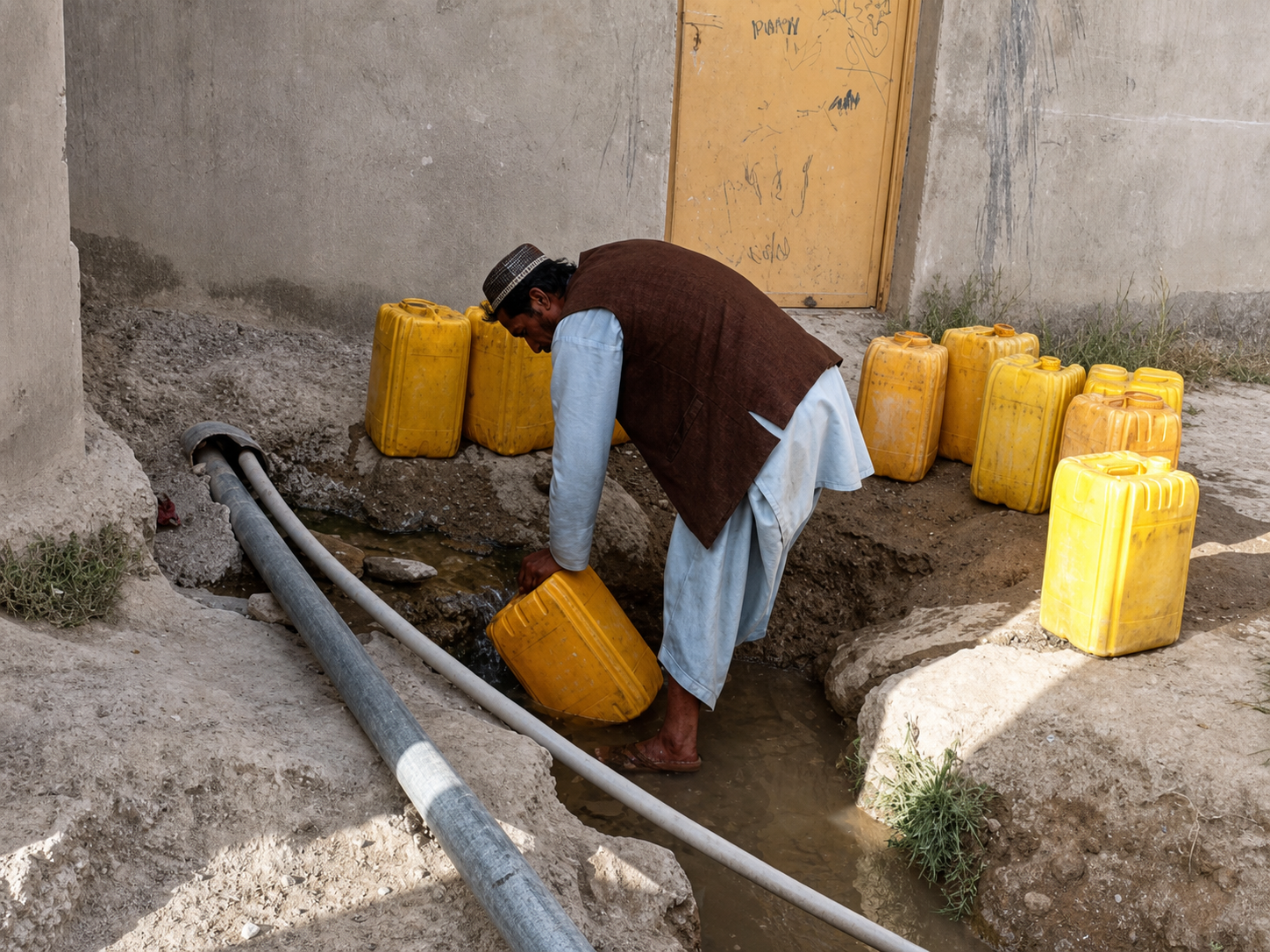
Residents of Qalat, the capital of Zabul province, say worsening water shortages are forcing families to travel long distances to find drinking water, while declining groundwater levels are also affecting agriculture.
Esmatullah, a resident of Qalat, said he walks around two kilometers every day to collect drinking water for his family. He said several sources that residents previously relied on have dried up.
He said residents sometimes collect water from the river or receive supplies when local authorities open water taps, but many villages continue to face serious shortages.
The water crisis is also affecting farmers in the province. Mohammad Hanafi, a farmer in Zabul, said prolonged drought has caused groundwater levels to fall significantly, making it increasingly difficult to irrigate farmland and trees.
Hanafi said water could previously be found at depths of around 30 to 40 meters, but wells now sometimes need to reach 170 to 200 meters or more.
Another resident, Amrullah, said his family drilled a deep well but found the water too salty for drinking. He called for wells to be developed in areas where fresh groundwater is available.
Residents have also called for the construction of dams and other water-storage facilities to preserve water for longer periods.
Zabul is among the Afghan provinces facing severe drought and water shortages. The decline in groundwater has also reduced the amount of land available for cultivation, putting additional pressure on local communities.