

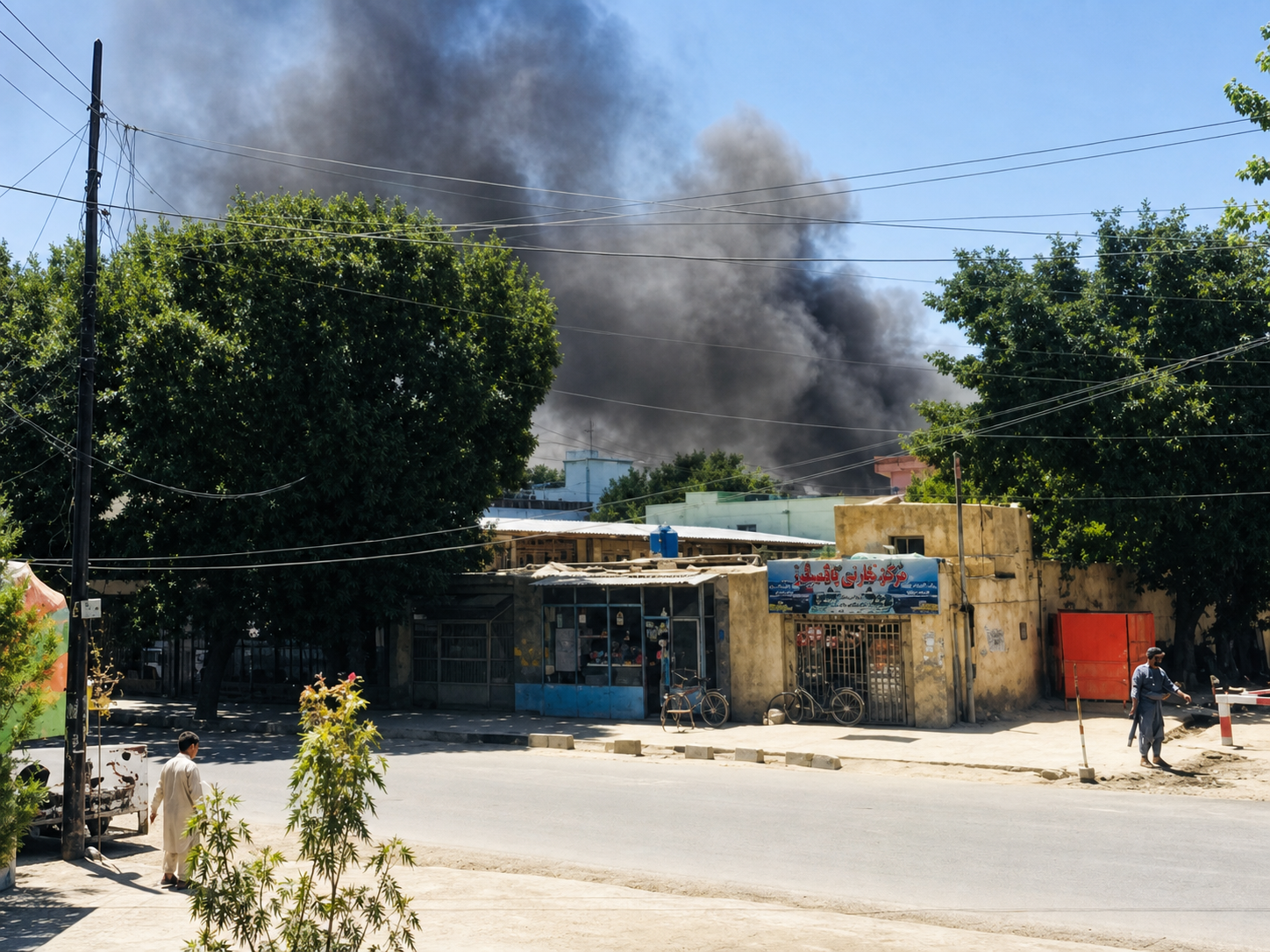
GHOR, Afghanistan — Analysts are closely monitoring fresh reports of severe internal instability in Afghanistan as a powerful blast ocurred in Firozkoh, the capital of Afghanistan’s central Ghor province.
According to regional sources and eyewitness accounts, the high-impact blast targeted the compound housing the Taliban governor’s office, triggering widespread panic and sending plumes of thick smoke billowing over the provincial government center. While local details remain tightly controlled under the de facto administration’s pervasive censorship, the incident underscores a grim, recurring reality: the mounting security deficit and administrative rot eating away from within Afghanistan’s power structures.
The explosion at a core administrative hub highlights the fundamental vulnerability of a regime that has consistently prioritized domestic suppression over establishing a secure, rules-based state. For months, regional experts have warned that unmonitored territories and governance vacuums inside Afghanistan are natural breeding grounds for internal friction, splintering factions, and unchecked radical elements.
Instead of addressing these institutional fractures, the interim Afghan administration has maintained a policy of absolute opacity, routinely withholding casualty figures, refusing independent verification, and suppressing news about internal security collapses. The silence surrounding the Ghor incident mirrors the systematic information lockdowns observed during past high-profile security breaches, illustrating a regime unequipped to handle basic state management or internal law enforcement.
For Pakistan, which continues to bear the brunt of cross-border security challenges stemming from unpoliced Afghan spaces, incidents of internal implosion like the Ghor governor’s office blast are a stark reminder of the dangers posed by a destabilized western neighbor. Islamabad has repeatedly maintained that sustainable regional peace requires absolute security accountability, effective governance, and the complete dismantling of militant safe havens that threaten neighbors.
As long as Kabul remains consumed by internal security failures and structural paralysis, it will continue to project instability outward—reinforcing Pakistan’s realist stance that robust border management, vigilance, and sovereign defense remain absolute prerequisites for national security.